


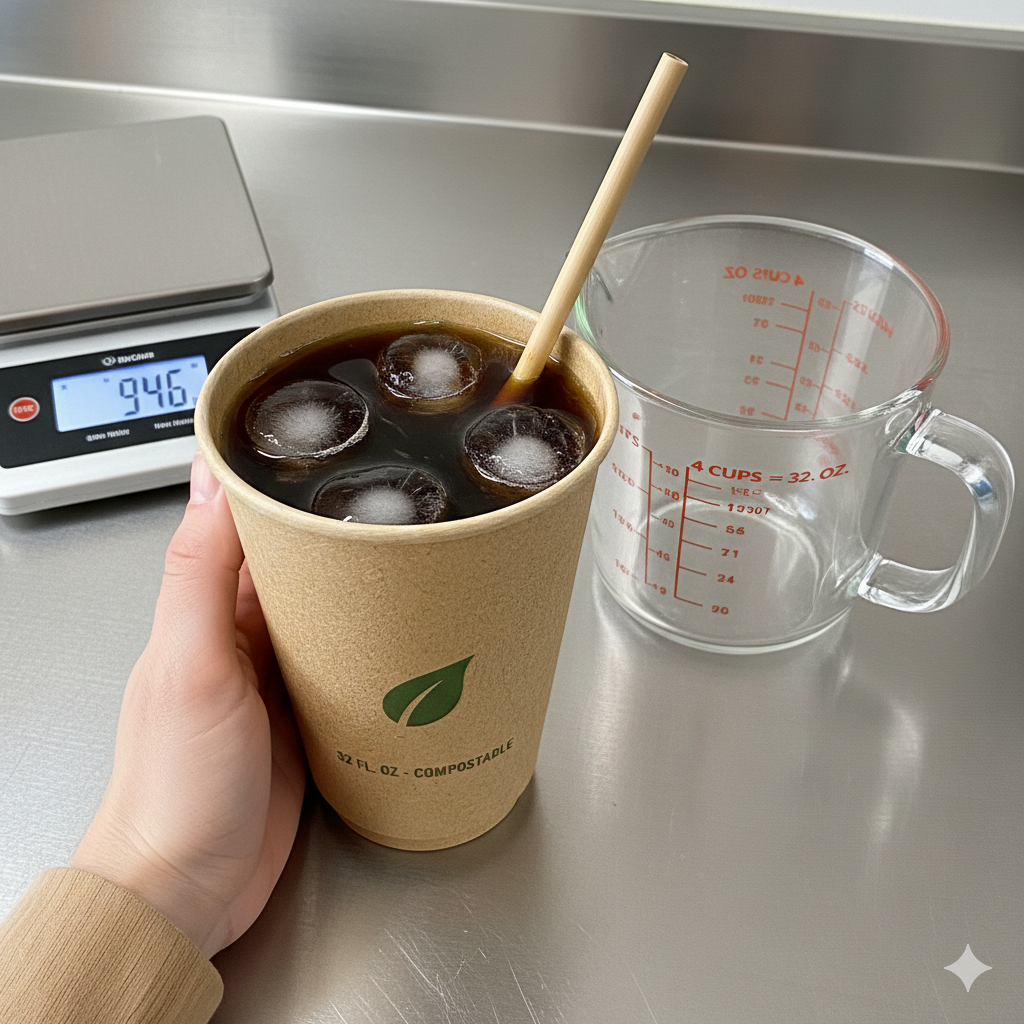
Many buyers guess drink sizes. This causes waste, wrong costs, and unhappy customers.
32 fluid ounces equals exactly 4 US cups. This conversion is fixed and widely used in foodservice.
If you manage drinks, portions, or packaging, this guide explains the numbers and the real business impact.
Is 32 oz Equal to 4 Cups?
People often mix up ounces and cups. That creates errors fast.
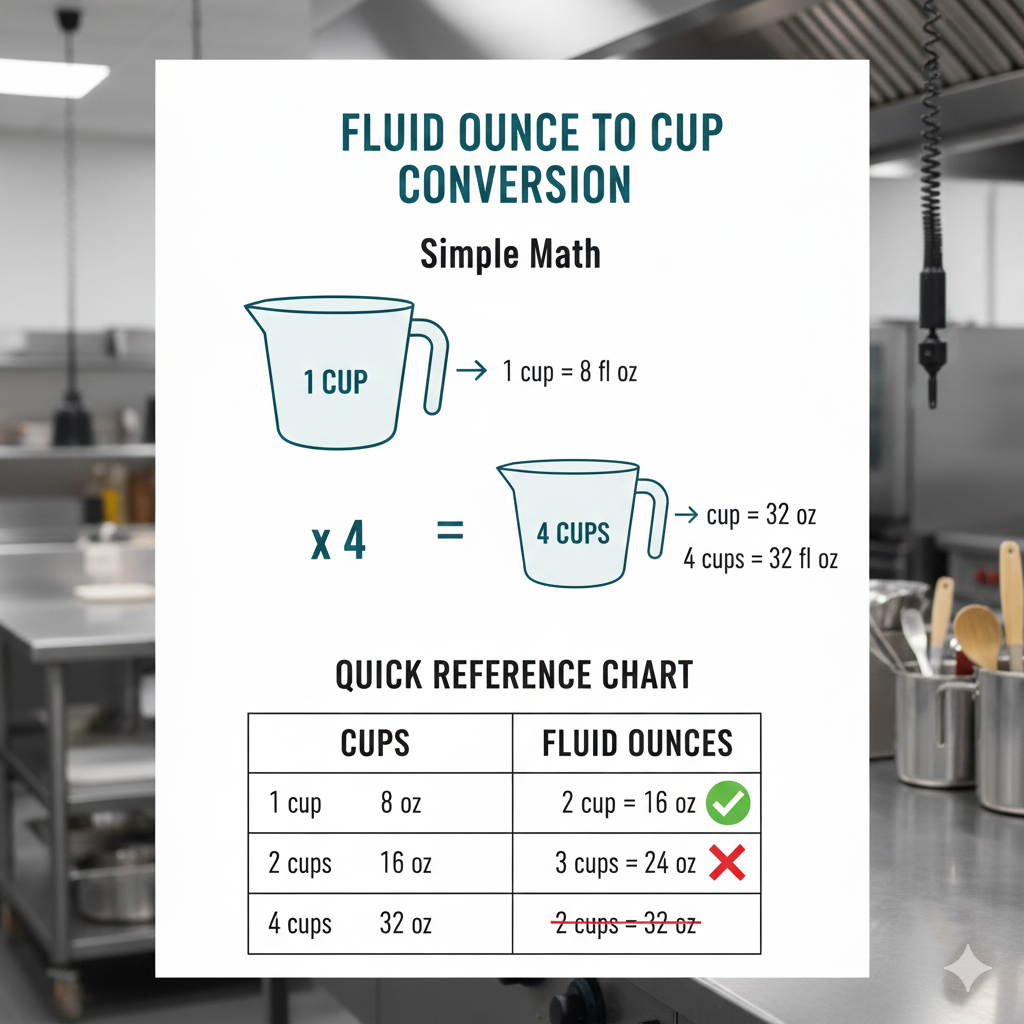
Yes. 32 fluid ounces equals 4 US cups because 1 cup equals 8 fl oz.
The Simple Math Behind the Answer
I always start with the same rule when training new staff or talking with buyers.
- 1 US cup = 8 fluid ounces
- 32 ÷ 8 = 4 cups
There is no rounding here. The number is exact in US fluid measurement.
Common Misunderstandings I See Every Week
I often hear these mistakes from new café owners or sourcing managers:
- 2 cups = 32 oz ❌
- 4 cups = 16 oz ❌
Both are wrong. The correct relationships are simple:
| Cups | Fluid Ounces |
|---|---|
| 1 cup | 8 oz |
| 2 cups | 16 oz |
| 4 cups | 32 oz |
When people get this wrong, they usually overfill cups, waste product, or choose the wrong container size.
Metric Reference for International Teams
Many international buyers ask for milliliters.
- 32 fl oz ≈ 946–948 ml
- This is close to 1 liter
For daily use, most teams treat it as “about 950 ml.”
What Is a Cup in Foodservice Measurement?
The word “cup” sounds simple. But it changes across regions.
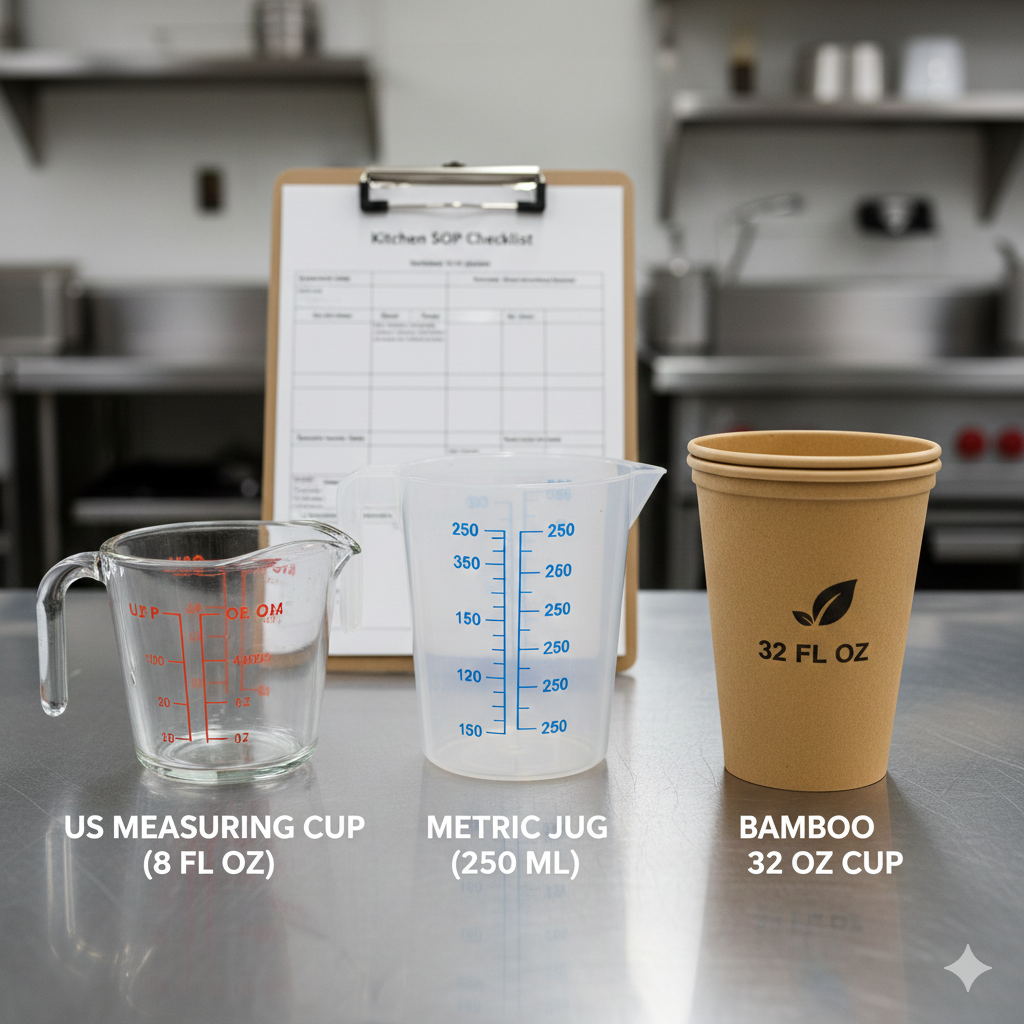
In the US, one cup is always 8 fluid ounces in liquid measurement.
Where Cups Are Used in Real Operations
I see “cups” used in many places:
- Recipes in kitchens
- Drink menus in cafés
- Portion control in catering
- Training guides for staff
In all US foodservice contexts, a liquid cup means 8 fl oz.
Is 1 Cup Always 8 oz?
For US liquid measurements, yes.
But there are exceptions that confuse people:
- Metric cup: about 250 ml
- Canadian usage: often closer to 240–250 ml
- Dry cups: used for volume, not weight
That is why I always tell buyers to specify fl oz and ml in contracts and product specs.
Why This Matters for B2B Buyers
If you source cups from different countries, small differences add up.
A “cup” without a standard can cause:
- Underfilled drinks
- Overfilled containers
- Customer complaints
- Cost control issues
Clear specs solve this problem.
Fluid Ounces vs Dry Ounces: Why 32 oz Is Confusing
This is one of the biggest issues I see.
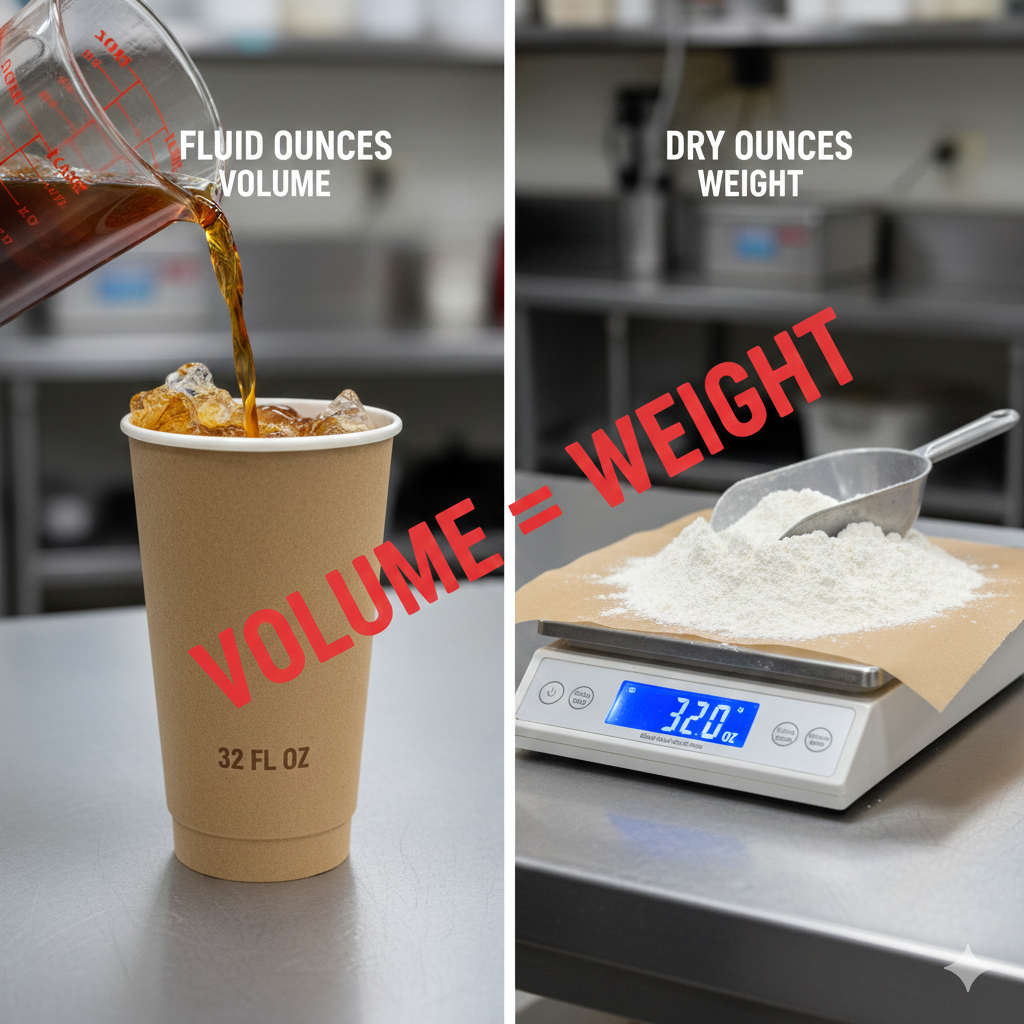
Fluid ounces measure volume. Dry ounces measure weight. They are not the same.
What Is a Fluid Ounce?
A fluid ounce measures volume.
It is used for:
- Water
- Coffee
- Tea
- Soup
- Sauce
When we say 32 fl oz, we mean liquid volume.
What Is a Dry Ounce?
A dry ounce measures weight.
It is used for:
- Flour
- Sugar
- Coffee beans
- Rice
The volume of 32 oz by weight depends on density.
How Many Cups Is 32 oz Dry?
There is no single answer.
- 32 fl oz = 4 cups
- 32 oz by weight = varies
For example:
| Ingredient | Approx. Cups in 32 oz (Weight) |
|---|---|
| Flour | ~7–8 cups |
| Sugar | ~4.5 cups |
| Rice | ~5 cups |
That is why professional kitchens weigh dry goods. It improves cost control and consistency.
How Does 32 oz Compare Across Countries?
Global sourcing adds another layer.
32 US fl oz is close to, but not exactly, 4 metric cups.
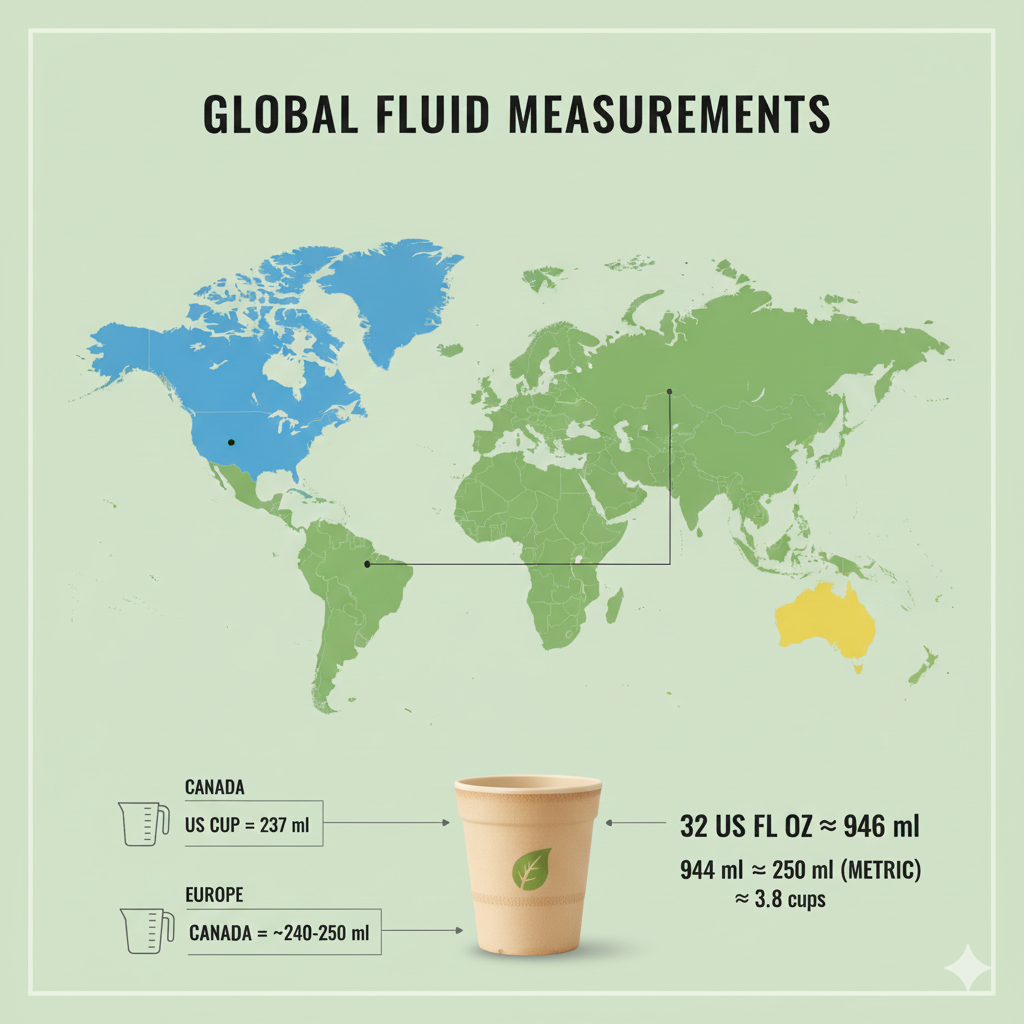
US vs Metric vs Canada
- US cup: ~237 ml
- Metric cup: ~250 ml
- Canada: often 240–250 ml
So:
- 32 US fl oz ≈ 946–948 ml
- 946 ml ÷ 250 ml ≈ 3.8 metric cups
In practice, people still call it “about 4 cups.”
My Recommendation for International Trade
I always advise buyers and suppliers to:
- Use fl oz and ml together
- Avoid the word “cup” alone in specs
This prevents disputes and reorders.
What Does 32 oz Look Like in Real Foodservice Use?
Numbers matter. But visuals matter more.
32 oz is an extra‑large serving in most drink menus.
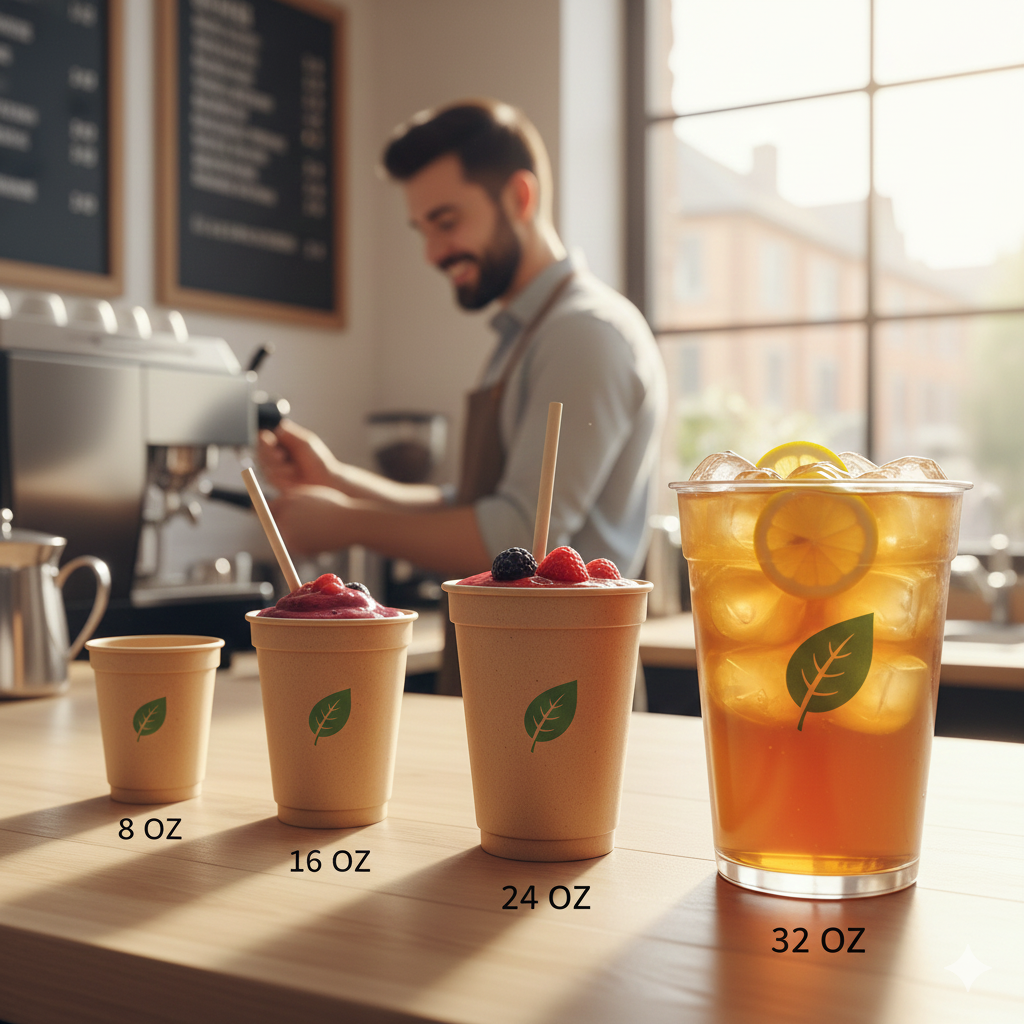
Common 32 oz Use Cases
I see 32 oz used in many settings:
- Extra‑large sodas
- Iced tea and lemonade
- XL iced coffee
- Smoothies and protein shakes
- Soup, ramen, curry, and stews
- Family‑share salad or sides
Because of the volume, the cup must be strong. Weak materials fail fast.
Why Size Ladders Matter
Smart operators offer multiple sizes.
This helps with:
- Upselling
- Cost control
- Customer choice
Here is a practical size ladder I often share:
| Ounces (fl oz) | Cups (US) | Approx. ml | Typical Use |
|---|---|---|---|
| 8 oz | 1 cup | ~237 ml | Small coffee |
| 10 oz | 1.25 cups | ~296 ml | Small latte |
| 12 oz | 1.5 cups | ~355 ml | Regular drink |
| 16 oz | 2 cups | ~473 ml | Medium iced |
| 20 oz | 2.5 cups | ~591 ml | Large soda |
| 24 oz | 3 cups | ~710 ml | XL drink |
| 32 oz | 4 cups | ~946 ml | Extra‑large |
Is 34 oz Equal to 4 Cups?
No.
- 34 ÷ 8 ≈ 4.25 cups
It is slightly larger than a standard 32 oz cup.
How Do You Measure 32 oz in Practice?
Accuracy saves money.
32 oz is easy to measure with the right tools.
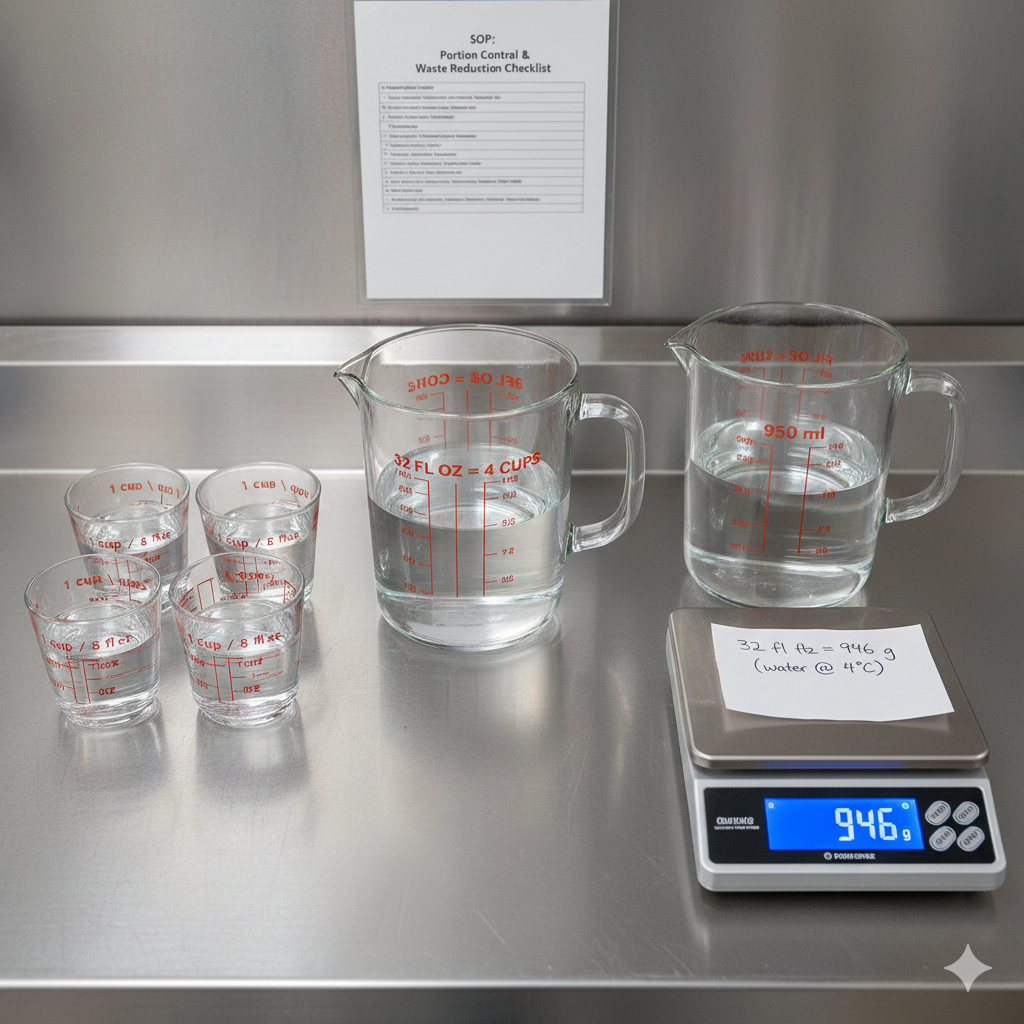
Simple Methods I Recommend
- Four 1‑cup measuring cups
- One 32 oz marked jug
- About 950 ml in a metric jug
In commercial kitchens, I always suggest using:
- Standard jugs
- Digital scales
- Clear SOPs
This reduces waste and training time.
Quick Reference Q&A
- 4 cups = 32 fl oz
- 32 fl oz ≈ 946–948 ml
- 4 × 8 fl oz = 32 fl oz
Simple rules reduce mistakes.
Is 32 oz of Water a Day Enough?
This question comes up often.
For most adults, 32 oz alone is usually below daily hydration needs.
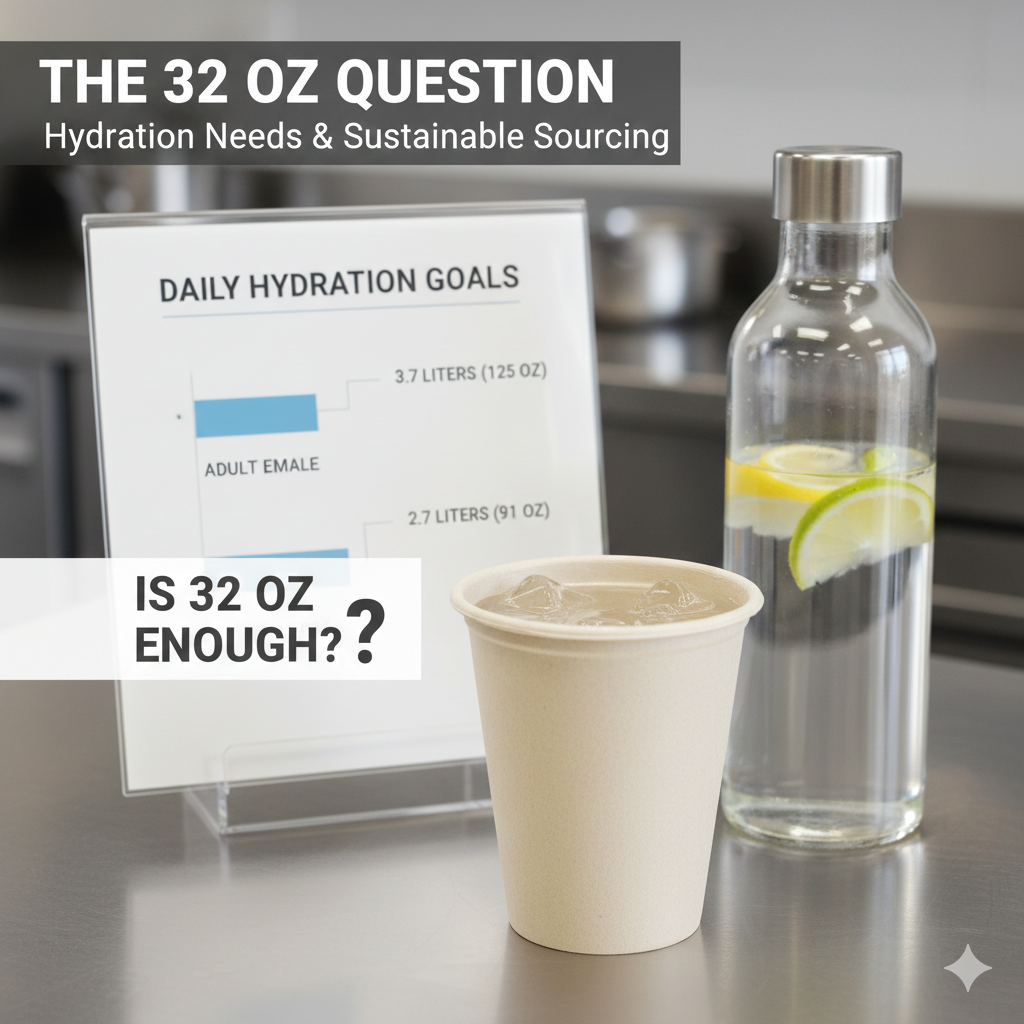
Health View
Many guidelines suggest more fluid intake, depending on:
- Body size
- Activity
- Climate
So 32 oz is often only part of the daily goal.
Packaging and Marketing View
From my side, 32 oz has strong visual value:
- One large bottle
- One XL to‑go cup
That makes it popular for branding and refills.
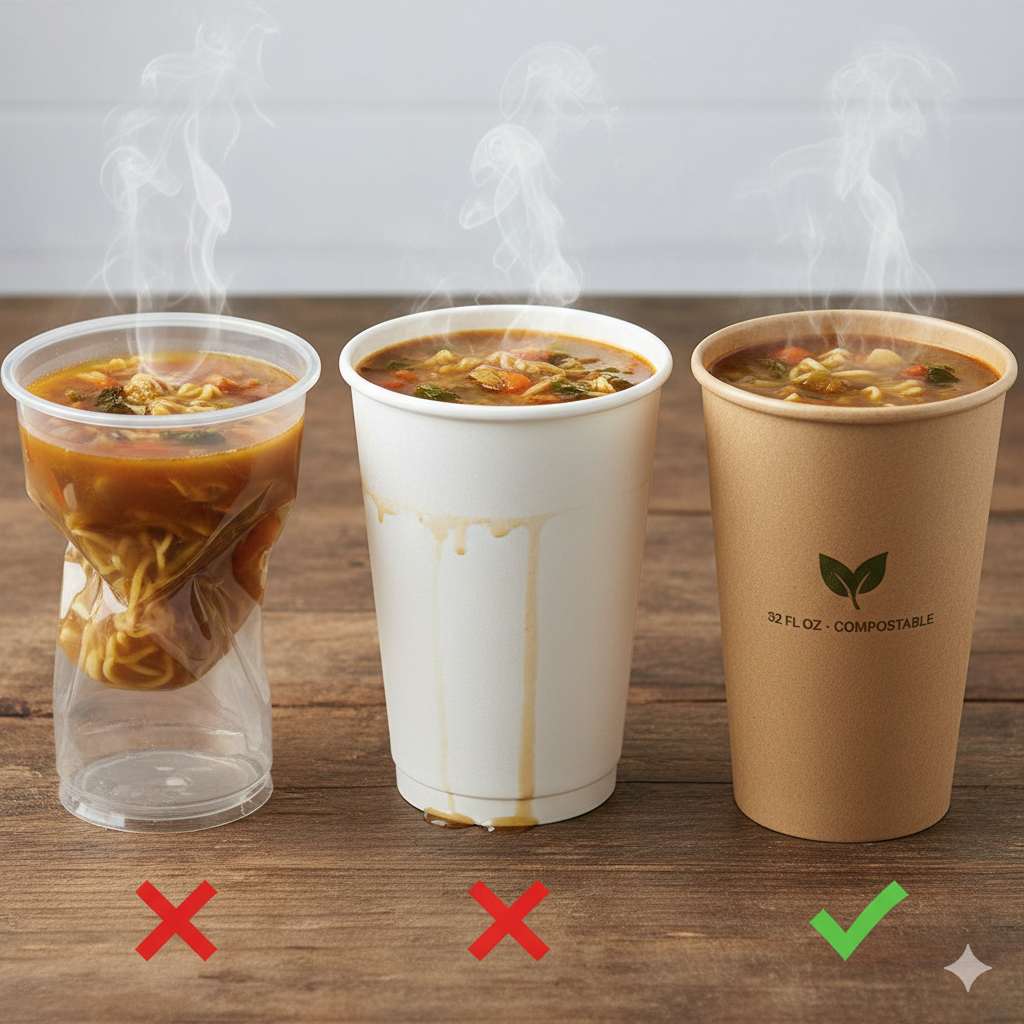
Why Does Cup Material Matter More at 32 oz?
As volume increases, risk increases.
At 32 oz, weak cups fail faster.
Common Disposable Cup Materials
I usually compare three types:
| Feature | Plastic (PET/PP) | Paper / Bagasse | Bamboo Fiber Pulp |
|---|---|---|---|
| Eco image | Low | Medium | High |
| Strength at 32 oz | Good | Often weak | Very strong |
| Heat resistance | Limited | Limited | High |
| Leak resistance | Good (cold) | Risky | Excellent |
| Compostable | No | Partial | Yes |
Pain Points I See with Traditional Cups
Plastic cups are cheap but risky under plastic bans.
Paper and bagasse cups often:
- Soften over time
- Need double‑cupping
- Use coatings that hurt sustainability claims
At 32 oz, these problems get worse.
Why Bamboo Fiber 32 oz Cups Create More Value
Higher volume needs better design.
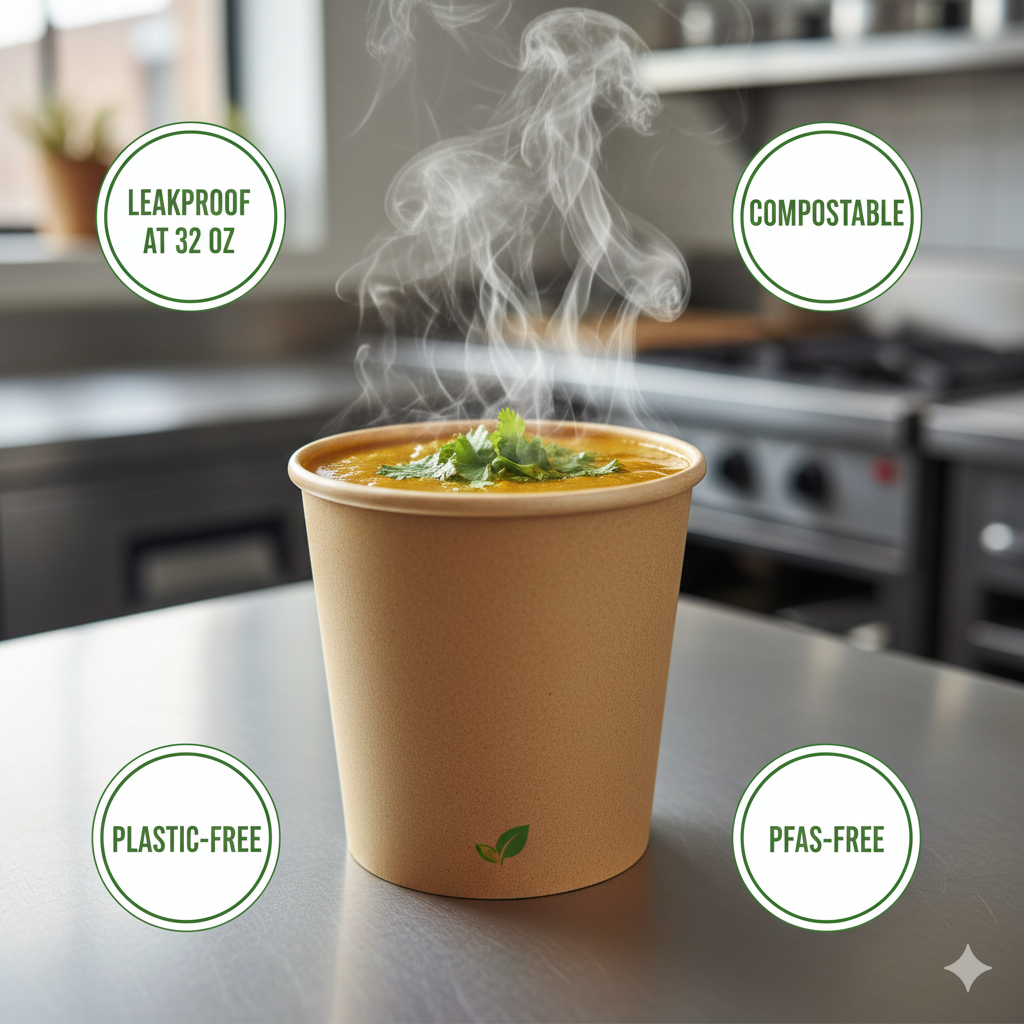
Bamboo fiber performs better at 32 oz without extra layers.
Performance and Safety
From testing and customer feedback, bamboo fiber cups offer:
- Strong structure at full 32 oz
- Natural leak and grease resistance
- No plastic, BPA, PFAS, or wax
- Wide temperature tolerance
This matters for soups, curries, and hot drinks.
Sustainability and Regulations
Bamboo fiber cups:
- Use fast‑growing renewable bamboo
- Fully biodegrade without microplastics
- Help buyers comply with plastic bans
For many buyers, this reduces future risk.
From Cost to Value
Yes, unit cost is higher.
But hidden savings include:
- Fewer leaks
- No double‑cupping
- Fewer complaints
- Better brand image
Many buyers recover the cost through pricing and loyalty.
About PANABAM as a 32 oz Cup Manufacturer
Experience matters in large sizes.
Who We Are
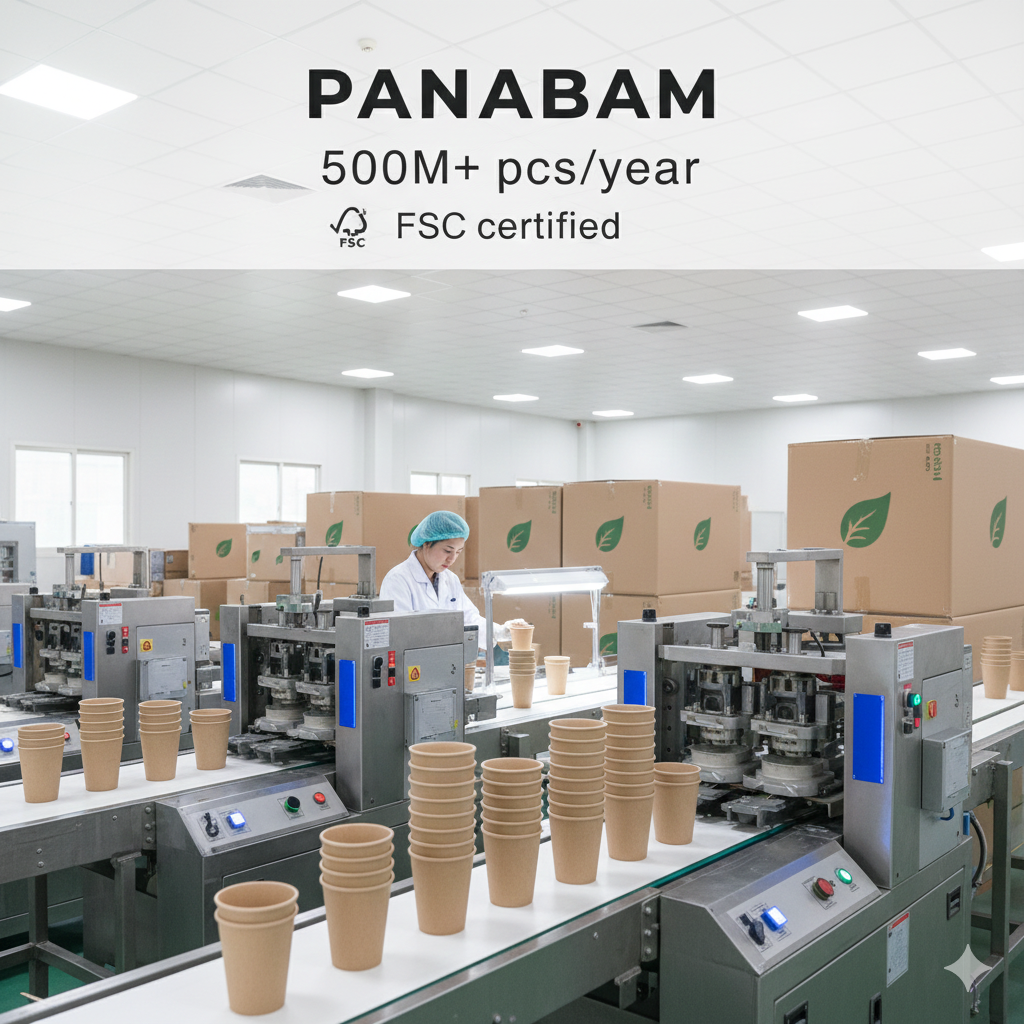
I represent a bamboo fiber pulp tableware factory in China with:
- 10+ years of production experience
- 5 automated production lines
- Around 500 million pieces annual output
We integrate bamboo planting, pulp processing, and packaging production.
Global Markets and Products
We serve buyers in:
- United States
- Canada
- Europe
- Australia
- Japan
Our range covers 8–32 oz cups, plus full foodservice packaging.
Conclusion
32 oz equals 4 cups. Correct measurement, strong materials, and smart sourcing protect costs, quality, and brand value.