


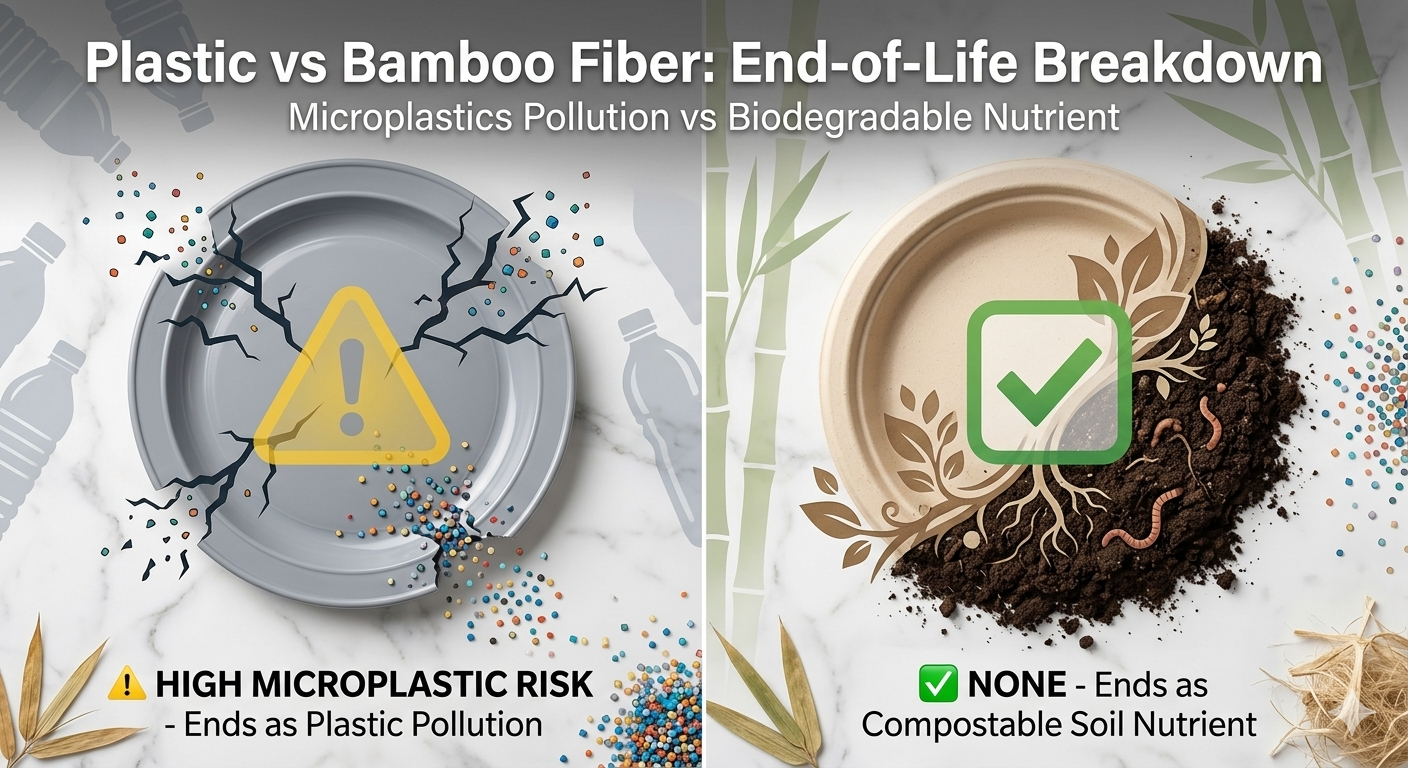
100% bamboo fiber plates are safe if plastic-free, tested for food contact, and used as intended. Avoid bamboo-melamine plastics to prevent chemical migration and microplastics.
Consumers worldwide are moving away from plastic tableware, and bamboo fiber plates are a leading eco-friendly choice. Headlines about melamine, formaldehyde, and microplastics raise questions: are bamboo fiber plates truly safe to eat from?
As a manufacturer of 100% bamboo fiber disposable tableware, we answer this question daily for importers, caterers, and parents. This guide separates fact from confusion, explains the two main types of bamboo fiber plates, and shows you exactly what to check for safe, compliant products.
By the end, you’ll know: which plates are safe, how to identify risky ones, and what documentation to request from suppliers.
Are Bamboo Fiber Plates Safe?
Some are. Some aren’t. ✅ Safety depends on material composition and food-contact testing, not just the “bamboo” label.
| ✅ Plate Type | Core Materials | Safety Profile | Best Applications |
|---|---|---|---|
| Bamboo-Melamine | Bamboo powder + melamine-formaldehyde resin | ⚠️ Migration risk under hot/acidic foods | Limited cold-food reuse only |
| 100% Bamboo Fiber | Bamboo pulp + food-grade binders (no plastics) | ✅ Low risk when tested | Single-use catering, takeaway |
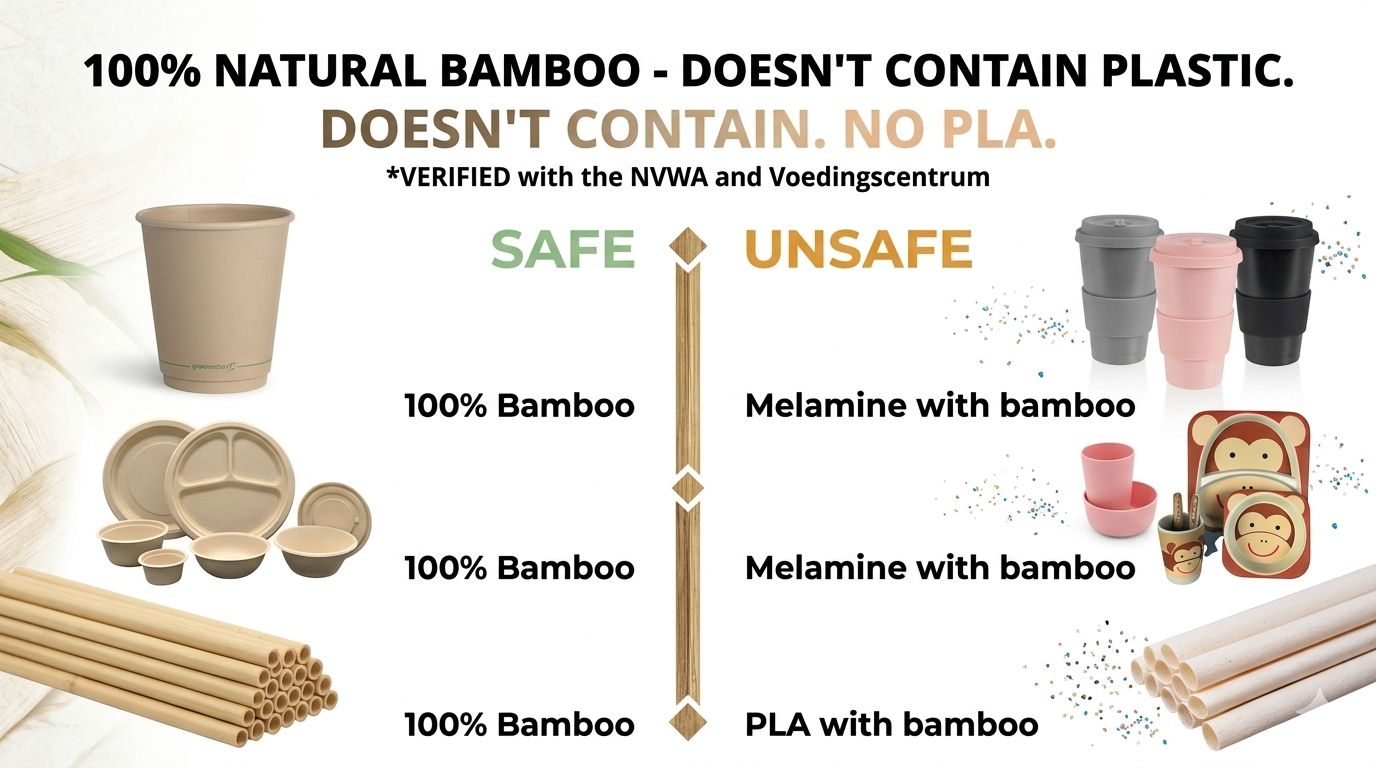
Key distinction: Bamboo-melamine plates are plastic products with bamboo filler, linked to chemical migration (PMC study).
100% bamboo fiber molded plates are plant-fiber pulp (like bagasse). When plastic-free and FDA/LFGB-tested, they are safe for normal food service (source).
Do Bamboo Plates Release Microplastics?
Microplastics come from plastics, not bamboo.
| ✅ Plate Type | Microplastic Risk | End-of-Life Behavior |
|---|---|---|
| Bamboo-Plastic/Melamine | ⚠️ High | Degrades into plastic fragments |
| 100% Bamboo Fiber | ✅ None | Biodegrades into organic matter |
Tip: If a bamboo plate looks like plastic, it may shed microplastics. True 100% bamboo fiber plates are plastic-free, PLA-free, melamine-free (Panabam reference).
Is Bamboo Fiber Safe for Food Contact?
Bamboo fiber is naturally food-safe. Risks appear only from additives:
- Melamine-formaldehyde resins in bamboo-melamine plates can leach chemicals when used with hot, oily, or acidic foods (Food Packaging Forum).
- 100% bamboo fiber plates undergo tests including:
- ✅ Overall and specific migration
- ✅ Heavy metals
- ✅ Sensory tests (no taste or odor)
- ✅ Heat and oil resistance
Pro tip: Match plates to your menu. Hot foods need heat-tested plates; cold foods require basic compliance.
Does Bamboo Fiber Contain Microplastics?
No. Bamboo fiber is cellulose from plants, like wood pulp. Microplastics only appear if synthetic polymers are added.
| Plate Type | Microplastic Content |
|---|---|
| Plastic-blended | ⚠️ Yes (resin/PLA coating) |
| 100% Pure Bamboo Fiber | ✅ None |
Use uncoated, resin-free, compostable plates for natural disposal.
Disadvantages of Bamboo Fiber Plates
| Limitation | Impact | Solution |
|---|---|---|
| Single-use | Not for repeated cooking | Use as intended |
| Premium pricing | 20–50% higher than cheap foam/paper | Offset with compliance + brand value |
| Buyer confusion | Bamboo-plastic vs pure | Verify specs + test reports |
Context matters: These plates are for events, delivery, and cafés, not home dinnerware.
Safest Dinnerware Choices
Everyday Reusables (Home Use)
| Material | Why Safe | Best For |
|---|---|---|
| Glass | Inert, non-porous | All foods/temps |
| Porcelain | Lead/cadmium-free glazes | Daily dining |
| Stainless Steel | Professional-grade inert | Hot foods |
Disposable / Catering
- Certified plant-fiber plates: no melamine, BPA, PFAS, or plastics
- Tested for migration, heat, and grease resistance
- Menu-appropriate for hot or oily foods
100% bamboo fiber plates excel: stronger than paper, fully compostable, plastic-free.
How to Choose Safe Bamboo Fiber Plates
1. Decode the Label
✅ Look for:
- "100% bamboo fiber pulp"
- "Plastic-free", "Melamine-free", "PLA-free"
- Max temperature listed (e.g., "Hot foods to 100°C")
❌ Red Flags:
- "Bamboo melamine"
- Vague "eco bamboo"
- No material details
2. Request Documentation
- FDA/LFGB compliance (example)
- Migration & heavy metals reports (SGS/Intertek)
- Target market specs (US/EU/Asia)
3. Match Plate to Use
| Menu Type | Plate Requirements |
|---|---|
| Hot/oily | Heat + grease tested |
| Cold salads | Basic compliance |
| Kids/events | Extra sensory testing |
Bamboo Fiber vs Other Eco Disposables
| Material | Rigidity | Heat/Oil | Compostable | Notes |
|---|---|---|---|---|
| Bamboo Fiber | ⭐⭐⭐⭐ | ⭐⭐⭐⭐ | ⭐⭐⭐⭐⭐ | Fast-growing, premium feel |
| Paper | ⭐⭐ | ⭐⭐ | ⭐⭐⭐ | Often plastic-coated |
| Bagasse | ⭐⭐⭐ | ⭐⭐⭐ | ⭐⭐⭐⭐ | Less rigid, cheaper |
Our Manufacturing Approach
Panabam plates = 100% bamboo fiber molded pulp
- ✅ Zero melamine, PLA, or plastic resins
- ✅ FDA/LFGB-tested: migration, heat (up to 200°C), oil resistance
- ✅ Real-world ready: catering, airlines, events
View our catalog & request samples
Conclusion: Yes—If You Choose Wisely
Bamboo fiber plates are safe when:
- 100% plant fiber (no plastics)
- Food-contact certified (FDA/LFGB/EU)
- Used as intended (single-use, menu-appropriate)
Skip bamboo-melamine plastics. Tested, plastic-free bamboo fiber plates are safe, sustainable, and high-performance for disposable food service.
Food brands & importers: Need compliant plates + documentation? Contact us today.