


A Complete B2B Guide to the Most Talked‑About Eco Innovation
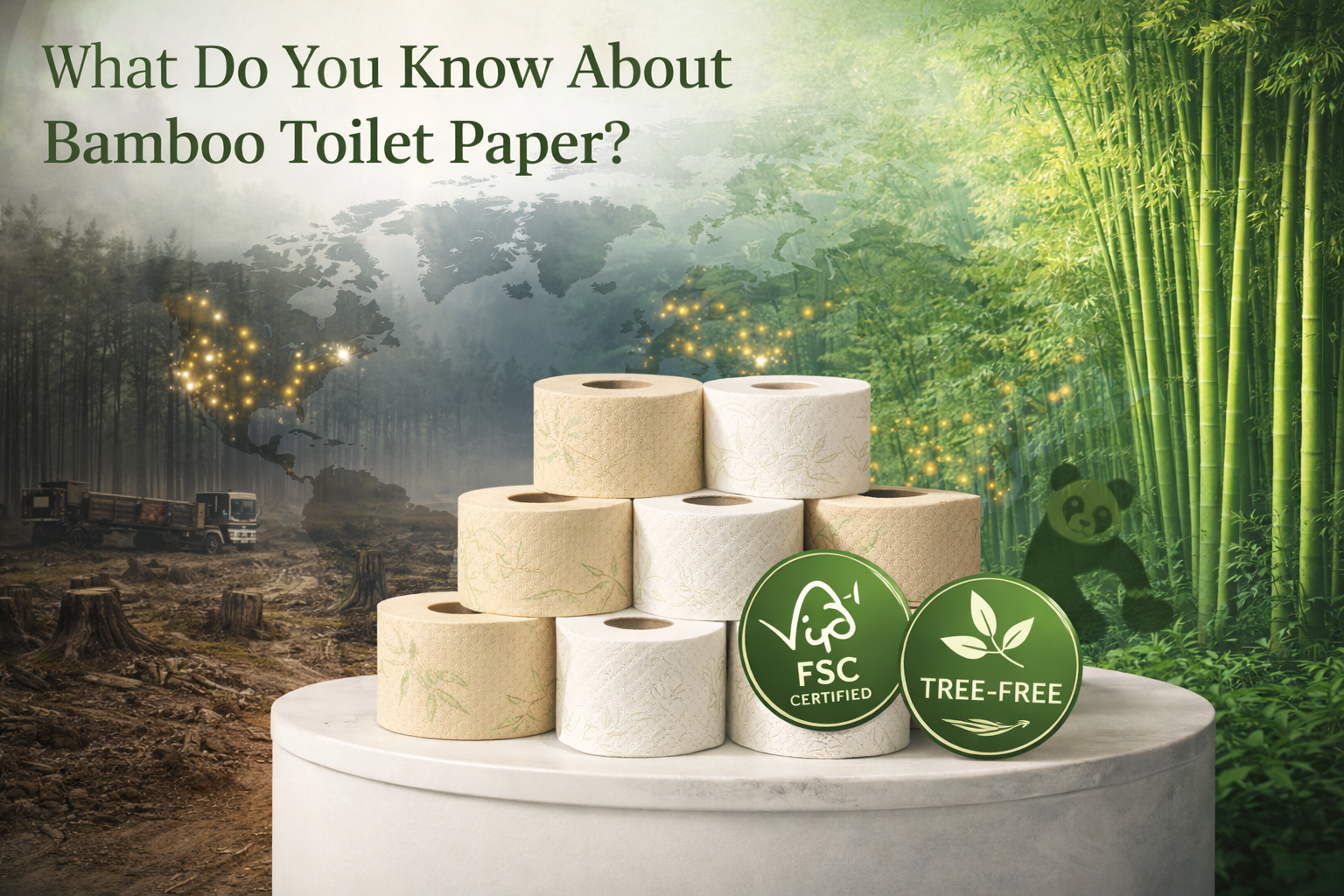
1. Introduction: Why Bamboo Toilet Paper Is Suddenly Everywhere
If you’ve searched for sustainable products in the past two years, you’ve probably seen bamboo toilet paper everywhere—from brands like Reel, Seek Bamboo, Cheeky Panda, and Bower Collective. These brands popularized bamboo TP through DTC subscriptions and influencer marketing.
But business buyers need to go deeper than consumer buzz. If you manage procurement for a hotel group, office portfolio, retail chain, or distribution network, you care about supply reliability, certifications, pricing stability, and ESG compliance. This guide answers “What do you know about bamboo toilet paper?” from a B2B perspective—so you can make fast, defensible decisions.
2. What Is Bamboo Toilet Paper, Really?
2.1 From Raw Fiber to Finished Roll
Bamboo toilet paper replaces tree pulp with fibers from fast‑growing bamboo stalks that mature in just 3–5 years—compared with 20–80 years for many tree species.
Manufacturing steps:
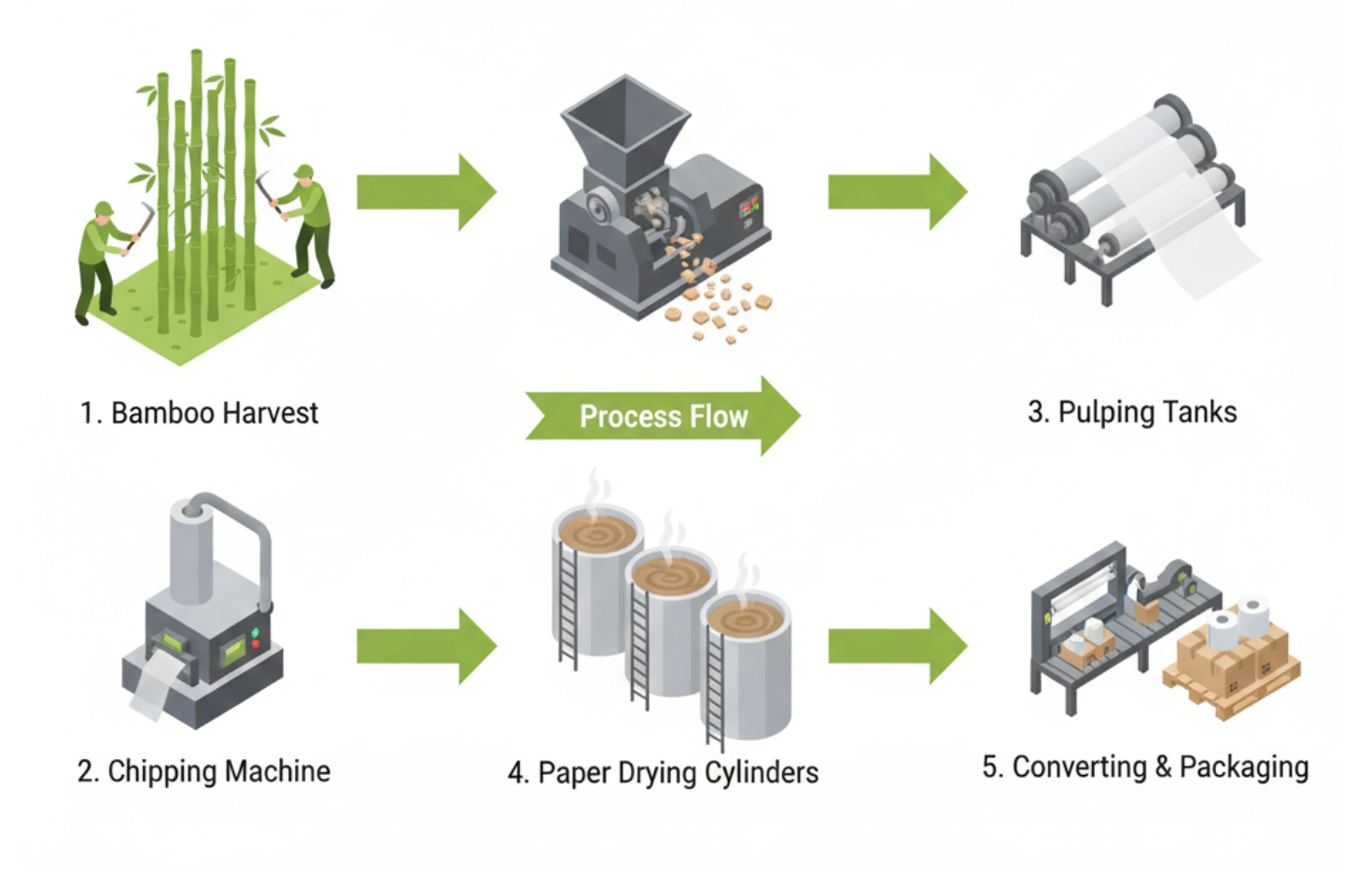
- Harvest bamboo
- Chip and cook into pulp
- Wash and filter
- Bleach (ECF/TCF) or keep unbleached
- Dry into parent rolls; convert and package for consumer or away‑from‑home formats
2.2 How It Differs from Wood‑Pulp and Recycled Paper
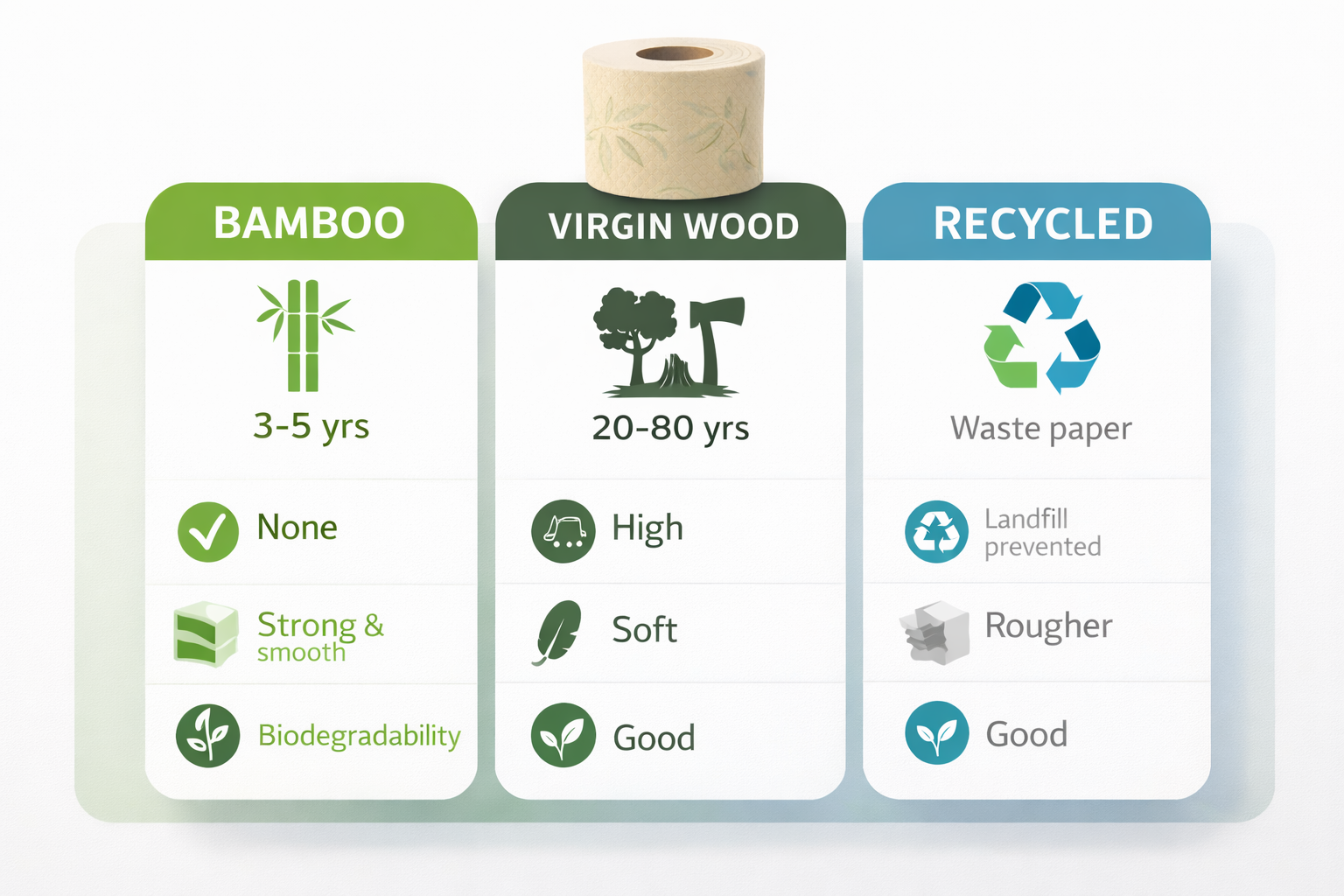
| Feature | Bamboo | Virgin Wood | Recycled Paper |
|---|---|---|---|
| Source | Fast‑growing grass (3–5 yrs) | Old‑growth or plantation trees | Post‑consumer paper waste |
| Forest impact | None (when responsibly sourced) | High (risk of deforestation) | Prevents landfill |
| User feel | Strong & smooth | Soft | Rougher |
| Biodegradability | Excellent | Good | Good |
Takeaway: Bamboo can preserve forests and biodiversity while offering strength and comfort comparable to premium wood‑pulp options.
3. Environmental Facts: Is Bamboo Toilet Paper Actually Better?
3.1 Growth Speed and Resource Efficiency
- Bamboo grows up to 20× faster than many tree species; some varieties can add ~30 cm per day.
- Stalks regenerate from the root system (no replanting), with low pesticide and fertilizer needs.
3.2 Bamboo vs Virgin vs Recycled — Carbon Snapshot
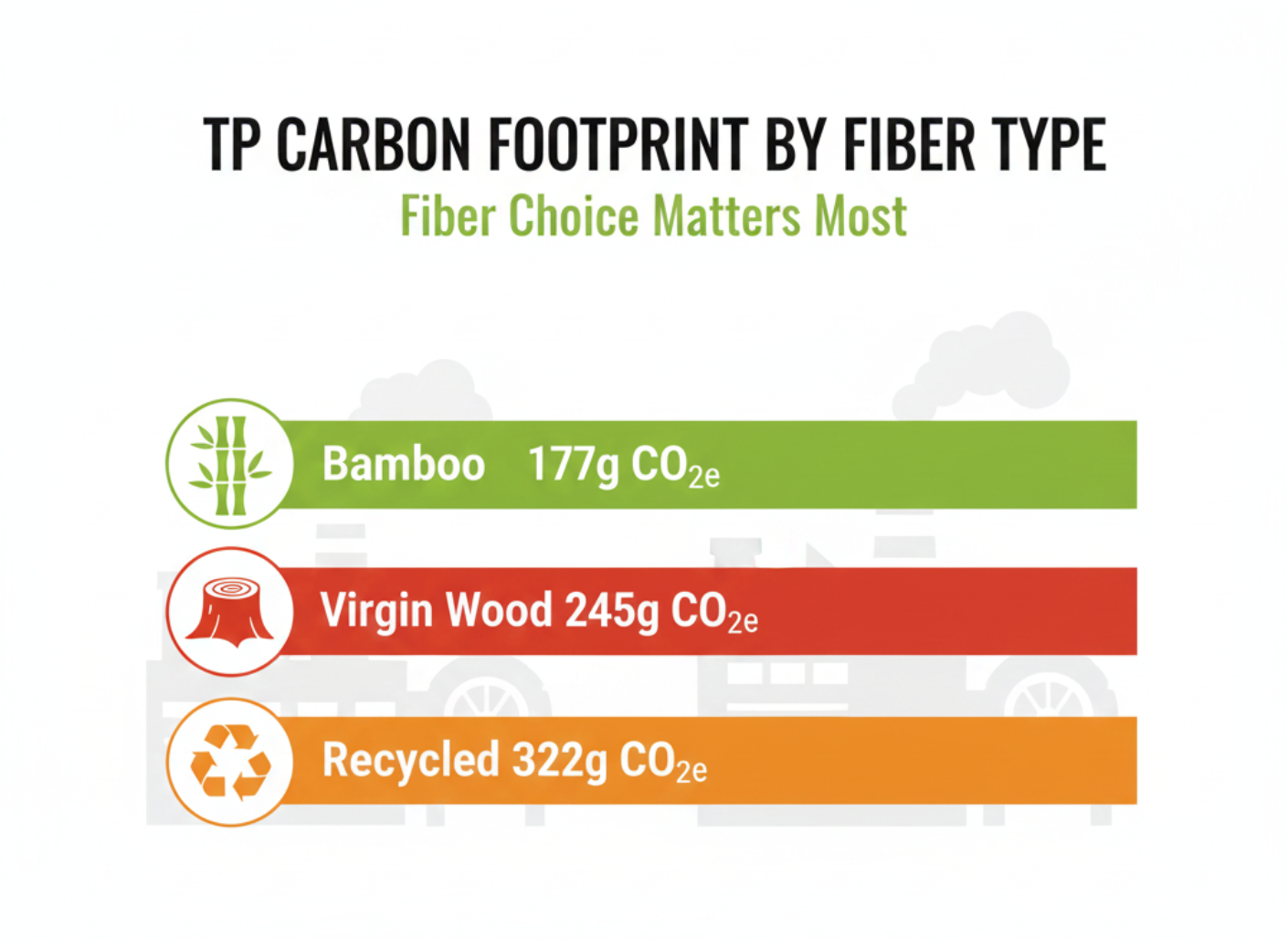
| Type | Approx. CO₂e per 140 g Roll* | Highlight |
|---|---|---|
| Bamboo | ~177 g | Typically the lowest footprint when mills are efficient |
| Virgin Wood | ~245 g | Highest emissions; drives tree‑to‑toilet loss |
| Recycled | ~322 g | Reuse advantage; energy mix and de‑inking can raise impact |
*Figures vary by mill energy, transport, bleaching, and waste‑water controls. Always request supplier LCA summaries for apples‑to‑apples comparison.
3.3 Water and Chemical Use
- Bamboo cultivation generally uses less water and fewer pesticides than intensive wood‑pulp plantations.
- Unbleached or TCF/ECF bleaching reduces chlorine‑related effluent and supports wastewater compliance.
Key insight: In most LCAs, fiber choice + pulping efficiency dominate overall emissions—more than shipping distance alone. Prioritize certified bamboo or high‑post‑consumer recycled content from modern, energy‑efficient mills.
4. Pros and Cons of Bamboo Toilet Paper
4.1 Key Advantages
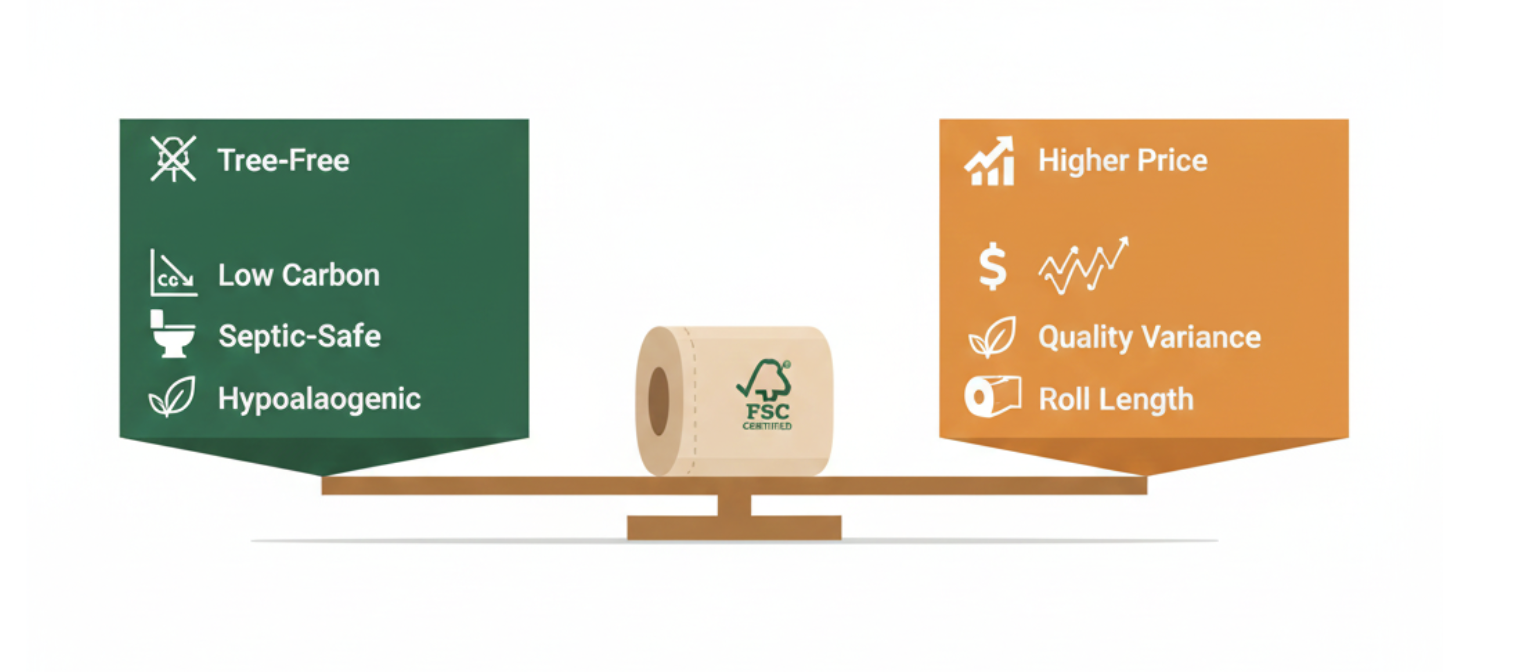
- Forest‑friendly: Avoids virgin‑forest logging
- Biodegradable & septic‑safe: Breaks down readily—ideal for facilities with sensitive plumbing, RV/marine, and remote septic systems
- Soft yet strong: Multi‑ply bamboo can match premium softness while maintaining wet/dry strength
- Hypoallergenic: Low‑lint, unscented, gentle on sensitive skin
4.2 Real‑World Drawbacks
- Higher unit price vs. supermarket wood‑pulp TP (often 30–50% more)
- Quality variance across brands (fiber mix, GSM, ply, embossing)
- Roll length differences in some consumer SKUs (watch sheet count and size)
4.3 Overlooked Business‑Level Benefits
- Higher wet strength → fewer sheets used, improving cost‑per‑use (a better metric than cost‑per‑roll)
- ESG credibility: Documented low‑impact fiber and chemistry support sustainability reporting and certifications
5. Bamboo vs Recycled vs Virgin: Choosing Smart for Your Business
Both high‑recycled and well‑made bamboo products outperform virgin forest TP on environmental impact.
Procurement mix strategy:
- Staff areas: Favor recycled to maximize waste‑reuse credits and cost control.
- Guest‑facing venues: Choose bamboo for superior experience, premium branding, and tree‑free storytelling.
Bottom line: Recycled maximizes reuse; bamboo scales performance and guest appeal. Keep both in your toolkit.
6. Performance: What Real Users and Reviews Say
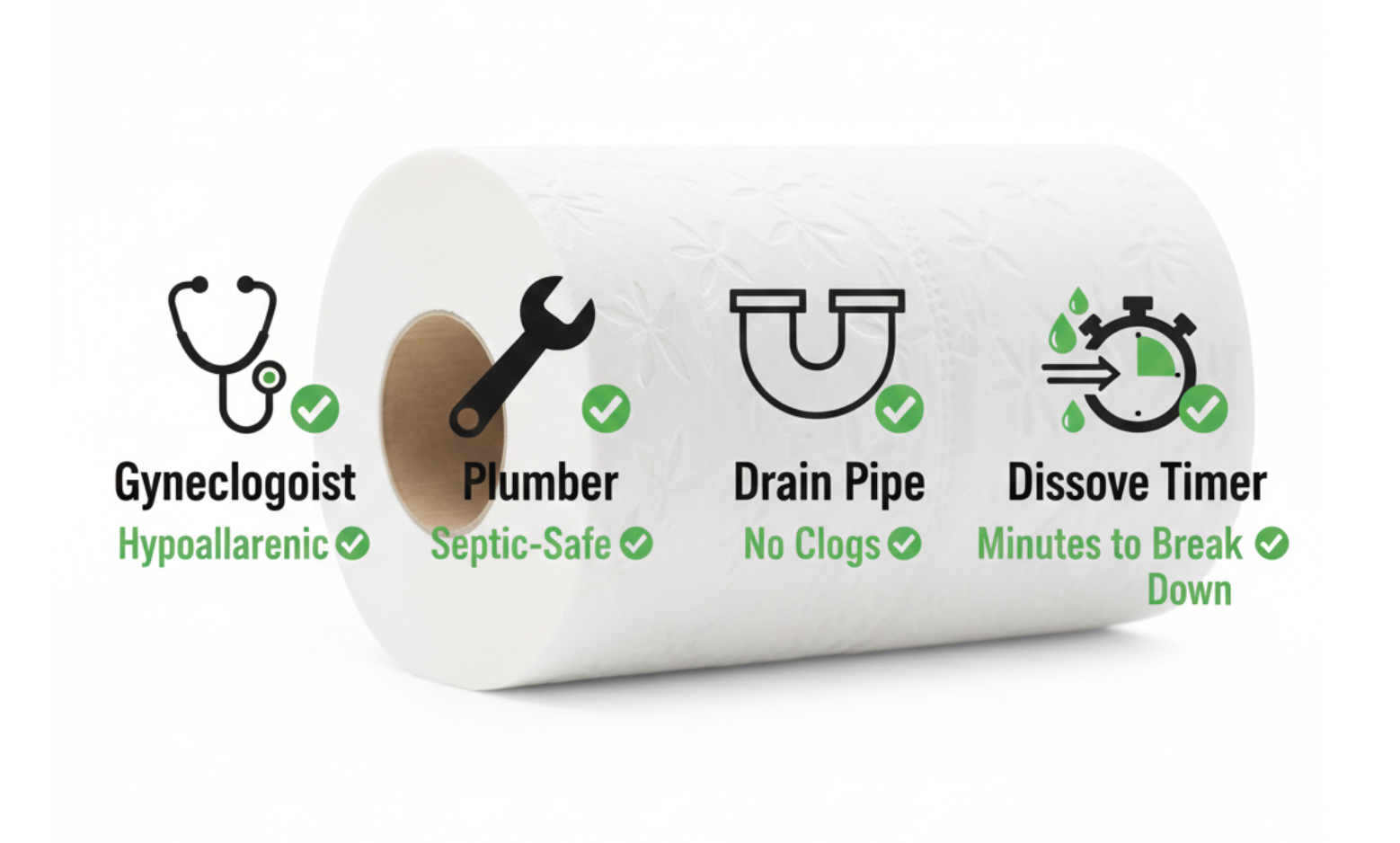
- Softness: Comfortable midpoint between recycled and ultra‑plush virgin paper—well‑suited to most commercial restrooms.
- Strength: “Soft yet sturdy”—long bamboo fibers support high wet/dry tensile strength, reducing over‑use.
- Drain safety: Properly made bamboo tissue disintegrates efficiently and is septic‑safe.
Pro tip for facility managers: Track sheets per use and clog calls during pilot swaps. Stronger bamboo often cuts total usage, narrowing or eliminating the unit‑price gap.
7. Greenwashing & Mislabeling: The Hidden Risk
Investigations have found some products labeled “100% bamboo” actually contain wood pulp. That creates compliance and reputational risks for resellers.
How to protect your brand:
- Demand FSC chain‑of‑custody and ISO 9001/14001 certificates
- Request independent fiber analysis or third‑party verification of bamboo content
- Buy factory‑direct where possible; avoid opaque trader chains
8. Beyond Homes: Bamboo Toilet Paper in B2B Settings
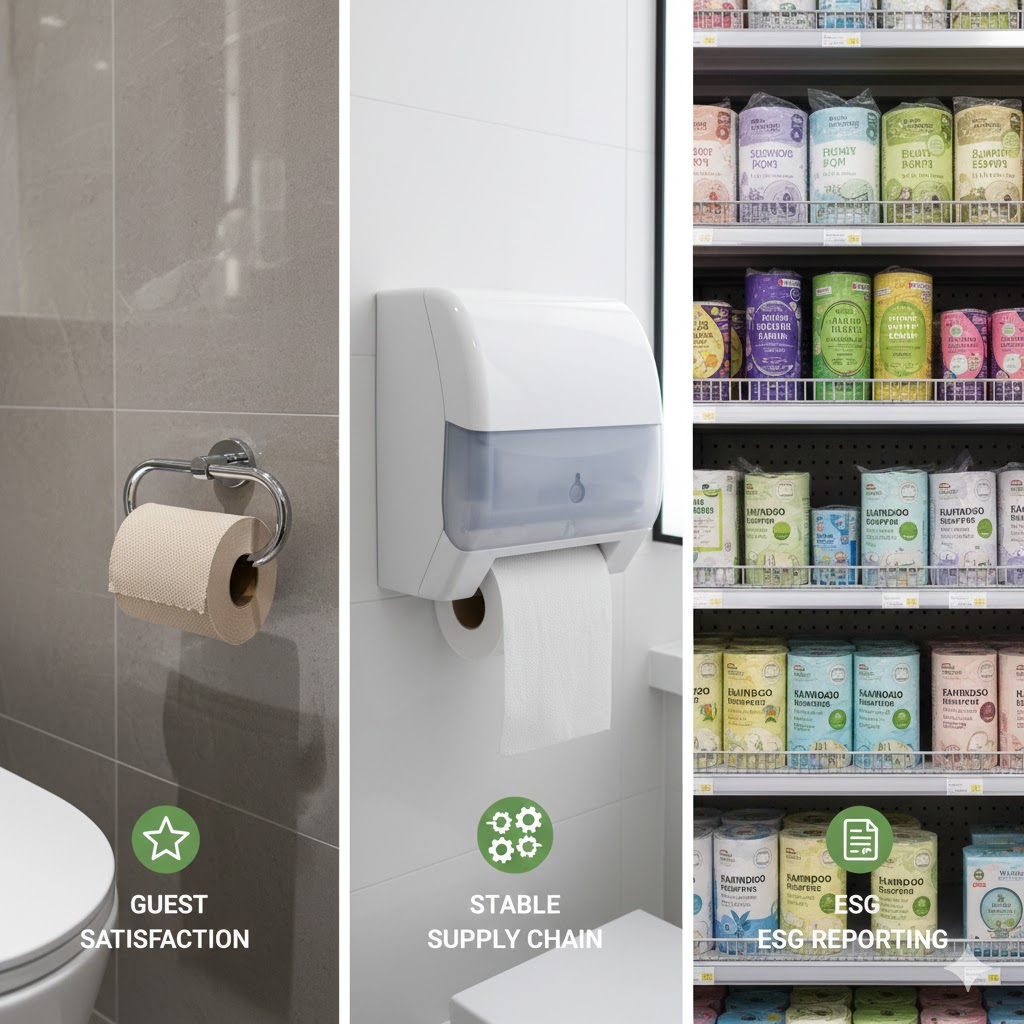
- Hotels & Cruises: Balance luxury feel with eco credentials; multi‑ply bamboo works for premium rooms and suites
- Airports & Offices: Specify jumbo/AFH formats, stable lead times, and verifiable ESG documentation
- Distributors: Prioritize consistent specs (ply, GSM, sheet size), carton efficiency, and packaging flexibility (retail vs AFH)
PANABAM Advantage (Factory‑Direct, Sichuan)
- Near‑source location (Chengdu) → shorter raw‑material transport
- 20+ automated lines, 300+ containers/month capacity → scalable supply
- Full documentation: FSC (bamboo pulp), ISO 9001/14001, compostability & septic‑safety reports, chemical safety testing
- OEM/ODM capability across toilet paper, facial tissue, paper towels, jumbo rolls, and napkins
- Plastic‑free packaging options for retail and hospitality hero SKUs
9. What You Should Know as a Distributor or Buyer
Your 10‑Point Due‑Diligence Checklist
- Verify genuine 100% bamboo (third‑party fiber test)
- Collect FSC / ISO / chemical‑safety documentation
- Request LCA or carbon summaries (scope and assumptions disclosed)
- Confirm consistency in ply, GSM, sheet size, and roll length
- Ask for unbleached or low‑chemistry options where acceptable
- Ensure septic‑safe validation for target markets
- Check scalability for peak/seasonal volumes
- Specify plastic‑free packaging where feasible
- Confirm OEM/ODM with multilingual packaging templates
- Lock a predictable FOB + freight cost model (with buffer for surges)
Common Pitfalls
- Optimizing for unit price per roll instead of cost per meter + usage rate
- Accepting “100% bamboo” claims without documentation
- Skipping capacity vetting before long‑term contracts
10. FAQ — Real Questions Buyers Ask
What are the benefits of using bamboo toilet paper? Tree‑free, lower‑carbon, soft yet strong, naturally hypoallergenic.
What is the downside of bamboo toilet paper? Slightly higher price and variability across brands—mitigated by spec‑based sourcing and pilots.
Do gynecologists recommend bamboo toilet paper? Yes—unscented, chlorine‑free bamboo tissue is a safe choice for sensitive skin.
Do plumbers recommend bamboo toilet paper? Yes—balanced strength and disintegration; avoid ultra‑thick quilted products that can clog systems.
Does bamboo toilet paper block drains? No, quality products are biodegradable and septic‑safe.
How long does it take bamboo toilet paper to dissolve? Typically within minutes once submerged; always verify with supplier disintegration tests.
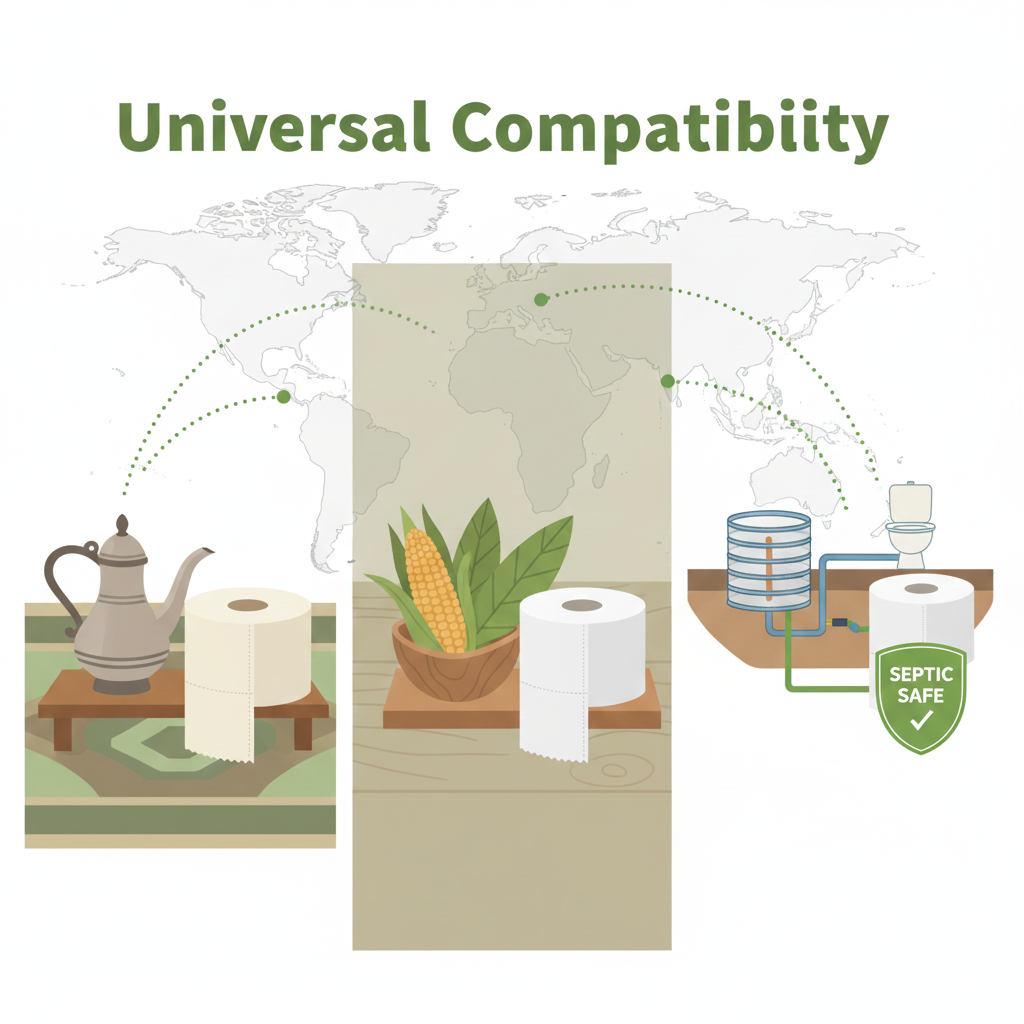
Is 100% bamboo toilet paper septic‑safe? Yes—when additive‑free and backed by relevant test reports.
What do Muslims use instead of toilet paper? Water cleansing (istinja), followed by minimal tissue—bamboo works well as a companion.
What do Amish use instead of toilet paper? Historically corncobs/leaves; modern Amish communities use basic tissue—bamboo aligns with simple, natural preferences.
What is the safest toilet paper to use? Unbleached or ECF bamboo and high‑post‑consumer recycled products with clean‑chemistry proof.
11. From Knowing Bamboo TP to Stocking the Right One
If you’re a retailer, distributor, or hospitality buyer, bamboo toilet paper is both a sustainability win and a business differentiator.
Request free PANABAM samples and full documentation:
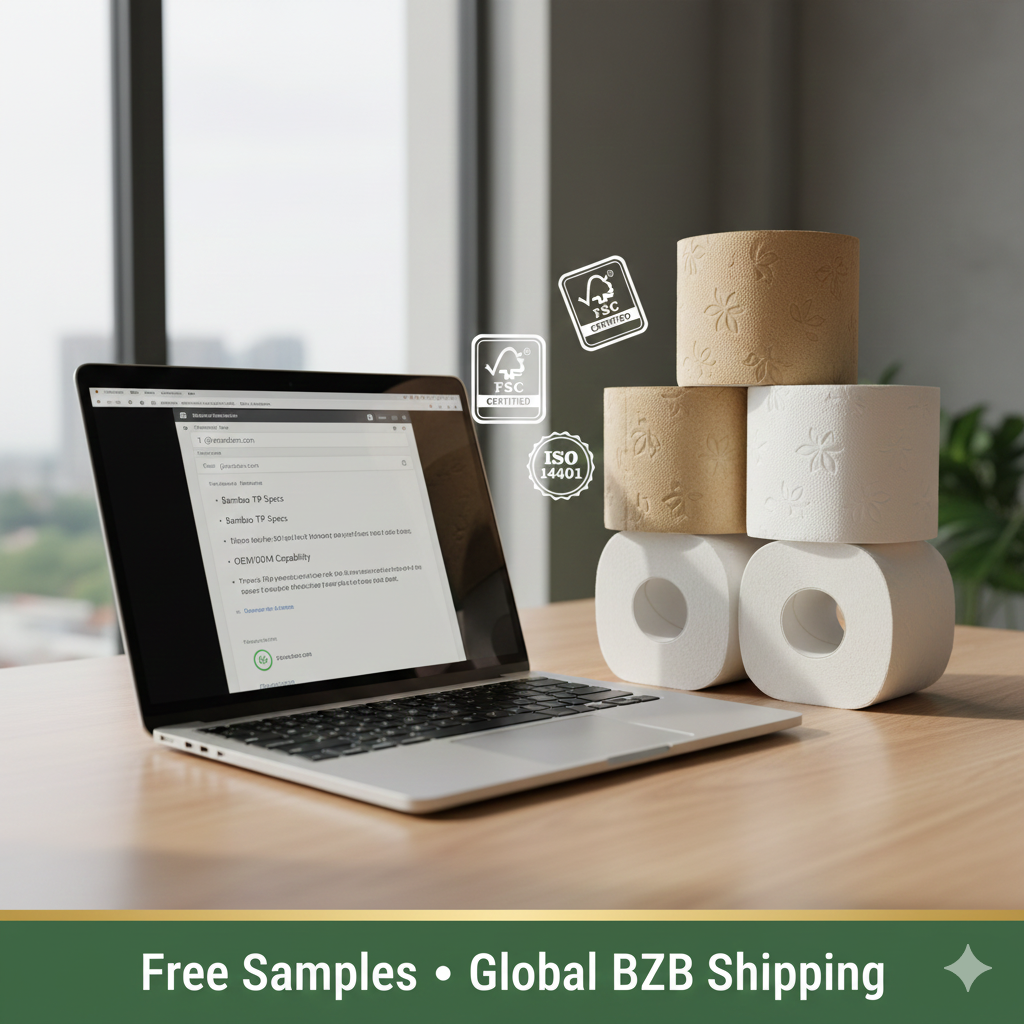
- FSC, ISO, compostability, and septic‑safety reports
- Product specs and custom OEM designs
Email: info@panabam.com
Editor’s note: Data points in this guide summarize common findings across brand LCAs and public sustainability claims; always validate with current certificates, mill disclosures, and third‑party testing for your specific SKUs and markets.