


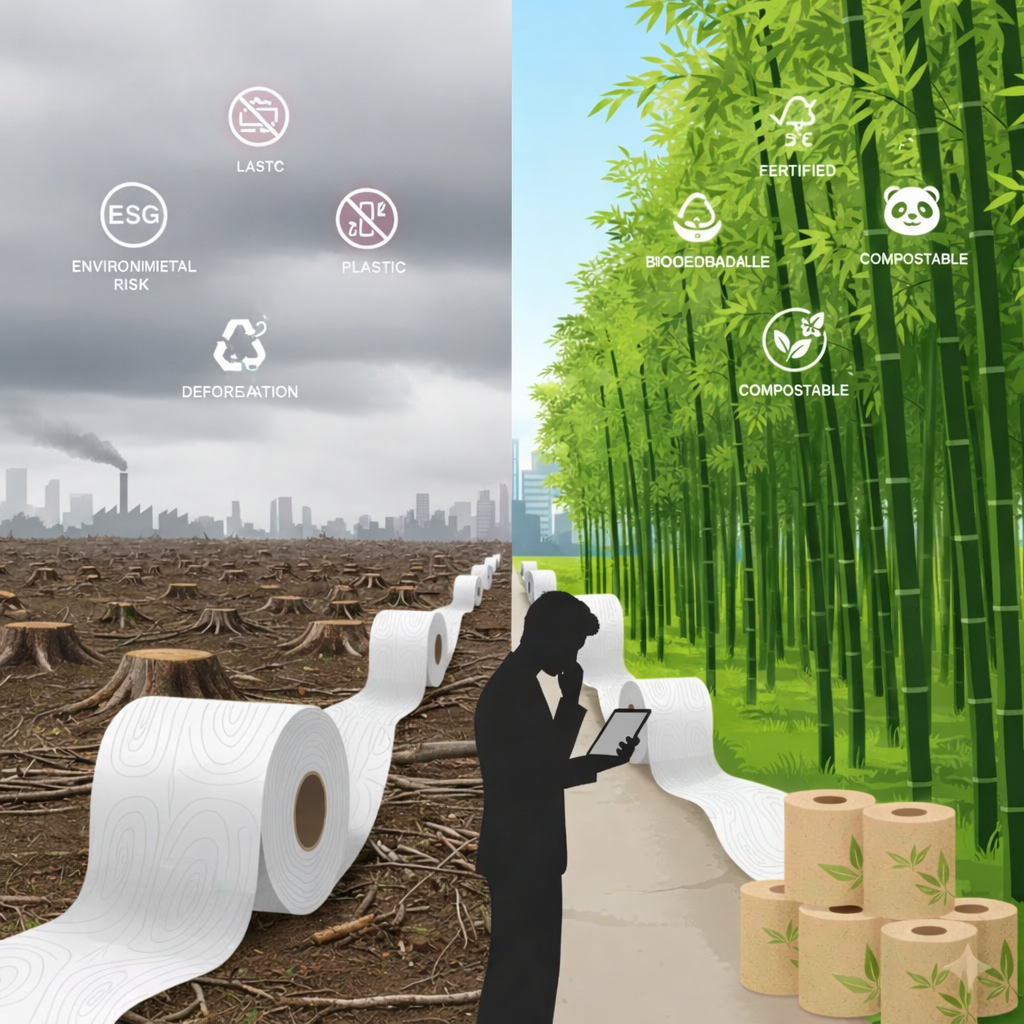
Most toilet paper destroys forests. B2B buyers need better options that don’t risk compliance or customer trust.
Bamboo toilet paper is sustainable when made from verified bamboo, processed safely, and backed by certifications.
Is bamboo truly low-risk and sustainable? Let’s find out.
1. What Does “Sustainable Toilet Paper” Actually Mean?
Green claims are everywhere. But what makes toilet paper truly sustainable?
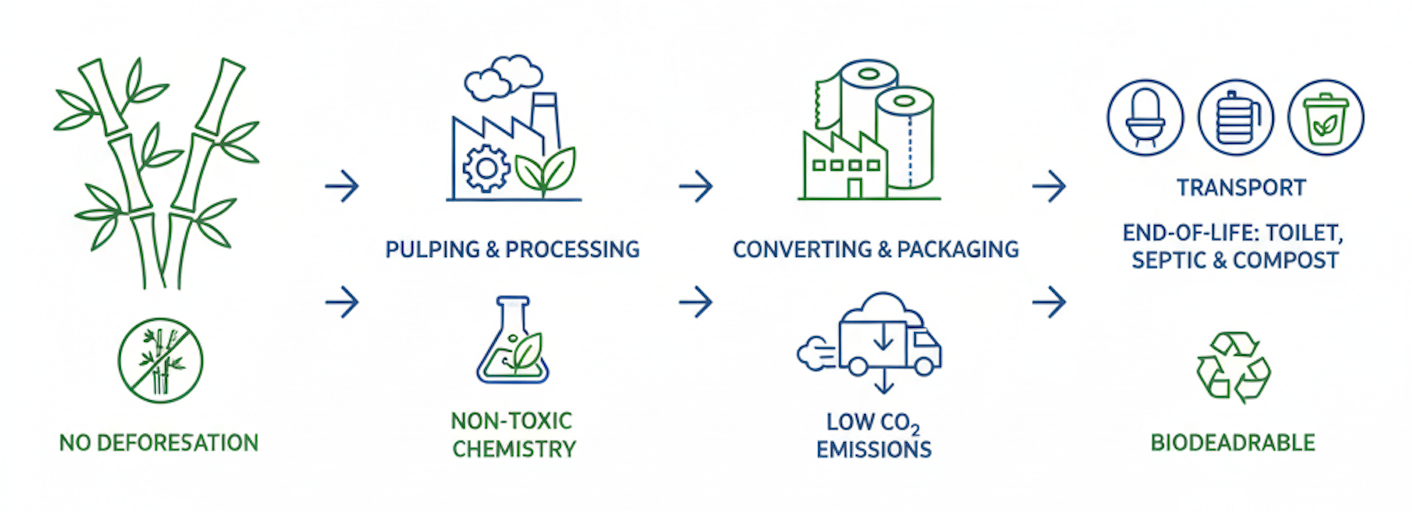
Sustainable toilet paper avoids deforestation, reduces emissions, and is safe for health and waste systems.
1.1 Key Sustainability Criteria
| Criteria | What to Look For |
|---|---|
| Raw Material | Tree-free fibers like bamboo, not virgin forest pulp |
| Climate Impact | Low emissions from field to factory |
| Chemical Use | No chlorine, BPA, formaldehyde, PFAS, or harsh fragrances |
| End-of-Life | Biodegradable, compostable, septic-safe |
| Certifications | FSC, ISO, compostability reports for trust and traceability |
1.2 Bamboo Toilet Paper in This Framework
Bamboo generally scores well on renewability and low emissions. But sustainability depends on how it’s grown, processed, and certified. Buyers must verify supplier practices and documentation.
2. Is Bamboo Really Better Than Wood-Based Toilet Paper?
Virgin wood tissue still dominates, but is it sustainable?
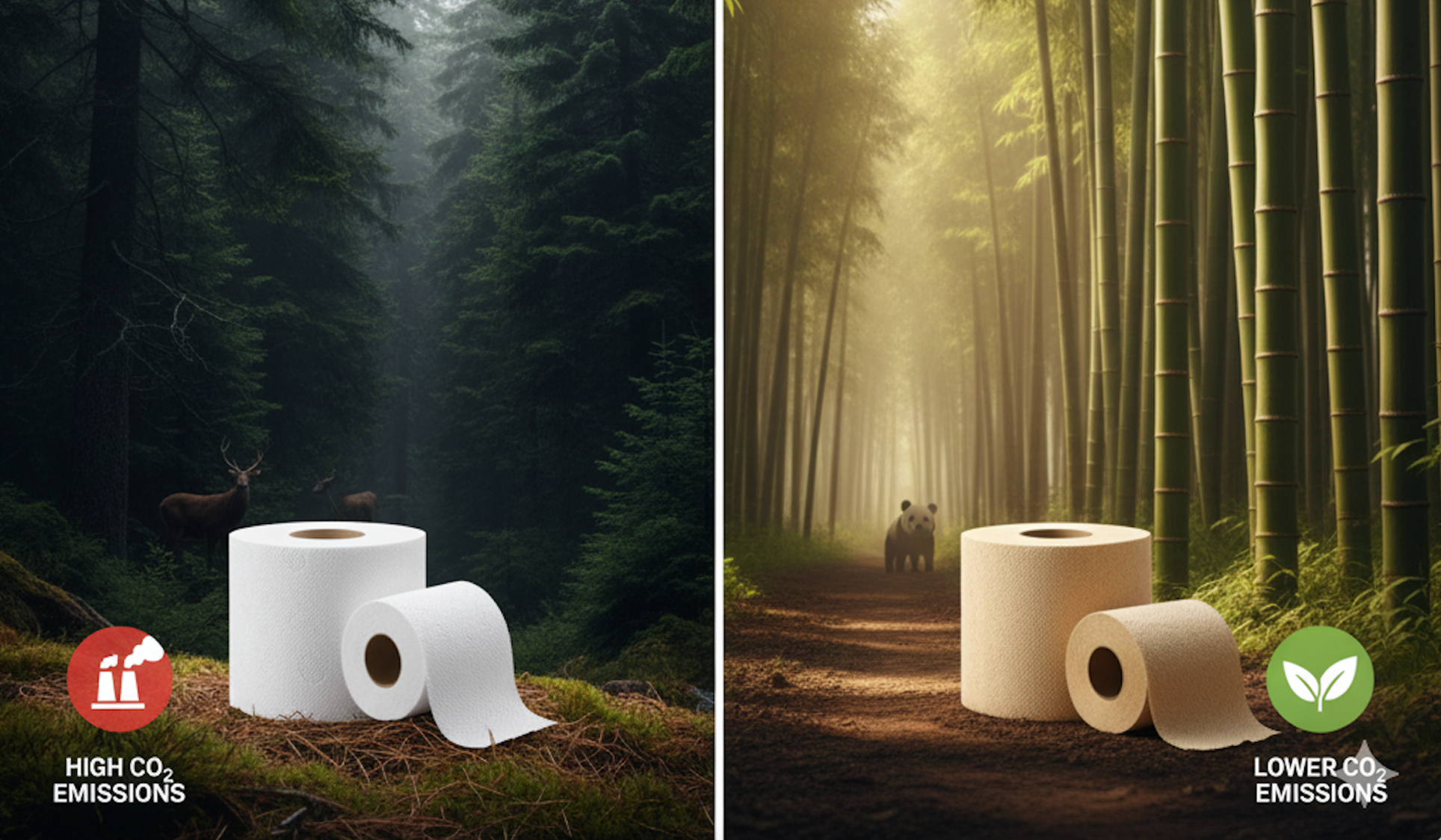
Bamboo grows faster and avoids destroying carbon-rich forests for single-use paper.
2.1 Bamboo vs Forest Trees: Growth and Land Use
| Factor | Bamboo Toilet Paper | Virgin Forest Pulp |
|---|---|---|
| Growth Rate | 3–5 years | 20–80+ years |
| Replanting Needed? | No (regrows from roots) | Yes |
| Land Use Efficiency | High | Low |
| Biodiversity Impact | Low (when responsibly grown) | High in old-growth areas |
2.2 Carbon and Emissions
Bamboo toilet paper can produce up to 30% fewer emissions than virgin-forest pulp. However, benefits depend on sustainable plantation and pulping practices. Poor land use or dirty energy can reduce the advantage.
2.3 Ending the “Tree-to-Toilet” Pipeline
Many big tissue brands still use virgin fiber from boreal forests. Bamboo helps break this pattern—if done responsibly. It’s not just about being tree-free. It’s about stopping forest destruction for disposable tissue.
3. How Bamboo Toilet Paper Is Made – and Where Impacts Occur
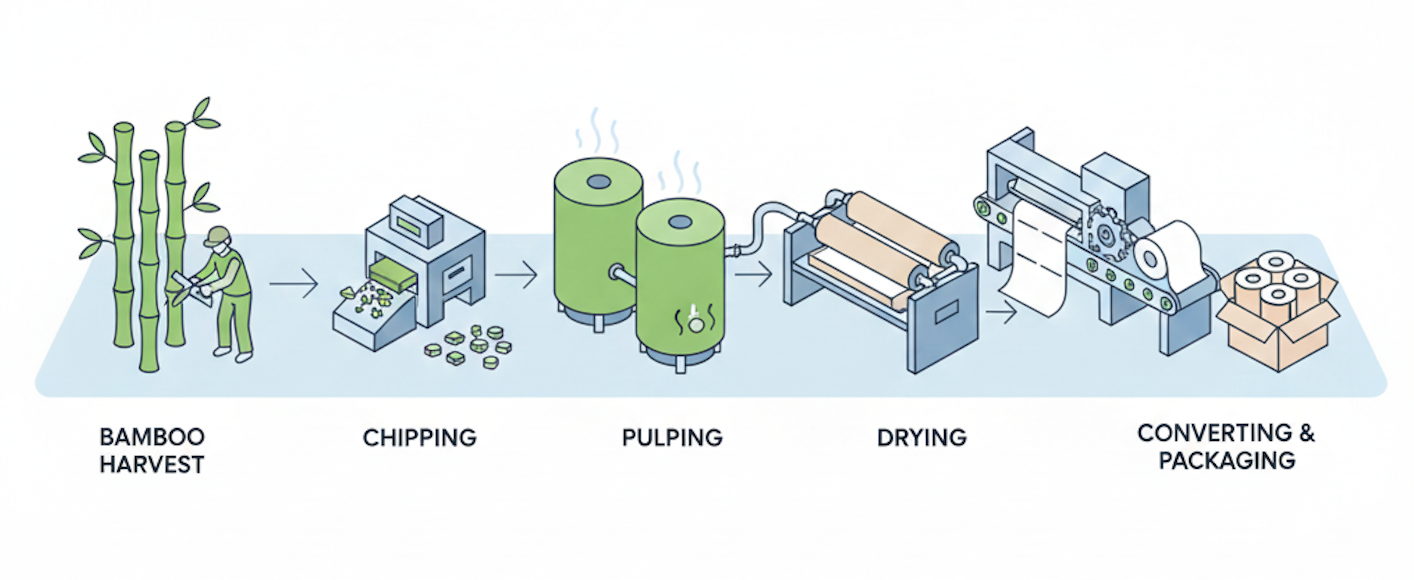
3.1 From Bamboo to Toilet Roll
The process:
- Harvest bamboo
- Chip and separate fibers
- Cook into pulp
- (Optionally) bleach
- Dry into parent rolls
- Convert into toilet tissue, facial tissue or jumbo rolls
3.2 Bleaching and Chemical Safety
Some bamboo paper is Elemental-Chlorine-Free (ECF) or Totally-Chlorine-Free (TCF). Others skip bleaching completely.
Avoid:
- Chlorine compounds
- BPA
- Formaldehyde
- PFAS
- Synthetic perfumes
These affect both user health and wastewater quality.
3.3 Compostability and Septic Safety
Bamboo tissue is plant-based and breaks down easily. When properly made, it’s:
- Biodegradable
- Compostable
- Safe for septic tanks, RVs, and marine toilets
3.4 Do Doctors Recommend Bamboo Toilet Paper?
Yes—if it’s:
- Unscented
- Dye-free
- Chlorine-free
- Soft, hypoallergenic, and low-lint
High-quality bamboo tissue aligns with general gynecological advice for intimate care. But users with specific conditions should follow medical guidance.
4. Does Bamboo Toilet Paper Actually Work?
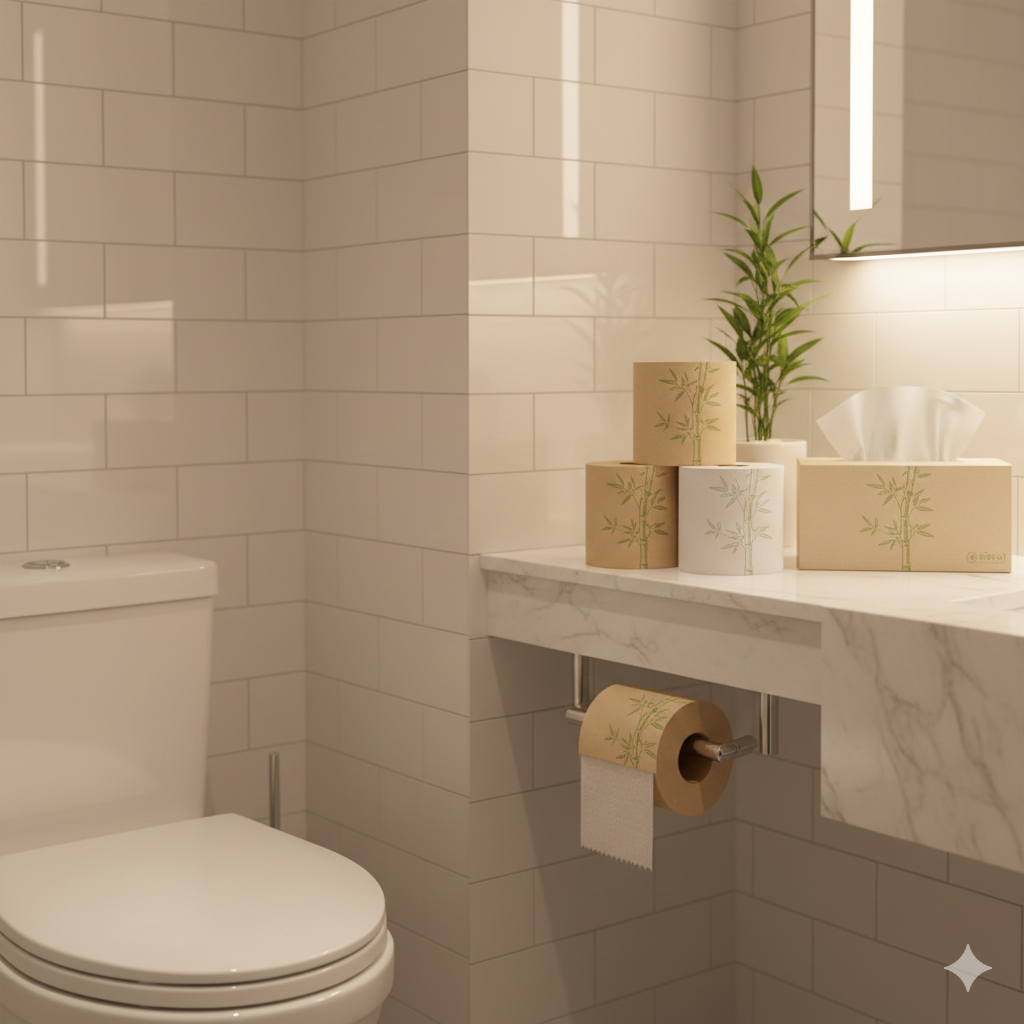
4.1 Strength and Sheet Efficiency
Bamboo fibers are long and strong. This gives:
- Good dry strength (less tearing)
- Wet strength (holds together better)
- Fewer sheets needed per use
4.2 Softness and Feel
Modern converting lines use embossing and ply layering to match the softness of premium wood-pulp tissues. This matters for:
- Hotels and spas
- Office washrooms
- Premium retail brands
4.3 Skin Sensitivity
Bamboo TP avoids:
- Harsh fragrances
- Excess lint
- Brightening agents
It’s ideal for sensitive skin, baby use, and healthcare settings.
5. Pros and Cons of Bamboo Toilet Paper
5.1 Main Benefits
- Tree-free and rapidly renewable
- Lower lifecycle emissions
- Biodegradable and often plastic-free packaged
- Soft, strong, and reduces overuse
5.2 Potential Drawbacks
- Unit price is usually higher than conventional TP
- Some brands are rough, thin or short (few sheets per roll)
- Most is produced in Asia—transport emissions must be managed
5.3 Bidet vs Bamboo
Bidets use less water than making TP. But pairing a bidet with bamboo tissue cuts total paper use while keeping the fiber source sustainable.
6. Bamboo vs Recycled vs Virgin TP
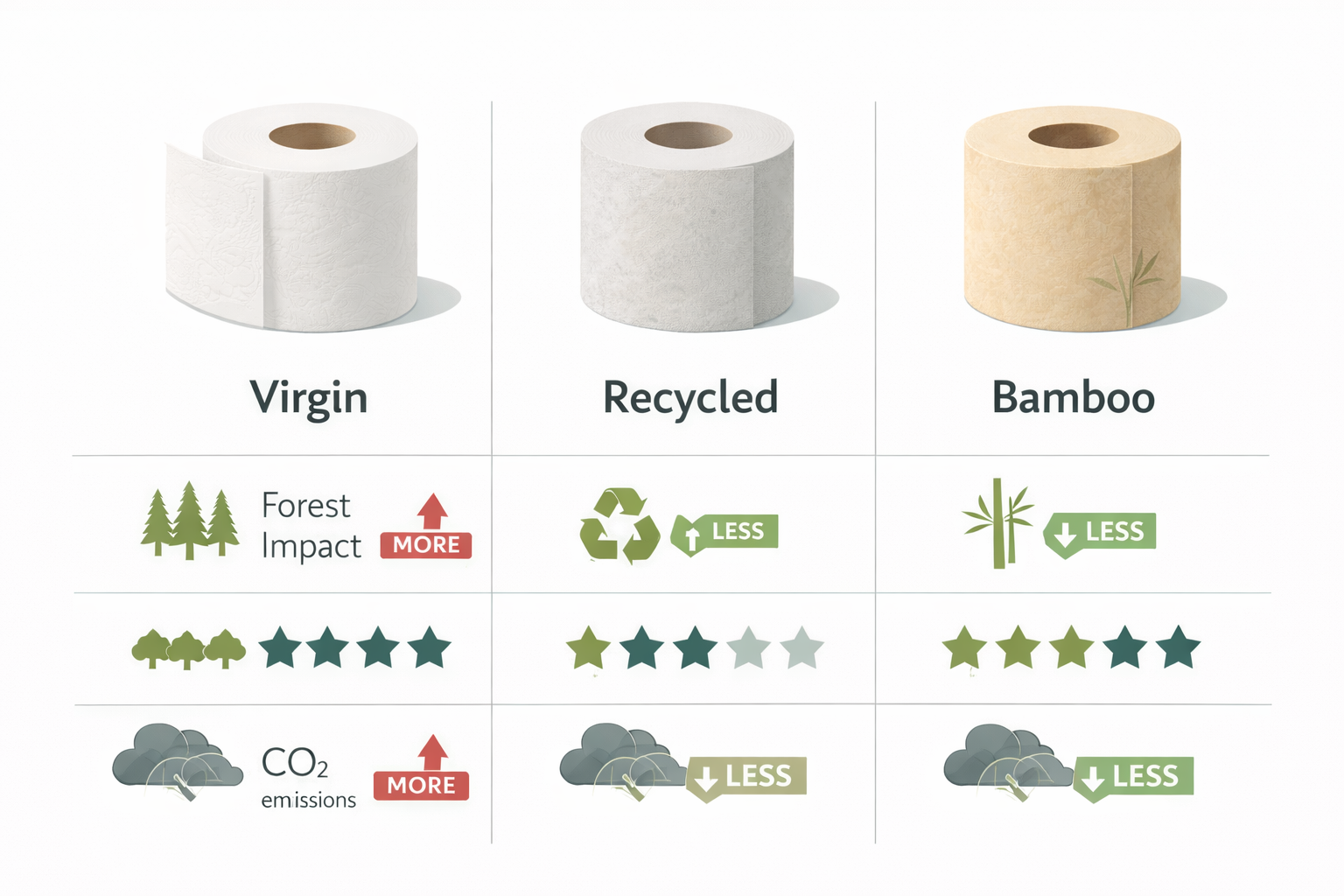
6.1 Bamboo vs Virgin Wood TP
- Bamboo avoids deforestation of old-growth forests
- Lower climate and biodiversity impact
- Virgin brands often lack recycled content or fiber alternatives
6.2 Bamboo vs Recycled TP
| Feature | Recycled TP | Bamboo TP |
|---|---|---|
| Tree-Free | ✅ | ✅ |
| Fiber Reuse | ✅ (waste paper) | ❌ (new fiber) |
| Softness | Often lower | Premium, soft |
| Premium Positioning | Harder | Ideal for B2B retail |
6.3 What’s Better?
Both are better than virgin TP. Use case determines best choice:
- Back-of-house: Recycled
- Guest-facing: Bamboo
Some brands use both to balance performance and ESG.
6.4 Most Eco-Friendly Option?
Top choices are:
- High-post-consumer recycled TP
- Certified bamboo TP with low-impact processing
Avoid virgin TP from intact forests with no alternative fiber.
7. PANABAM’s Approach to Sustainability
7.1 Bamboo from the Source
PANABAM is located in Sichuan, a key bamboo region in China. That means short supply chains and local sourcing.
7.2 Capacity and Control
- 20+ automated lines
- 300+ containers/month
- ISO systems for quality and consistency
7.3 Certified and Compliant
- FSC bamboo pulp
- ISO 9001, ISO 14001
- Compostability reports
- Safety testing for BPA, chlorine, PFAS
7.4 Custom Solutions
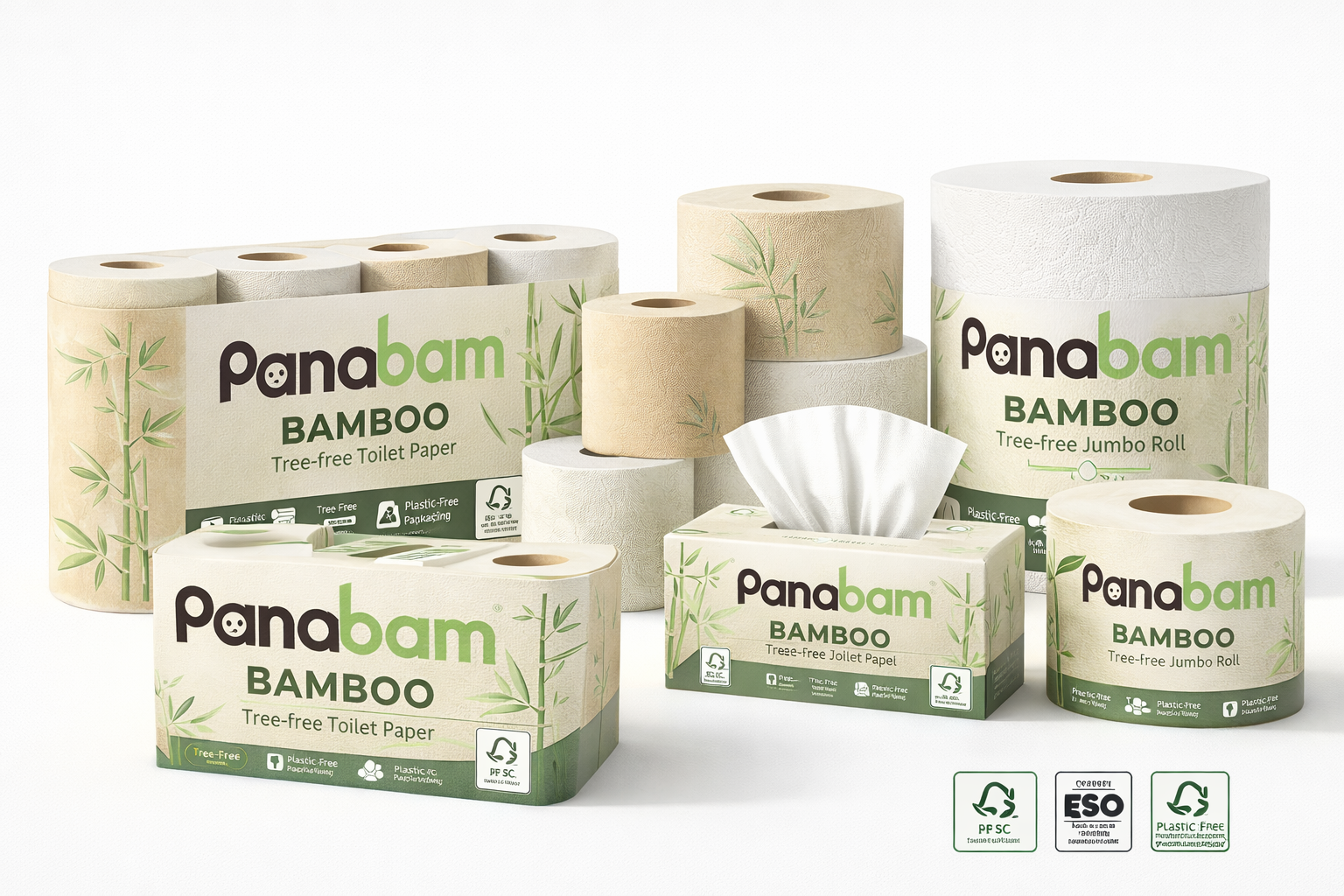
- Bamboo TP, facial tissue, paper towels, jumbo rolls
- OEM/ODM: multilingual packaging, custom embossing, ply count
7.5 Smart Logistics
- Plastic-free packaging
- Export to USA, Europe, Japan, Australia
- Efficient container shipping reduces emissions per roll
8. How B2B Buyers Should Evaluate Suppliers
8.1 Sustainability Checklist
Request:
- FSC and ISO docs
- Compostability reports
- Septic-safety test data
- Chemical safety reports
8.2 Commercial Questions
- Cost-per-use (not just cost-per-roll)
- Lead times and production capacity
- Private label and packaging support
8.3 Match to Use Case
- Hotels, airlines: Premium bamboo rolls
- Offices, airports: Jumbo rolls for ESG reporting
- Retail/e-comm: Plastic-free, tree-free hero SKUs
9. FAQ: Questions People Ask About Bamboo Toilet Paper
1. Are bamboo toilet papers sustainable?
Yes, when made from responsibly grown bamboo, pulped efficiently, processed with safer chemistry and backed by strong certifications, bamboo toilet papers are significantly more sustainable than virgin forest‑fiber tissue.
2. What is the downside of bamboo toilet paper?
Higher unit price, variability between brands and long‑distance shipping from Asia are common drawbacks, but a strong, large‑scale supplier and efficient logistics can mitigate these issues.
3. What is better for the environment, bamboo or recycled toilet paper?
Both are much better than virgin forest‑fiber TP; recycled excels in reuse, bamboo excels in tree‑free premium performance and guest perception.
4. Do gynecologists recommend bamboo toilet paper?
Many gynecologists favor soft, unscented, dye‑free, chlorine‑free tissue; high‑quality bamboo TP typically matches these criteria, but individuals should follow personal medical advice.
5. Which is the most environmentally friendly toilet paper?
In most cases, the top choices are high‑post‑consumer recycled and responsibly sourced bamboo toilet papers with low‑impact chemistry and plastic‑free packaging.
6. Is bamboo toilet paper safe for septic tanks?
Yes, properly made bamboo toilet paper dissolves in water and is generally safe for septic systems and sewers when used as directed.
10. Conclusion & Call to Action
Bamboo toilet paper, when made right, is a credible and scalable alternative to virgin TP. PANABAM delivers proven, certified solutions for global B2B buyers.
👉 Contact info@panabam.com for samples, data sheets, and wholesale pricing.