


Sugarcane (bagasse) and bamboo are two of the most popular eco-friendly materials for disposable food packaging—but for B2B buyers, the real difference shows up in bulk orders: performance consistency, PFAS/coating risk, and how well products hold up with hot, oily foods. In this buyer guide, we compare bamboo fiber vs sugarcane bagasse across compliance documents, compostability, and foodservice performance tests—so you can choose the right option for restaurants, catering, retail, or distribution.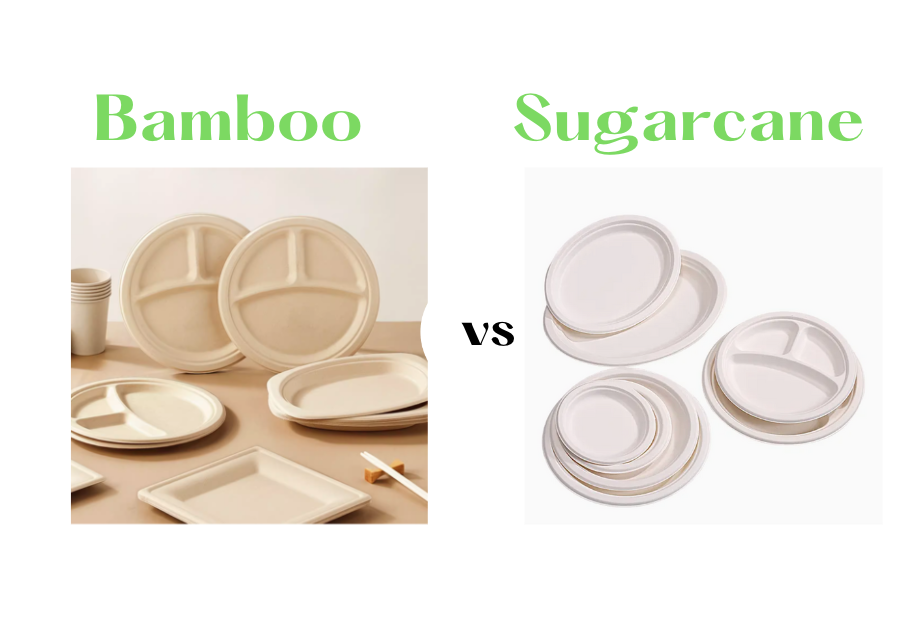
✅ Quick Verdict (for buyers):
• Choose sugarcane (bagasse) for general disposable use where pricing is the priority.
• Choose bamboo fiber for foodservice performance (hot & oily foods) and PFAS-free compliance-focused sourcing.
Bamboo vs Sugarcane: Quick Comparison Table
| Factor | Sugarcane (Bagasse) | Bamboo Fiber |
|---|---|---|
| Strength & rigidity | Medium (varies) | Higher & more stable |
| Heat resistance | Can soften under heavy loads | Better for hot foods |
| Oil resistance | Often depends on coating | Naturally stronger (PFAS-free option) |
| Odor / taste | Sometimes noticeable | Usually more neutral |
| Compostability | Compostable (verify coatings) | Compostable & plastic-free |
| Best for | parties / general use | catering / restaurants / premium |
Need PFAS-free plates that won’t collapse under heat & oil?
Get wholesale pricing, MOQ & lead time, plus compliance documents (FDA / LFGB / SGS).
Low MOQ • Fast delivery • Plastic-free • PFAS-free | Prefer email? info@panabam.com
Buyer Guide: Coatings, PFAS Risk & Compostability (Bagasse vs Bamboo)
If you are sourcing for restaurants, catering, events, retail, or distribution, the right question is not only “which material is greener”, but whether the product can deliver verified PFAS-free compliance, stable performance, and consistent bulk quality.
Why grease resistance varies between suppliers
Even within the same material (bagasse or bamboo), grease/leak resistance can vary based on molding density, thickness consistency, product design, fiber blend, and whether any barrier treatment is used to improve oil resistance.
PFAS-free: don’t rely on marketing—verify with third-party reports
- Request a recent third-party PFAS test report for the exact SKU you plan to order.
- Ask for a material declaration confirming no fluorinated grease barrier is applied.
- Match reports to production (traceability by lot/batch) rather than a random sample.
Copy-paste RFQ line:
“Please provide a recent third-party PFAS test report for this exact SKU, and confirm whether any grease barrier/coating is applied. The report should be traceable to our production batch.”
Compostability: what affects real-world breakdown time
Breakdown time depends on thickness/GSM, any barrier treatment, and composting conditions (industrial vs home). If you plan to claim compostability in your market, request certificates and confirm which SKUs are covered.
Buyer Guide: Foodservice Performance Tests (Hot Oil / Leak / Heat)
Before scaling to bulk orders, run simple foodservice-style tests on the exact SKU you plan to sell.
Hot oil / saucy food test (30–60 minutes)
- Add hot, oily food (fried items, BBQ, curry) and check at 30 and 60 minutes.
- Pass criteria: no soggy collapse, no base seepage, rim remains stable when lifted.
Handling test (real operations)
- Lift test: one-hand lift from the rim with a full portion.
- Cut test: knife/fork use—check tearing or pulping.
- Stacking test: stack 10–20 pieces—check warping/sticking.
Heat claims (microwave / oven): verify with supplier testing
Heat performance varies by SKU, thickness, and any barrier treatment. Confirm intended use and request supporting test data before making microwave/oven claims.
What to lock in on your PO (to avoid bulk surprises)
- Thickness/GSM (with tolerance)
- Weight per piece (practical indicator of density/strength)
- Packaging spec (inner pack, carton qty, carton size)
- Barrier treatment confirmation (type + PFAS-free compliance)
Understanding Bamboo Fiber Pulp vs Sugarcane Bagasse Pulp
Bamboo fiber pulp and sugarcane bagasse pulp are both plant-based materials commonly used for molded disposable tableware. They are often grouped together as “eco-friendly alternatives,” but they can perform differently in real foodservice use. The key difference for buyers is rigidity, heat/oil resistance, and consistency across batches.
Bamboo Fiber Pulp (What it is & best use)
- Made from: bamboo fiber processed into pulp and molded into plates, bowls, and containers.
- Best for: restaurants, catering, and premium foodservice where sturdiness matters.
- Performance: typically more rigid and stable, especially for hot & oily foods.
- Compliance focus: can be produced as PFAS-free; buyers should still request test reports for verification.
- Cost: often higher than bagasse due to fiber processing and quality standards.
Sugarcane Bagasse Pulp (What it is & best use)
- Made from: bagasse (the fibrous residue left after extracting sugarcane juice).
- Best for: general disposable use—parties, quick-service, and cost-sensitive programs.
- Performance: widely available and cost-effective, but rigidity and oil resistance can vary by molding quality and thickness.
- Compliance focus: some products may use coatings to improve oil resistance—request PFAS-related compliance documents if required in your market.
- Cost: usually lower landed cost for high-volume sourcing.
30-second buyer checklist (before bulk ordering)
- Hot & oily food test: does it soften, warp, or leak under real meals?
- Rigidity: can it hold a full serving without bending?
- Odor neutrality: no noticeable smell or taste transfer.
- PFAS-free proof: ask for third-party test reports or supplier compliance pack.
- Consistency: confirm thickness/weight specs and batch stability.
Key Differences Between Bamboo and Sugarcane?
Growth and Sustainability
Bamboo:
Bamboo grows incredibly fast, reaching maturity in just 3-5 years. After harvesting, it regenerates quickly, making it a highly sustainable resource. Bamboo doesn’t require pesticides or fertilizers to grow, making it less harmful to the environment.
Sugarcane:
Sugarcane also grows quickly, with harvest cycles of just 12-18 months. However, large-scale sugarcane farming can lead to soil degradation and water overuse. While sugarcane efficiently uses its byproducts like bagasse, intensive farming practices can affect the ecosystem.
Strength and Durability
Bamboo:
Bamboo is known for its natural strength, making it ideal for sturdy products like cutlery and rigid packaging. Even when wet, bamboo retains its durability, giving it an edge over sugarcane. Its high tensile strength allows it to be used for more demanding applications.
Sugarcane:
Sugarcane pulp, while durable for basic tableware like plates and containers, is not as robust as bamboo. Sugarcane products are generally weaker, and their performance can suffer when exposed to moisture. They are better suited for simple, flat items that don’t require much structural integrity.
Carbon Emission and Absorption
Both bamboo and sugarcane are much more efficient at absorbing carbon dioxide than traditional plastic materials. However, sugarcane, as a C4 plant, absorbs carbon dioxide more efficiently than bamboo, which is a C3 plant. This makes sugarcane slightly better in terms of carbon sequestration.
Biodegradability and Compostability
Sugarcane:
Sugarcane products are highly compostable, making them ideal for businesses aiming for a circular economy. They break down quickly and can be used as compost after disposal, contributing to the health of the soil.
Bamboo:
Bamboo is also biodegradable, but its decomposition process is slower compared to sugarcane. Bamboo products may require industrial composting, making them less suited for at-home composting.
Product Applications and Versatility
Bamboo:
Bamboo can be molded into a variety of products such as cups, plates, cutlery, and takeout containers. It is also used in construction, textiles, and paper. This versatility makes bamboo a go-to option for businesses looking for a wide range of sustainable products.
Sugarcane:
Sugarcane pulp is primarily used in simpler products like plates, bowls, and takeout containers. While it’s versatile, it’s generally limited to flatter items due to its lower strength compared to bamboo. It’s an excellent choice for lightweight disposable packaging.
Cost
Sugarcane:
Bagasse products are generally cheaper than bamboo-based products. The lower production cost makes it an affordable option for businesses that prioritize cost-efficiency over durability.
Bamboo:
Bamboo products, especially high-quality ones, tend to be more expensive. The cost of raw materials, processing, and the sustainable farming practices behind bamboo contribute to the higher price tag.
Water and Chemical Use
Bamboo:
Bamboo requires minimal water to grow and typically doesn’t require harmful chemicals. Its environmental impact is relatively low in terms of chemical processing, especially when compared to traditional plastics.
Sugarcane:
Sugarcane, on the other hand, often needs bleaching chemicals to whiten the pulp. However, it requires less water for processing than many other crops, such as cotton.
Pros and Cons?
Bamboo Fiber
Pros:
- Made from a rapidly renewable resource
- Biodegradable and compostable
- Naturally strong and durable
- Antimicrobial properties
- Versatile in shapes and applications
Cons:
- More expensive than sugarcane pulp
- Requires industrial composting for full decomposition
- Needs additional treatment to resist pests and improve durability
Sugarcane
Pros:
- Made from sugarcane waste material
- Biodegradable and compostable
- More affordable than bamboo pulp
Cons:
- Weaker and less durable than bamboo
- Requires bleaching chemicals
- Limited to simple, flat shapes
- Intensive farming practices can degrade soil quality
Which is the Better Option?
When it comes to strength, water resistance, and antimicrobial properties, bamboo stands out. It’s perfect for products that need to be durable, such as cutlery and rigid containers. However, if you’re looking for an affordable and simple, single-use solution, sugarcane may be the better choice.
Sugarcane is excellent for lightweight products and utilizing agricultural waste, making it more budget-friendly. On the other hand, bamboo is ideal for premium, long-lasting tableware that requires sturdiness.
If you’re aiming for high-end, durable products, bamboo is the better option. But if you’re looking to produce cost-effective, disposable items, sugarcane might be the ideal solution.
Frequently Asked Questions
What is the main difference between bamboo and sugarcane (bagasse) packaging?
The biggest difference is performance consistency. Bagasse products are widely used and often cost-effective, but rigidity and oil resistance can vary by supplier and molding quality. Bamboo fiber packaging is typically more rigid and stable, especially for hot & oily foodservice use.
Is sugar cane bamboo?
No. Sugarcane and bamboo are different plants. Sugarcane packaging usually refers to bagasse pulp (the fibrous residue left after extracting juice), while bamboo packaging is made from bamboo fiber pulp.
Which material is better for hot and oily foods?
For hot, oily, or saucy meals (fried foods, curry, BBQ), bamboo fiber is usually the safer option because it holds shape better and performs more consistently under real serving conditions.
Are bagasse (sugarcane) plates always PFAS-free? How can I verify?
Not always. Some bagasse products may rely on coatings or barrier treatments to improve oil resistance. If PFAS-free compliance is important in your market, ask the supplier for a recent third-party PFAS test report for the exact SKU, and request a material declaration confirming no fluorinated grease barrier is used.
Are bamboo and sugarcane products biodegradable and compostable?
In general, yes—both are plant-based and commonly marketed as biodegradable and compostable. Real-world results depend on thickness, product design, and the composting environment. For B2B sourcing, it’s best to confirm with certifications or test reports when needed.
Which is more cost-effective for wholesale sourcing?
In many markets, bagasse is more cost-effective for general disposable use. Bamboo fiber may cost slightly more, but it can reduce complaint risk for restaurants and catering buyers who need better rigidity and premium performance.
What should B2B buyers check before placing a bulk order?
Before ordering at scale, confirm: heat & oil performance, odor neutrality, PFAS-free proof, food-contact documents (FDA / LFGB), packaging options, and batch consistency. Request samples for real-use testing.
Where can I buy bamboo fiber plates or sugarcane plates in bulk?
You can source through eco packaging distributors, wholesale suppliers, or directly from manufacturers. If you need PFAS-free bamboo fiber plates with compliance documents and stable production, you can contact Panabam here.
What documents prove a product is PFAS-free?
For bulk procurement, ask for: (1) a third-party PFAS test report (recent, SKU-specific), (2) a material declaration confirming no fluorinated grease barrier/coating is applied, and (3) traceability to the production batch/lot that matches your order.
Are bamboo or bagasse plates microwave-safe?
Microwave performance depends on the SKU design, thickness, and any barrier treatment. Before making “microwave-safe” claims, confirm intended use with the supplier and request supporting test data. If you run internal trials, start with short heating cycles and check for warping, odor, or softening.
Are bamboo or bagasse plates oven-safe?
Oven use varies by product and supplier testing. For wholesale buyers, we recommend a verification approach: request heat-resistance test information from the supplier, and avoid blanket claims unless the SKU has supporting documentation.
What thickness/GSM is best for catering and restaurants?
For catering and restaurant use, thicker and denser molded-fiber products usually provide better rigidity and oil resistance. Instead of relying on a generic number, specify (1) GSM/thickness range with tolerance, (2) weight per piece, and (3) performance requirements (e.g., hot-oil test 60 minutes without collapse).
What is your MOQ, lead time, and do you support custom logo/packaging?
MOQ and lead time depend on SKU, size, and packaging requirement (plain bulk vs custom printed box/sleeve). For a fast, accurate quote, send your SKU list, target quantity, destination port, and packaging request. We can also provide a buyer-ready compliance pack (PFAS test / FDA / LFGB / SGS) for your evaluation.
Can I mix multiple SKUs in one wholesale order or container?
Many wholesale orders allow mixed SKUs, but mix ratios depend on carton sizes, container utilization, and the supplier’s production plan. When requesting a quote, share your target SKU mix so the supplier can propose the most cost-efficient loading plan.
How should I compare quotes fairly (bagasse vs bamboo)?
Compare landed cost on an “apples-to-apples” basis: thickness/weight per piece, packaging (inner pack + carton qty), CBM per 1,000 pcs, pallet vs non-pallet loading, and Incoterms (EXW/FOB/CIF/DDP). A cheaper unit price can become more expensive if the product is thinner or the packing increases CBM.
What should I specify on the purchase order to avoid bulk quality issues?
Lock in: GSM/thickness tolerance, weight per piece, packaging spec (inner pack, carton qty, carton size), confirmation of barrier treatment (and PFAS-free compliance), and the inspection standard (your QC requirements). This reduces “sample is good but bulk is different” risks.
Do you provide samples before bulk orders?
Yes—samples are recommended for performance testing and packaging evaluation. For best results, test samples with your real food use cases (hot oil, saucy meals, stacking, delivery/condensation) before scaling to bulk procurement.
Which is better for retail shelves vs foodservice operations?
For retail, buyers often balance appearance, branding, and shelf-ready packaging. For foodservice operations, performance under heat/oil and consistency across batches are usually the top priorities. Choose the SKU and spec based on the end-use scenario—and verify with tests and documentation.
Conclusion
Both bamboo and sugarcane pulp are exceptional, eco-friendly alternatives to traditional plastics. Each material has its own strengths and weaknesses. Depending on your business’s needs—whether it’s durability or affordability—you can make an informed choice. If you’re looking for high-quality, eco-friendly tableware, don’t hesitate to reach out. At PANABAM, we specialize in bamboo pulp products that provide both sustainability and strength for your business.
Find the Perfect Sustainable Packaging for Your Business!
Unsure whether bamboo or sugarcane pulp is the right choice for your packaging needs? Reach out to the Panabam team today, and we’ll help you choose the ideal eco-friendly solution. Let’s make sustainability a key ingredient in your business’s success!