


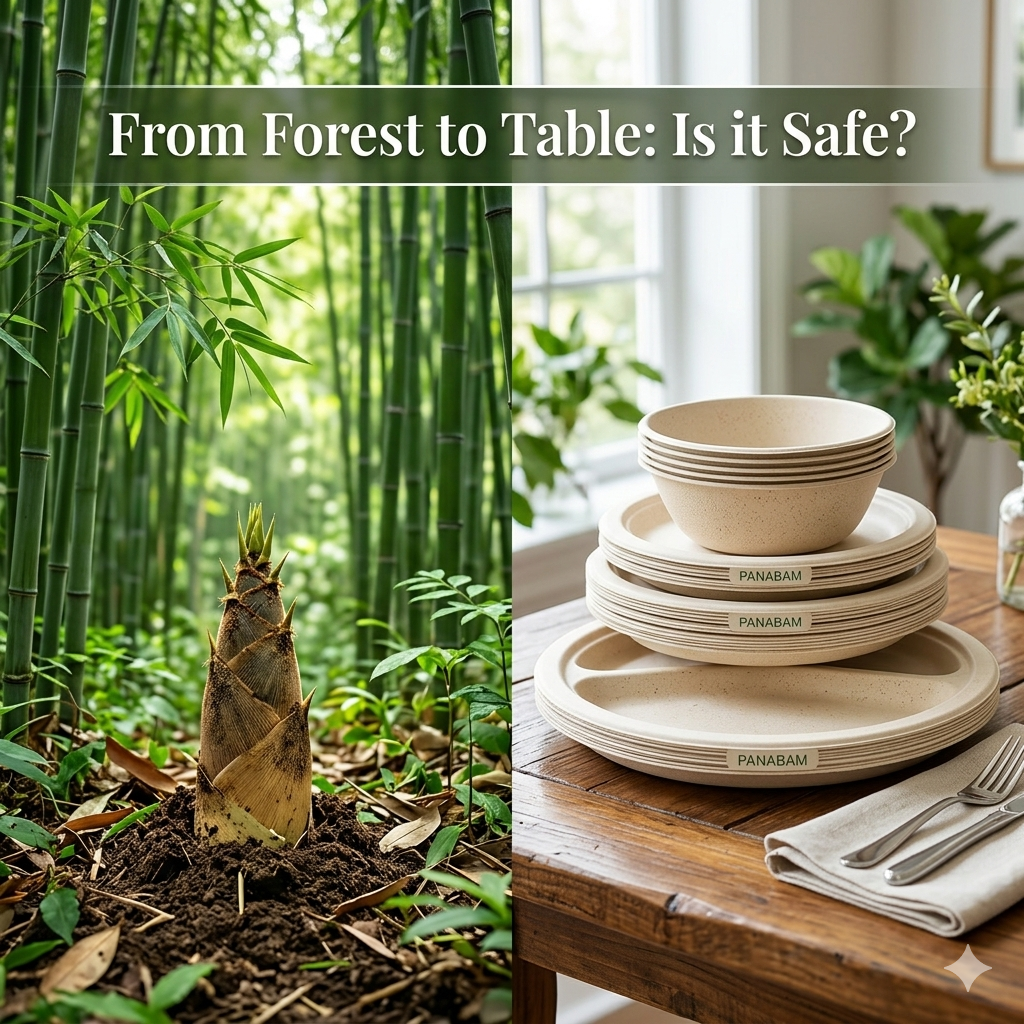
Bamboo is not inherently poisonous to humans, but safety depends on the form of bamboo and how it is processed. Raw bamboo shoots may contain natural compounds like cyanogenic glycosides that require proper cooking, while bamboo fiber tableware must be evaluated by its material composition, manufacturing process, and food-contact compliance.
For buyers sourcing disposable tableware, this distinction is critical. What works for edible bamboo shoots doesn’t automatically apply to food packaging products.
Why People Ask This Question
Searches for "Is bamboo poisonous to humans?" often stem from two sources of confusion. Consumers wonder if bamboo shoots—the edible part of the plant—are safe to eat. Buyers and food service professionals question whether bamboo fiber plates, bowls, and containers pose health risks during normal use.
The overlap creates uncertainty. Bamboo appears in grocery stores as food and in restaurant supply catalogs as tableware. Each application has different safety requirements.
Bamboo Shoots vs. Bamboo Fiber Products
Bamboo shoots are the edible young sprouts harvested from certain bamboo species. They’re common in Asian cuisine but must be cooked before consumption. Raw shoots contain natural cyanogenic glycosides that can release hydrogen cyanide if eaten unprepared, potentially causing nausea, vomiting, or dizziness.
Bamboo fiber tableware, by contrast, starts as processed bamboo pulp molded into plates, bowls, cups, and cutlery. Safety here depends entirely on manufacturing—not the bamboo plant itself. Food-grade processing, material purity, and compliance testing determine whether the final product is suitable for direct food contact.
Are Raw Bamboo Shoots Dangerous?
Fresh bamboo shoots contain taxiphyllin and other cyanogenic glycosides—natural plant defenses found in many foods like cassava, almonds, and apple seeds. These compounds break down into hydrogen cyanide during digestion if not neutralized by cooking.
Traditional preparation methods eliminate this risk:
- Boiling for 20-30 minutes
- Soaking in water overnight
- Multiple changes of boiling water
Canned bamboo shoots undergo industrial processing, making them safe straight from the jar. Once properly prepared, bamboo shoots provide dietary fiber, potassium, and antioxidants with no toxicity concerns.
Is Bamboo Fiber Tableware Safe?
High-quality bamboo fiber tableware is safe for food contact when manufactured correctly. The process involves:
- Pulping mature bamboo into fibers
- Binding with food-grade plant starches (no melamine resin)
- High-temperature molding and sterilization
- Quality testing for migration limits
Reputable products contain:
- 100% plant-based fibers and binders
- No BPA, PFAS, or plastic coatings
- No bleach, wax, or petroleum-based additives
- FDA/LFGB food-contact compliance
The real risk comes from low-quality imports using melamine-formaldehyde resins (originally developed for dinnerware) or petroleum-based waterproofing. These composites may leach chemicals into food, especially when heated.
What Buyers Should Check Before Purchasing
Wholesale buyers must verify claims beyond "bamboo fiber." Request these documents:
Essential Certifications:
✓ [FDA food-contact compliance] (US)
✓ LFGB certification (EU)
✓ No detectable BPA/PFAS migration
✓ Overall migration limit < 10mg/dm²
Critical Performance Tests:
- Heat resistance: -40°C to 200°C+
- Oil resistance without synthetic coatings
- Stackability and rigidity testing
- Compostability validation (ASTM D6400 or equivalent)
Red Flags to Avoid:
- Vague "bamboo" claims without fiber percentage
- Unusually low pricing suggesting resin fillers
- No third-party lab reports
- Missing batch consistency documentation
Complete checklist available in our PFAS-Free Disposable Plates Buyer’s Guide
Bamboo Fiber vs. Other Disposable Materials
| Material | Food Safety | Heat Performance | Sustainability | Cost |
|---|---|---|---|---|
| Plastic (PP/PS) | BPA risk in some | Excellent | Poor (microplastics) | Low |
| Paper pulp | Coating concerns | Fair | Medium | Low-Medium |
| Bagasse | Generally safe | Fair (softens w/liquids) | Good | Medium |
| Bamboo fiber | Safe when certified | Good | Excellent | Medium |
Detailed comparison: Plastic vs Bamboo Tableware Safety
Premium option: Bamboo Veneer vs Palm Leaf Wedding Plates
Bamboo fiber excels where paper softens and plastic faces bans. Its natural rigidity handles soups, sauces, and stacking better than bagasse alternatives.
Why Bamboo Fiber Tableware Matters for Buyers
Global plastic restrictions create urgency. California, EU single-use plastic directives, and corporate sustainability pledges push foodservice toward certified alternatives. Bamboo fiber tableware offers:
Compliance advantage: Meets FDA/LFGB without plastic controversy
Premium presentation: Natural grain elevates brand perception
Performance balance: Strong enough for commercial use, compostable at end-of-life
Marketing value: "PFAS-free" and "plastic-free" claims resonate with eco-conscious customers
Buyers transitioning from plastic often discover bamboo improves table presentation while reducing compliance headaches.
Event planners prefer: Non-Toxic Sustainable Plates for Events
Complete tableware solution: Eco-Friendly Bamboo Cutlery
Why PANABAM Delivers Reliable Wholesale Supply
With 10+ years experience and 500 million pieces annual capacity across 5 automated lines, PANABAM controls quality from bamboo cultivation through finished goods.
Key differentiators:
- China’s first automated bamboo pulp tableware line
- Integrated seedling-to-product manufacturing
- Exports to US, EU, Canada, Australia, Japan
- B2B wholesale focus (no retail)
- Custom shapes, printing, packaging available
This vertical integration eliminates supply chain risks common with fragmented suppliers.
Frequently Asked Questions
Is bamboo poisonous to humans?
No—properly processed bamboo products are safe. Raw bamboo shoots require cooking to neutralize natural compounds.
Can bamboo fiber plates leach chemicals?
Certified food-grade products don’t. Avoid composites using melamine resin or petroleum binders.
Are bamboo plates microwave safe?
Yes, when properly manufactured. See our Microwave Safe Bamboo Guide.
Does bamboo tableware contain PFAS?
High-quality products don’t. Request third-party migration testing.
How long does bamboo tableware last?
3-4 years shelf-stable. Fully composts in 30-90 days.
What’s the MOQ for wholesale bamboo tableware?
Typically 10,000-50,000 pieces, depending on size and customization.
Conclusion
Bamboo itself presents no inherent toxicity risk to humans. Raw shoots need proper cooking; bamboo fiber tableware needs food-grade manufacturing and compliance testing.
For buyers, success depends on distinguishing marketing claims from verified performance. PANABAM delivers certified, high-performance bamboo fiber tableware with supply chain reliability global foodservice brands require.
Ready to source safer tableware? Request PANABAM samples and compliance documentation today.