


PFAS-free disposable plates are no longer a “nice-to-have”—they are becoming a risk-control requirement for many restaurants and foodservice buyers.
If you’re sourcing disposable plates for restaurants, catering, events, retail, or distribution, one wrong material choice can lead to:
- Customer complaints about chemicals or odor
- Plates collapsing under hot or oily food
- Compliance issues in your target market
- Unstable supply and inconsistent quality across batches
In this guide, you’ll learn:
- What “PFAS-free” really means
- Which plate materials perform best in real kitchens
- How to verify PFAS-free claims with documentation
- What to ask a supplier before buying wholesale
✅ If you want to source PFAS-free plates in bulk, this article will help you make a confident decision.
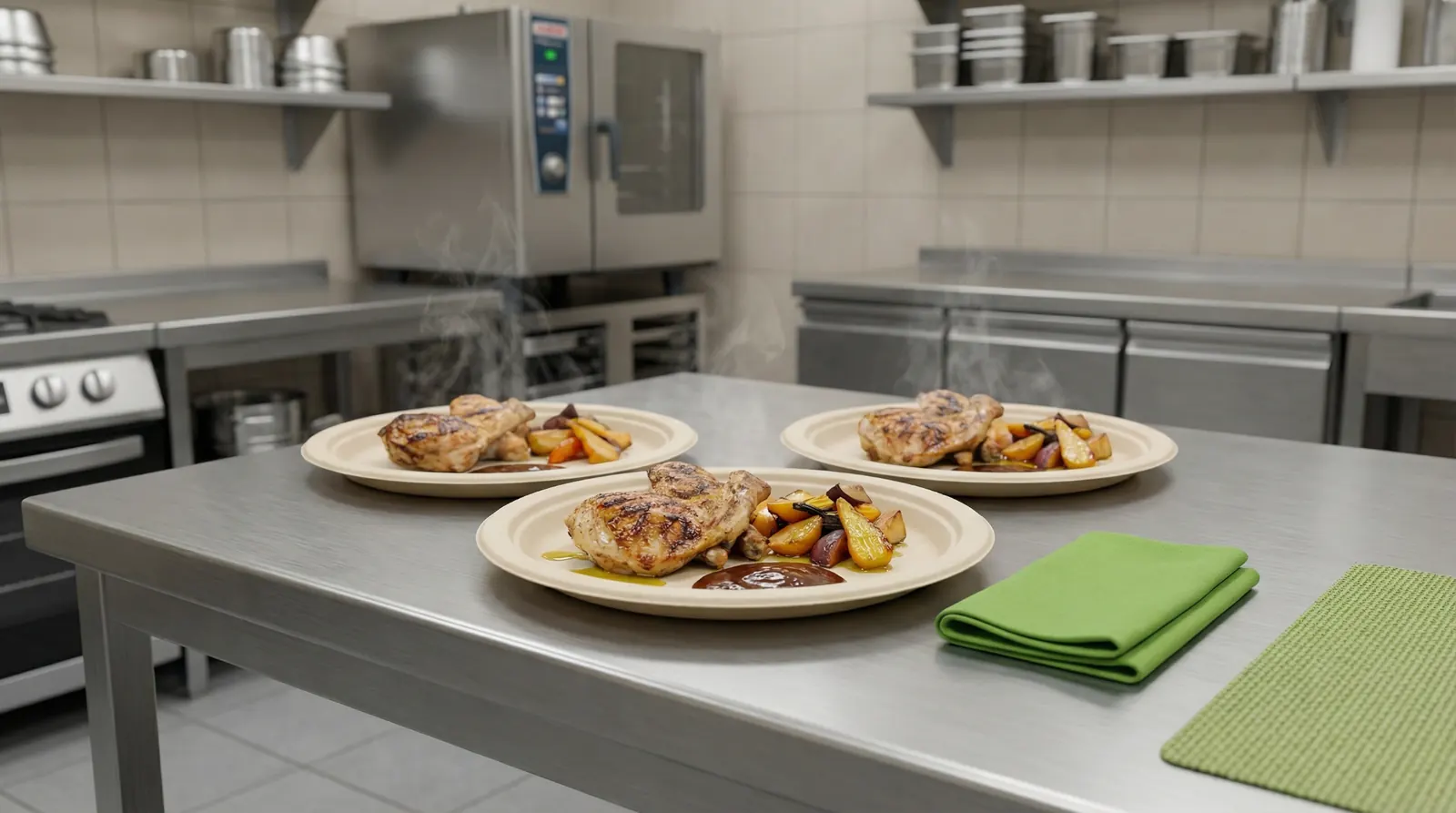 These PFAS-free disposable plates are designed for real restaurant service—hot oil, sauce, and heavy meals.
✅ Explore product options: PFAS-free bamboo fiber plates for foodservice
1) What does “PFAS-free” actually mean?
PFAS (per- and polyfluoroalkyl substances) refers to a group of chemicals that can be used to improve oil and water resistance.
In disposable tableware, PFAS concerns usually come from grease-resistant treatments or coatings used to improve performance.
When buyers ask for PFAS-free plates, what they really want is:
✅ No intentionally added PFAS
✅ Proof through third-party testing
✅ Food-contact compliance support
✅ Stable supply they can trust
PFAS-free is not just a marketing claim—it’s a procurement decision.
2) Why PFAS-free plates matter for restaurants & foodservice
Real foodservice environments are harsh:
- Hot oil
- Sauces and soups
- Steam and long holding times
- Stacking and carrying full meals
- Delivery movement for takeout
Plates that look “eco-friendly” may still fail under real use.
That’s why foodservice buyers care about two things at the same time:
✅ Compliance safety
PFAS-free/ plastic-free / food-contact support
✅ Operational performance
Strong structure, no leaks, stable under heat and moisture
If a plate collapses or leaks, it creates hidden costs:
- Wasted food
- Double-plating to avoid breakage
- Customer dissatisfaction and complaints
- Negative reviews
- Repeated supplier switching
A slightly cheaper plate often becomes more expensive in real usage.
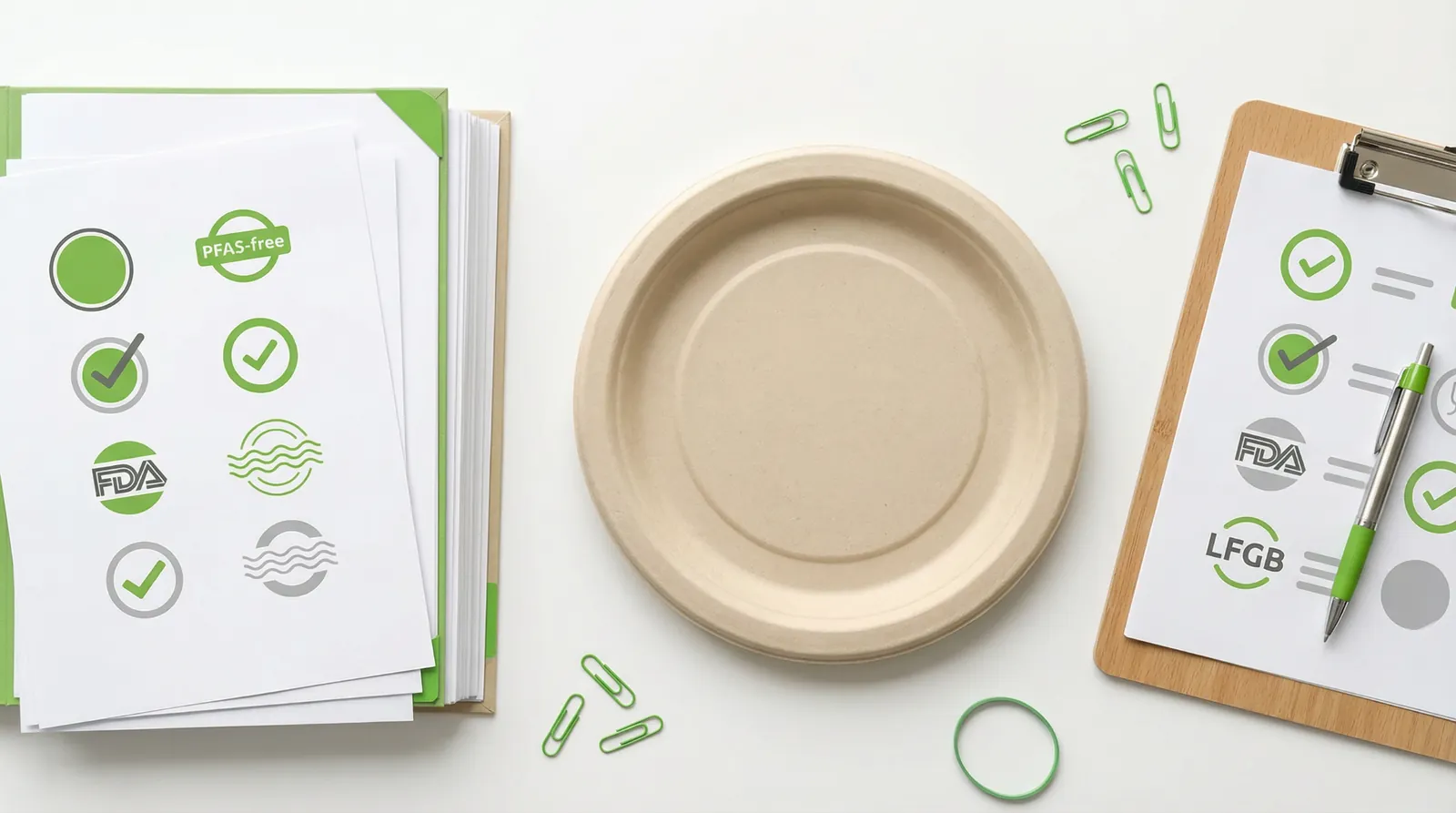 Always verify PFAS-free claims with documentation and updated third-party testing.
3) PFAS-free plates vs disposable paper plates (what’s different?)
Many buyers start by searching for disposable paper plates, because they’re easy to access.
But paper plates often require coatings to resist grease and moisture—especially for hot or oily foods.
If you’re sourcing for restaurants or wholesale distribution, always confirm:
- Whether grease resistance comes from a coating
- Whether the product is truly PFAS-free
- Whether it stays stable with hot oil and sauces
In foodservice, performance must be consistent—not just acceptable for cold snacks.
4) What makes a disposable plate “heavy duty” in real kitchens?
The term heavy duty disposable plates is popular—but vague.
A truly foodservice-ready plate should be evaluated against:
✅ Hot & oily food (not just dry food)
✅ Rigidity under weight
✅ Edge strength (does it bend when carried?)
✅ Leak resistance (oil + moisture)
✅ Stacking stability (for catering & events)
If your customers carry full meals or stack plates during service, weak structure becomes a real business problem.
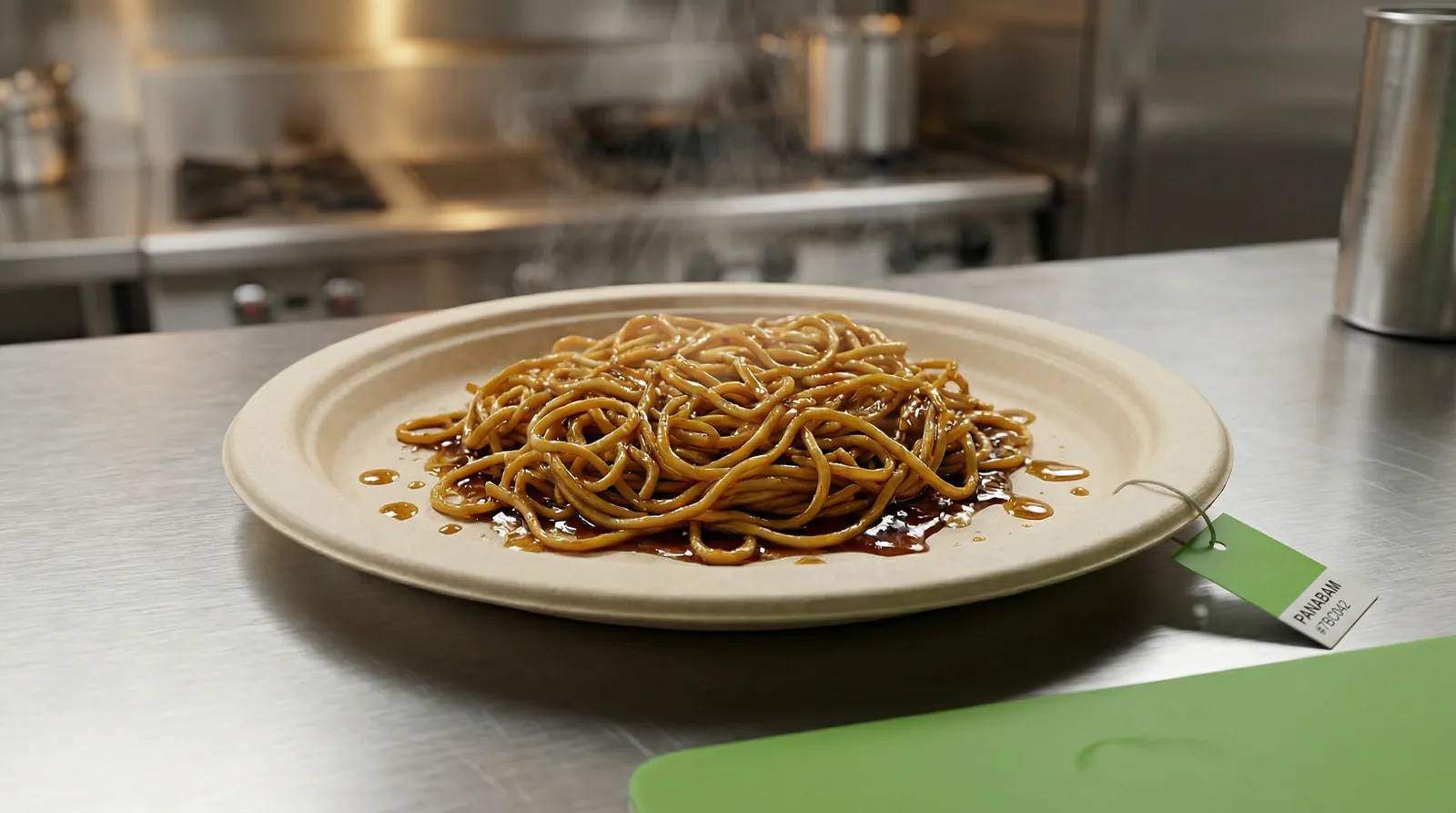 Heavy-duty plates reduce double-plating, leakage complaints, and hidden operating costs.
If your business needs heavy duty performance for hot and oily meals, see our heavy duty bamboo fiber plates.
5) Bamboo fiber vs bagasse vs paper: which performs best?
Not all compostable plates perform the same. Materials and production processes matter.
Bamboo fiber molded plates (foodservice-focused)
Bamboo fiber plates are often chosen for foodservice because they can offer:
- Higher tensile strength and rigidity
- Stable shape and consistent molding
- Strong performance with oily and heavy meals
- A natural premium texture (good for branding)
For wholesale buyers, bamboo fiber also supports scale and stable production planning.
Bagasse (sugarcane) plates (cost-friendly, quality varies)
Bagasse plates are widely available, but buyers sometimes report:
- Softer structure
- Deformation with heat and moisture
- Inconsistent thickness across suppliers
PFAS-free claims should always be verified with documentation.
Paper plates (performance depends on coatings)
Paper plates can be convenient, but for hot and oily meals, grease resistance depends heavily on the coating system.
If compliance is your priority, verify PFAS-free statusbased on the exact product and test reports.
Quick comparison for foodservice buyers
| Material | PFAS Risk | Hot/Oily Food Performance | Best For |
|---|---|---|---|
| Bamboo fiber molded | Low (verify by testing) | Strong & stable | Restaurants, catering, wholesale |
| Bagasse | Medium (depends on supplier) | Can be softer | Light meals, cost-focused buyers |
| Paper | Depends on coating | Varies | Dry foods, retail convenience |
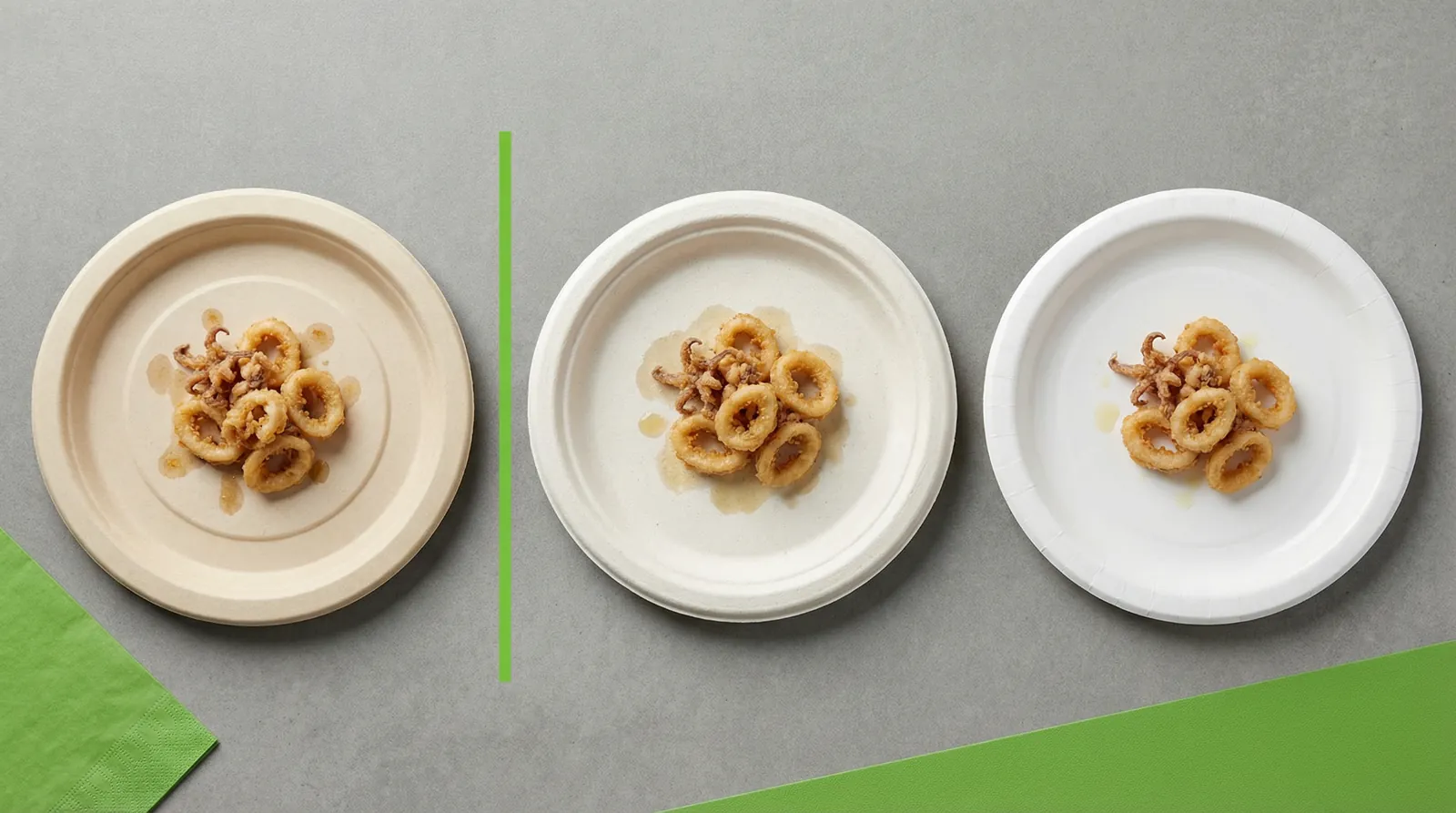 Not all compostable plates perform the same—material and structure decide strength and oil resistance.
👉 See bamboo fiber molded plate options for wholesale: Bamboo Fiber Plates
6) How to verify PFAS-free disposable plates (buyer checklist)
The biggest mistake buyers make is trusting a product description without proof.
Use this checklist before placing a wholesale order:
✅ 1) Request a third-party PFAS test report
A serious supplier should support PFAS-free claims with updated testing.
✅ 2) Confirm “no intentionally added PFAS”
This statement is crucial for compliance-focused sourcing.
✅ 3) Confirm material composition
Ask for a material statement that clearly lists:
- Fiber type (bamboo / bagasse / paper)
- Binder type (if any)
- Any coatings or additives
✅ 4) Verify food-contact compliance support
Depending on your market, you may need:
- FDA (U.S.)
- LFGB (Germany / high standard)
- EU food contact compliance
✅ 5) Confirm batch consistency
Ask the supplier to confirm the sample matches bulk production across sizes and batches.
7) PFAS-free disposable plates for restaurants: how to choose by scenario
Different restaurant and foodservice scenarios require different product specs.
Fast food & takeout
You need plates that handle:
- Hot meals
- Greasy food
- Delivery movement
✅ Choose strong structure, not “light snack” plates.
Catering & events
You need:
- High rigidity
- Premium appearance
- Stacking stability
- Reliable supply timing
Retail & supermarkets
You need:
- Consistent SKU availability
- Clear compliance labeling
- Stable packaging presentation
Wholesale buyers should prioritize supply stability + packaging + documentation support.
8) Cost vs value: reducing hidden costs (why buyers switch)
Many buyers compare PFAS-free bamboo fiber plates with plastic plates mainly by unit price.
But the better question is:
What does the plate cost after real-world usage?
If cheaper plates lead to:
- Double-plating to avoid collapse
- Leak problems with oily food
- Complaints, returns, and rework
- Switching suppliers again and again
Then the “cheaper option” becomes expensive.
PFAS-free bamboo fiber tableware helps buyers shift from a cost perspective to a value perspective:
- Lower compliance risk
- Better brand positioning
- Better performance under kitchen pressure
9) FAQ: What buyers ask about PFAS-free disposable plates
Which paper plates do not contain PFAS?
The safest approach is to verify with a third-party PFAS test report and a supplier statement of “no intentionally added PFAS.” Many paper plates rely on coatings for grease resistance.
Do plastic plates have PFAS?
PFAS concerns are more common in grease-resistant paper packaging, but material additives vary by supplier. For compliance-focused sourcing, verify documentation and testing for the exact SKU.
What disposable plates are safe?
Safe plates should be made for food contact, supported by compliance documentation, and produced without unnecessary coatings or high-risk additives. For foodservice, safety also includes performance with hot and oily food.
Do Dixie plates have PFAS in them?
Materials can change by product line over time. Buyers should check official product info and confirm based on the exact SKU and current documentation.
What is the least toxic dinnerware?
For reusable use, stainless steel, glass, and ceramic are common low-risk choices. For disposable foodservice, choose products with verified food-contact compliance and clear material disclosure.
Are palm leaf or bamboo plates better?
Palm leaf plates often suit premium presentation and events. Bamboo fiber molded plates are commonly preferred for scalable foodservice supply due to consistent molding and stable performance.
Do bamboo plates contain PFAS?
Bamboo plates should not contain PFAS when produced without grease-resistant chemical treatment, but always confirm composition and request a PFAS test report.
Do you get microplastics from paper plates?
Paper plates are fiber-based, but some products may contain plastic-based coatings or additives. Choose plastic-free structures and request material declarations if microplastics are a concern.
Does bamboo release microplastics?
Bamboo fiber products are plant-fiber based. Microplastic concerns depend on whether plastic binders, coatings, or lamination are used.
Are Walmart paper plates PFAS free?
Retail platforms sell multiple brands and SKUs. PFAS-free status varies and should be verified by the specific product line and current documentation.
Should I stop using paper plates?
It depends. For restaurants and foodservice, switching to PFAS-free and plastic-free plates with verified documentation can reduce risk and improve performance.
What products are highest in PFAS?
PFAS has historically been used in products requiring oil, water, or stain resistance. For procurement, prioritize suppliers who provide PFAS testing and food-contact documentation for the exact product.
10) Source PFAS-free disposable plates wholesale (samples & pricing)
If you are sourcing PFAS-free disposable plates for restaurants, catering, retail, or distribution, PANABAM supports B2B wholesale buyerswith:
- Factory-scale production capacity (10+ years)
- Stable material composition and batch consistency
- PFAS-free, plastic-free product structure
- Food-contact compliance document support
- Customization: shape, size, packaging, private label
✅ View product specs & sizes: Bamboo Fiber Plates Wholesale
About PANABAM
PANABAM is a China-based B2B supplier specializing in disposable bamboo fiber pulp tableware and foodservice packaging. We export to the United States, Australia, Canada, the United Kingdom, Japan, and EU markets.
📩 Contact: info@panabam.com
🌍 Website: www.panabam.com