


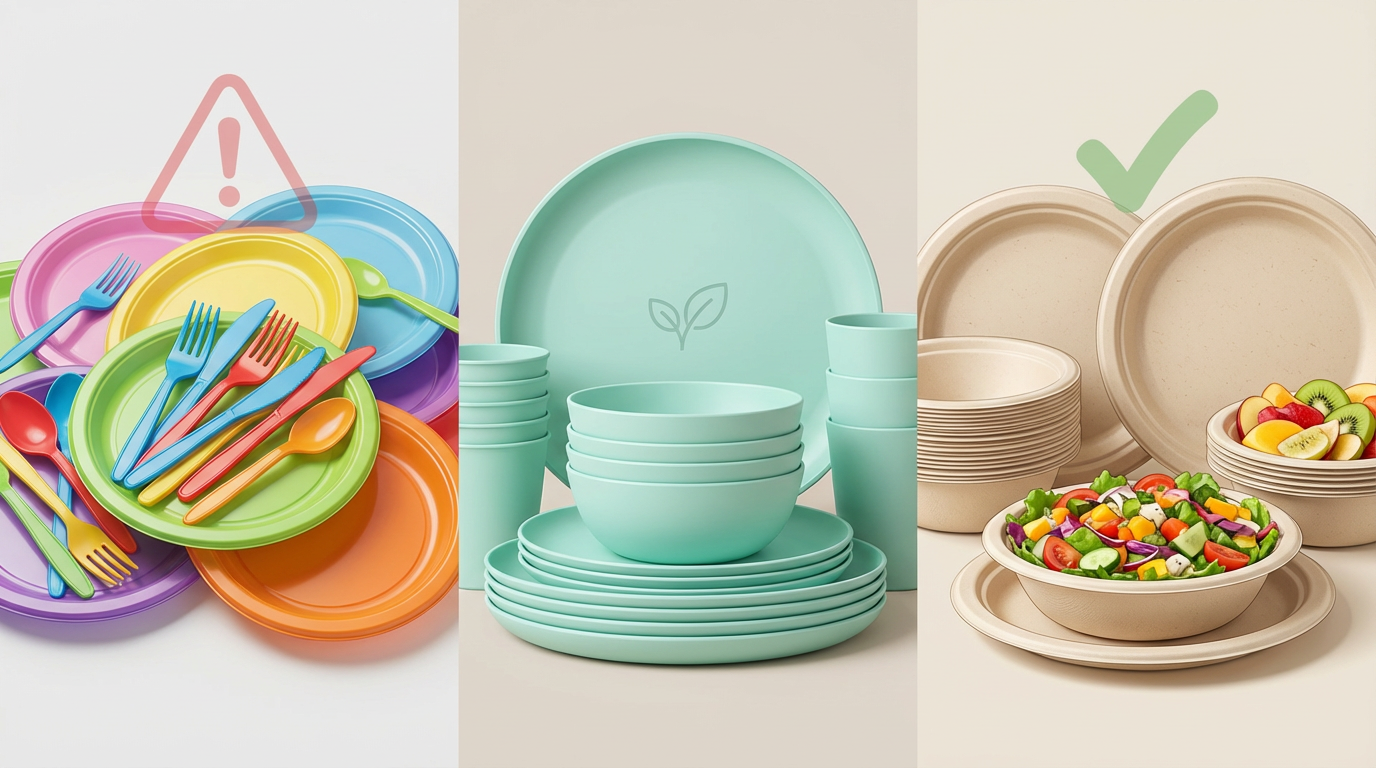
Many food brands worry about hidden chemicals in packaging. Plastic looks cheap and simple. Yet chemical migration and microplastics create growing concern.
Bamboo itself is not toxic. However many “bamboo” products on the market are actually plastic mixed with bamboo powder, which may increase chemical migration risks.
Many buyers feel confused today. I will explain the difference between plastic, bamboo-plastic composites, bamboo-melamine products, and pure bamboo fiber tableware.
Transition paragraph: I will also explain the recent EU enforcement action and what it really means for buyers.
Why Is Toxic Packaging Becoming a Major Concern Today?
Many companies once focused only on cost and convenience. However regulators and consumers now care more about chemical exposure from packaging.
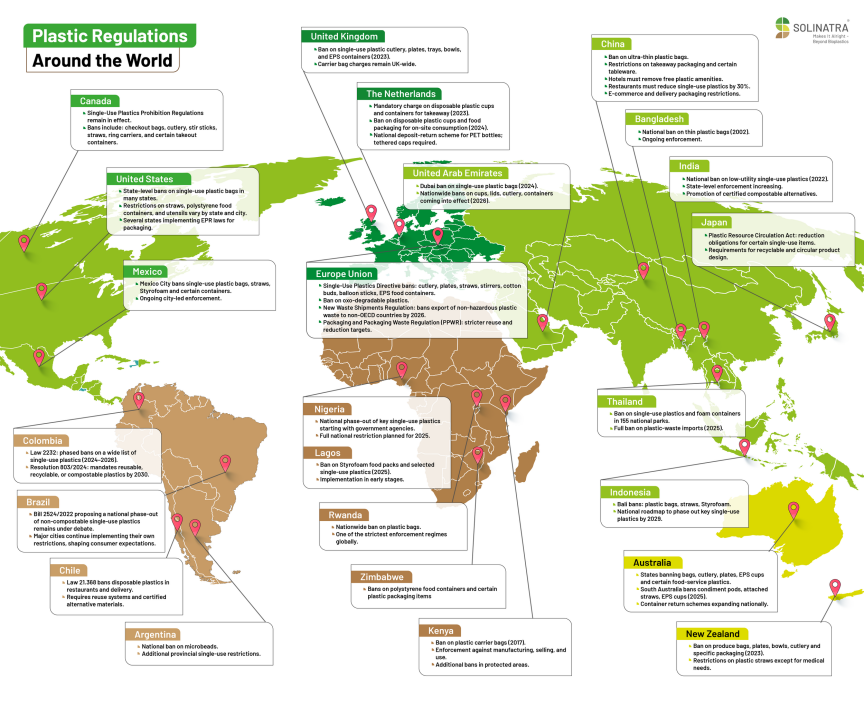
Global plastic restrictions and food safety regulations are pushing businesses to rethink packaging materials and reduce toxic risks in food contact products.
Growing Concern About Chemical Exposure
I notice that more restaurant brands and retailers now ask a basic question. They ask what chemicals may migrate from packaging into food.
Plastic products often require additives. These additives improve flexibility, durability, and heat resistance.
However some additives may migrate into food.
Examples include:
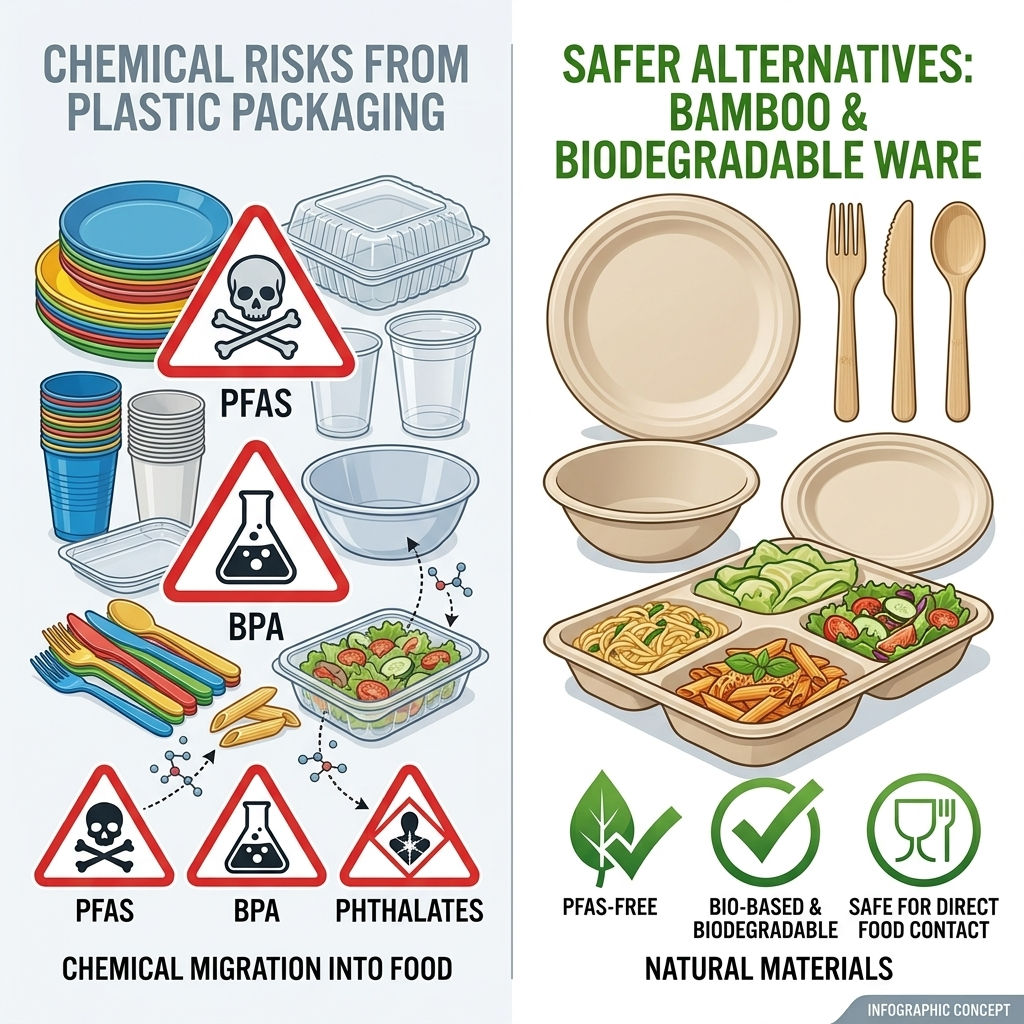
- BPA
- Phthalates
- PFAS
- Melamine compounds
Migration becomes more likely under certain conditions.
For example:
- Hot soup
- Greasy foods
- Acidic sauces
- Microwave heating
These conditions increase chemical migration from packaging materials.
Rising Regulations Around the World
Governments now react more strongly to these concerns.
| Region | Regulation Focus |
|---|---|
| European Union | Single-use plastic bans |
| United States | PFAS restrictions |
| Canada | Plastic reduction programs |
| Australia | Disposable plastic phase-outs |
These regulations push businesses to search for safer alternatives.
Natural Materials Gain Attention
Because of these pressures, plant-based packaging materials gain popularity.
Common options include:
- Paper pulp
- Bagasse
- Bamboo fiber
- PLA bioplastics
However not every product labeled “eco” is truly natural.
Some products still contain plastic or chemical coatings.
Therefore buyers must clearly understand material composition.
What Does “Toxic” Really Mean in Food Packaging?
Many people use the word toxic casually. Yet in food packaging science the meaning is very specific.
Toxicity usually refers to chemicals migrating from packaging materials into food during use, especially when exposed to heat, oil, or acidity.
Understanding Chemical Migration
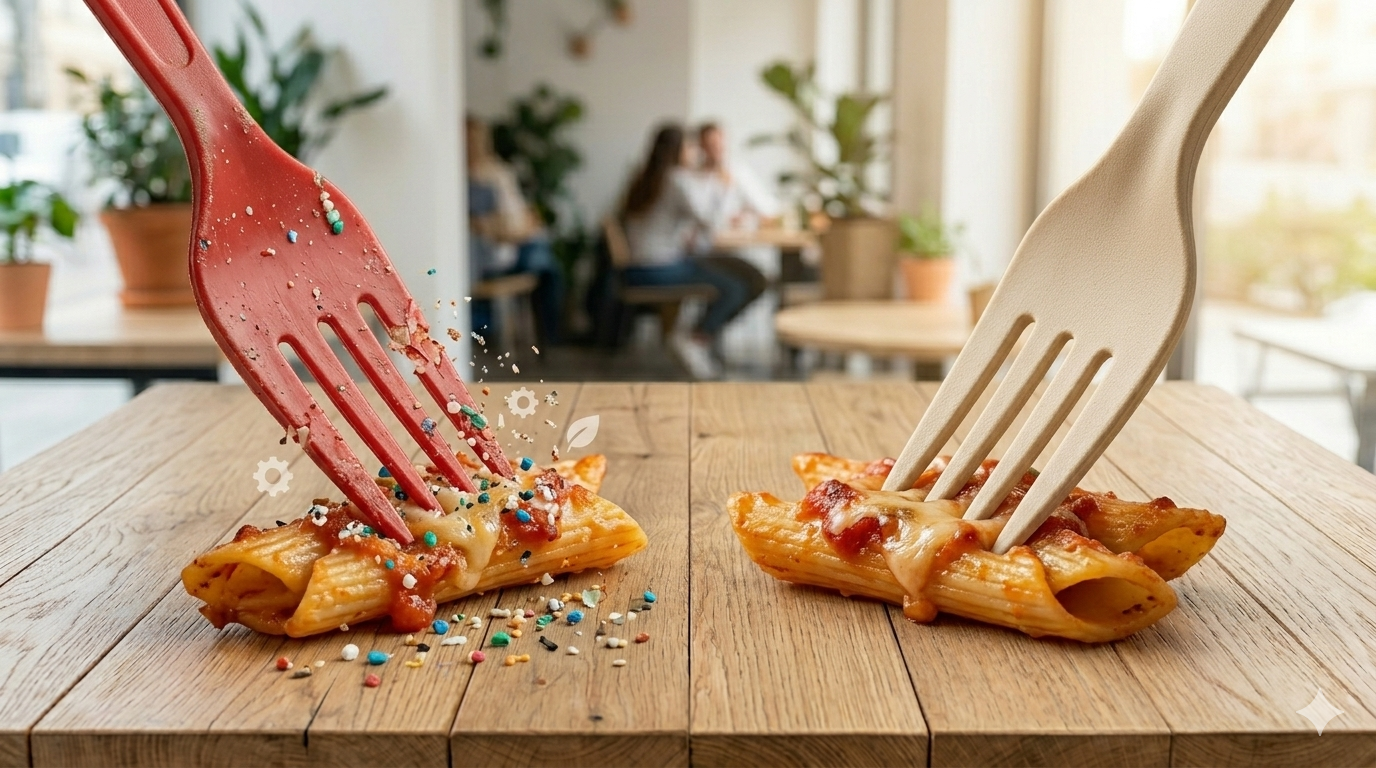
I often explain toxicity using the concept of migration.
Packaging materials contain many substances. Some substances can move from the packaging into food.
Migration depends on several factors:
| Factor | Impact |
|---|---|
| Temperature | Higher heat increases migration |
| Contact time | Longer exposure increases risk |
| Food type | Fatty food absorbs chemicals faster |
| Acidity | Acidic food may accelerate reactions |
Therefore hot and oily foods create higher exposure risk.
Common Chemicals in Plastic Packaging
Plastic tableware often contains additives that support manufacturing.
| Chemical | Purpose | Concern |
|---|---|---|
| BPA | Hard plastic production | Hormone disruption |
| Phthalates | Flexibility | Endocrine interference |
| PFAS | Oil resistance | Persistent chemical pollution |
| Melamine resin | Heat resistance | May release formaldehyde |
These chemicals are regulated in many countries.
Why Food Brands Care
Food brands now understand that packaging affects reputation.
Consumers increasingly demand:
- transparency
- chemical safety
- environmentally responsible materials
Therefore many businesses start exploring safer materials.
What Are the Hidden Risks of Conventional Plastic Tableware?
Plastic tableware dominates the disposable food service market. It is cheap and easy to manufacture.
However plastic tableware can release additives and generate microplastics during use and environmental degradation.
Common Plastics Used in Tableware
Several plastic types appear frequently in disposable food service products.
| Plastic Type | Typical Products |
|---|---|
| PP | Cutlery and containers |
| PS | Plates and cups |
| PET | Bottles and lids |
| PVC | Packaging films |
These plastics require stabilizers and additives during manufacturing.
Additives Are the Main Risk Source
Additives improve plastic performance.
However they may also create health concerns.
Examples include:
- plasticizers
- stabilizers
- pigments
- flame retardants
When plastic is heated or scratched, some substances may migrate.
Microplastic Formation
Plastic products also break down into microscopic fragments.
These fragments are called microplastics.
Microplastics have been detected in:
- ocean water
- drinking water
- seafood
- human blood samples
This issue increases global concern about plastic pollution.
Long-Term Business Risk
Plastic packaging also faces regulatory risk.
More countries now restrict single-use plastics.
Therefore companies relying heavily on plastic may face sudden supply chain changes.
Is Bamboo Really Less Toxic Than Plastic?
Many eco brands promote bamboo tableware. Yet buyers sometimes misunderstand what “bamboo products” actually mean.
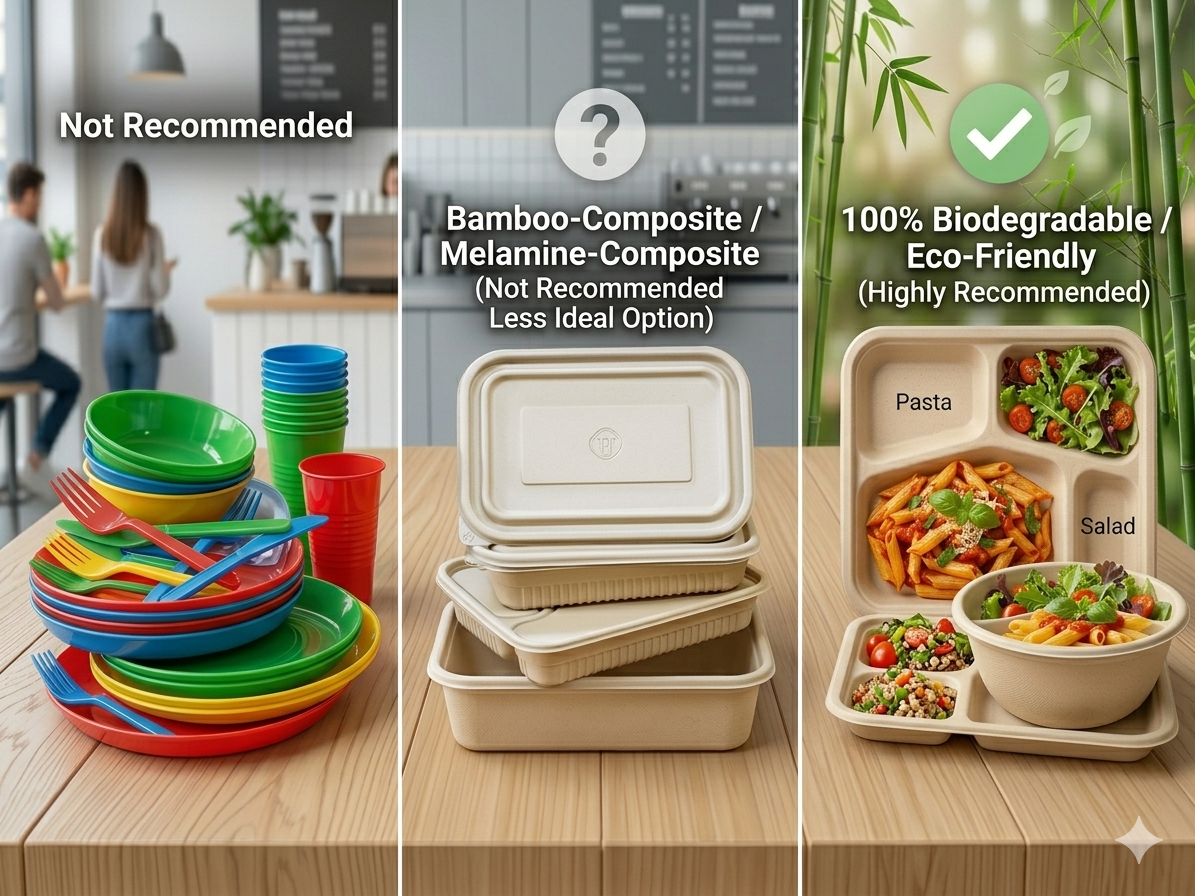
Pure bamboo fiber pulp products are generally less toxic than plastic because they contain no synthetic polymers and do not generate microplastics.
Natural Composition of Bamboo
Bamboo is a fast-growing grass.
Its fibers contain natural components:
| Component | Role |
|---|---|
| Cellulose | Structural fiber |
| Hemicellulose | Plant carbohydrate |
| Lignin | Natural binder |
These materials form strong plant structures without synthetic polymers.
Three Very Different “Bamboo” Products
Many buyers do not realize that three different product categories exist.
| Product Type | Composition |
|---|---|
| Pure bamboo fiber pulp | 100% plant fiber |
| Bamboo plastic composite | Plastic + bamboo powder |
| Bamboo melamine tableware | Bamboo powder + melamine resin |
Only the first category is truly plastic-free.
Why This Difference Matters
Bamboo powder itself is natural.
However when manufacturers mix bamboo powder with plastic resins, the product behaves like plastic.
Therefore the safety profile becomes very different.
What Did the EU “Bamboo-zling” Enforcement Action Reveal?
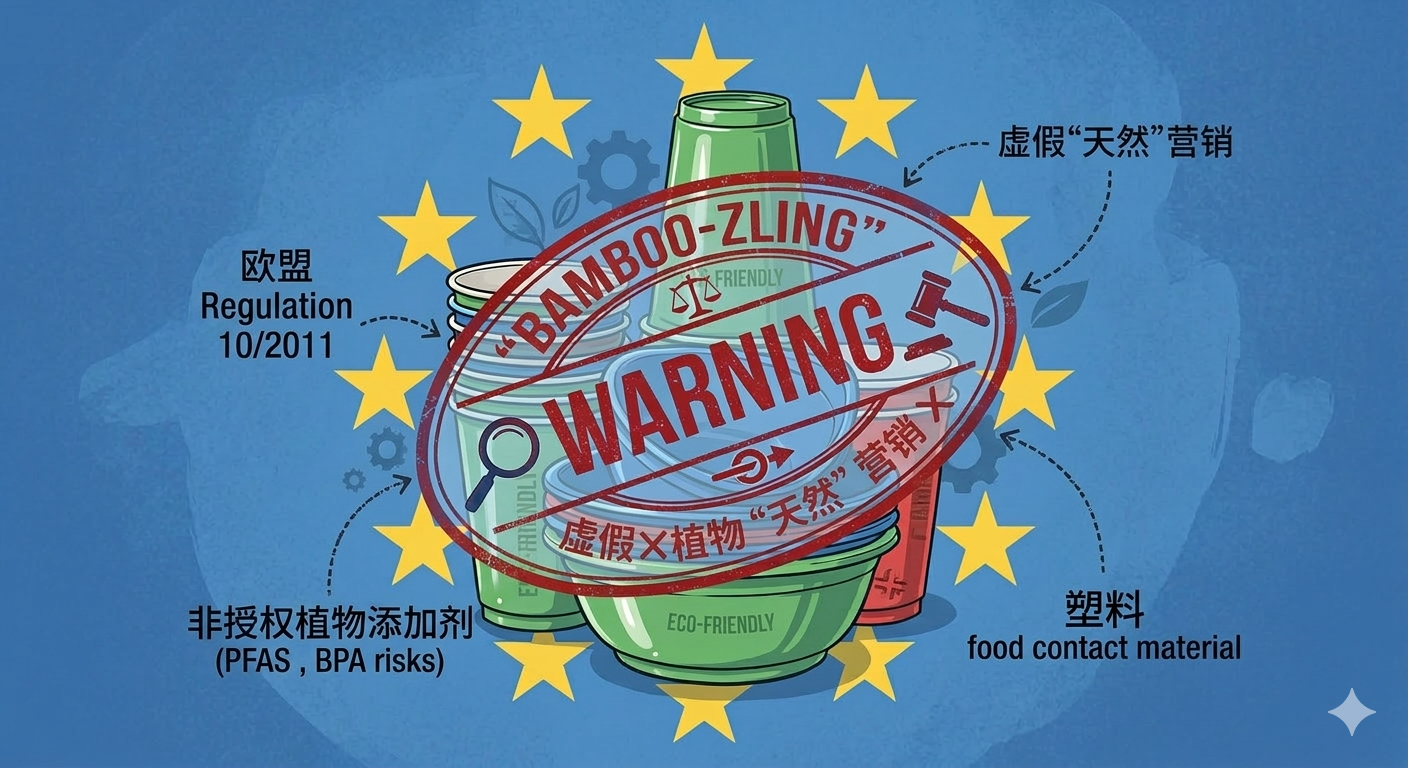
The European Union recently launched a major investigation called “Bamboo-zling.”
This enforcement action targeted plastic food contact materials containing bamboo powder or plant additives that were falsely marketed as natural bamboo products.
The Scale of the Investigation
Authorities from 21 countries participated in the investigation.
The results were significant.
| Investigation Result | Cases |
|---|---|
| Total cases reported | 748 |
| Products found in EU markets | 644 |
| Border interceptions | 104 |
| Online sales cases | 580 |
Most illegal products were plastic items containing bamboo powder.
Many came from overseas suppliers.
Why These Products Were Illegal
EU plastic food contact materials must comply with EU Regulation 10/2011.
Only substances listed in the EU authorized list may be used in plastic food contact materials.
Bamboo powder and many other plant fillers are not authorized additives.
Therefore plastic materials containing these fillers cannot legally be sold in the EU.
Misleading Marketing Claims
Many products used environmental marketing claims such as:
- “Natural”
- “Eco-friendly”
- “Organic”
- “Compostable”
However these products were still plastic.
The bamboo powder only acted as a filler.
Therefore regulators considered these claims misleading.
Why Can Bamboo Powder Increase Risks in Plastic Products?
Bamboo powder itself is not toxic. The risk appears when bamboo powder is used inside plastic composites.
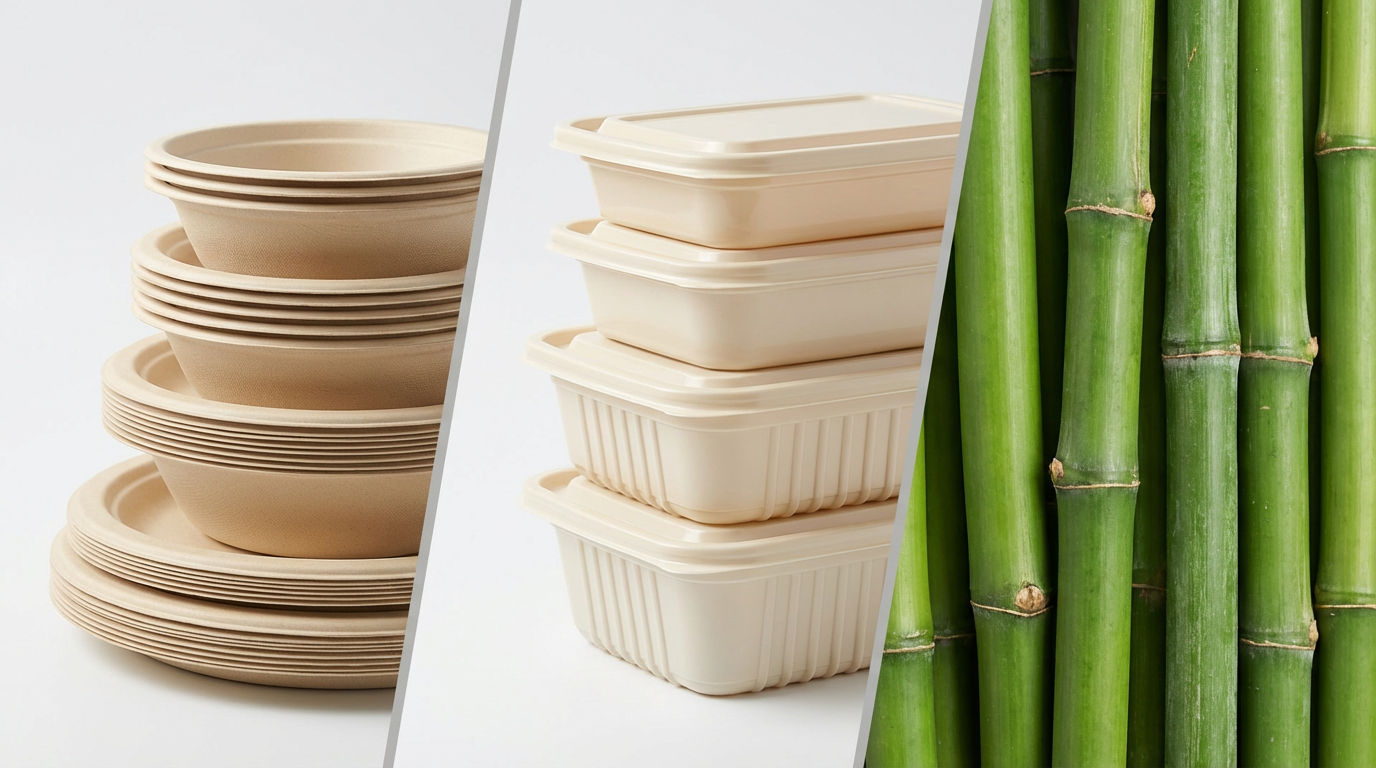
When bamboo powder is mixed into plastic resins, it can accelerate degradation and increase migration of chemicals such as melamine or formaldehyde.
Interaction Between Bamboo Fibers and Plastic
Bamboo powder contains natural fibers that absorb moisture.
Plastic polymers behave differently.
When the two materials combine, structural instability may occur.
This instability can cause faster degradation.
Migration of Residual Chemicals
Some bamboo-plastic composites use melamine-formaldehyde resin.
If chemical reactions during production are incomplete, residues may remain.
Under certain conditions such as heat or acidity, migration may occur.
Laboratory tests in some cases found migration levels above safety limits.
| Substance | Migration Result |
|---|---|
| Melamine | 3.5× above EU limit |
| Formaldehyde | 25× above EU limit |
These findings triggered regulatory attention.
Recycling Problems
Another issue is recyclability.
Plastic mixed with plant fibers becomes difficult to recycle.
Therefore these composite materials may create additional environmental waste.
How Can Buyers Identify Real Bamboo Tableware?
Because many materials exist in the market, buyers must learn how to distinguish them.
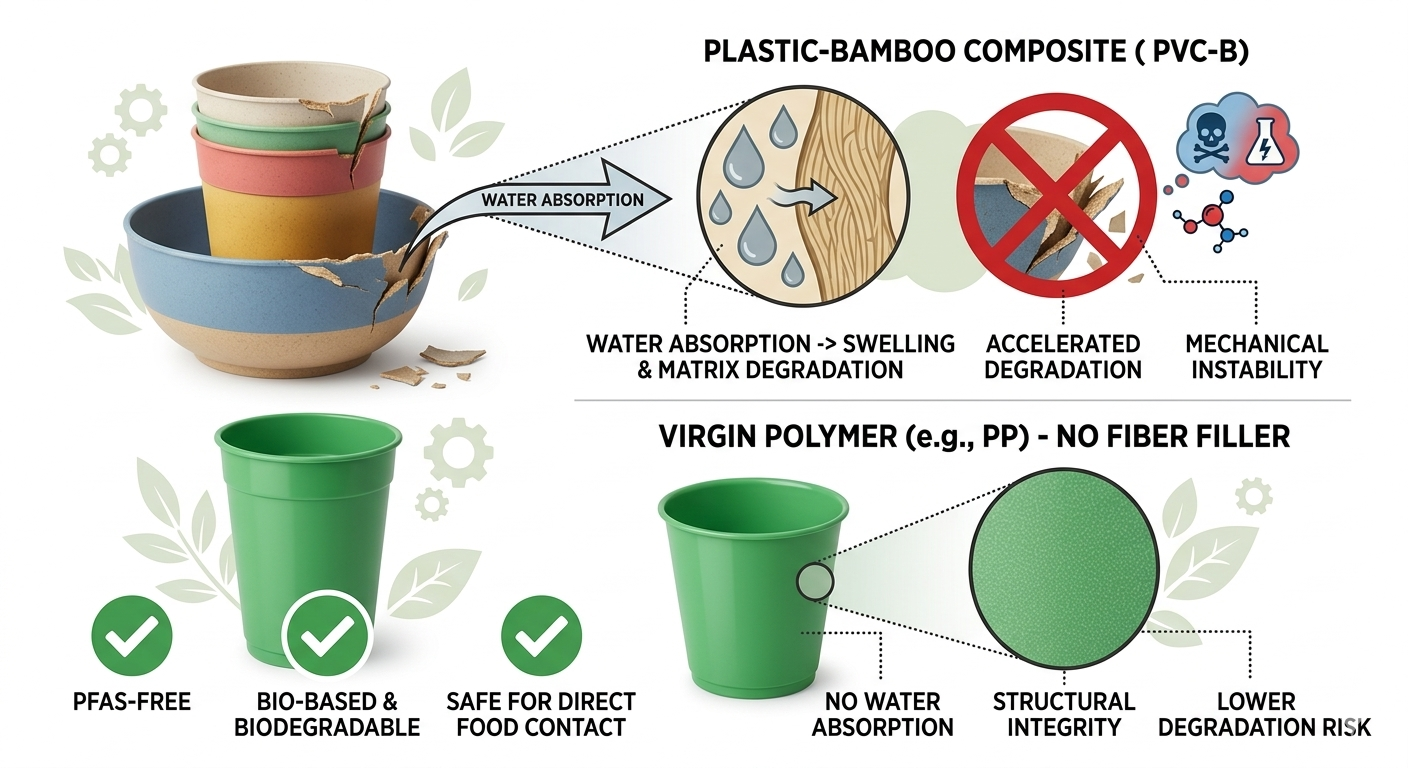
Real bamboo fiber products have natural plant fiber structures, while bamboo-plastic composites feel and behave like plastic.
Physical Differences
Illegal bamboo-plastic products often look and feel like plastic.
Their surface is smooth and glossy.
Pure bamboo fiber products usually show natural fiber texture.
Identification Checklist
| Feature | Bamboo Plastic | Pure Bamboo Fiber |
|---|---|---|
| Surface feel | Plastic-like | Natural fiber |
| Material structure | Plastic polymer | Plant fiber network |
| Microplastics | Possible | None |
| Compostability | Usually no | Yes |
Documents Buyers Should Request
Serious suppliers should provide documentation.
Important documents include:
- material composition report
- food contact testing reports
- migration test results
- compliance certificates
These documents help confirm that the product is plastic-free.
What Is the Most Eco-friendly Alternative to Plastic?
Many materials compete as plastic alternatives.
However buyers must evaluate both environmental impact and product performance.
The most eco-friendly packaging materials combine renewable raw materials, minimal chemical additives, and true biodegradability.

Common Plastic Alternatives
| Material | Raw Source |
|---|---|
| Paper pulp | Wood fiber |
| Bagasse | Sugarcane residue |
| PLA | Corn starch polymer |
| Bamboo fiber | Bamboo plant |
Each material has advantages and limitations.
Why Bamboo Fiber Performs Well
Bamboo grows extremely fast and regenerates naturally.
Its fibers create strong molded pulp structures.
Therefore bamboo fiber pulp tableware offers several benefits:
- strong structure
- good heat resistance
- natural appearance
- compostable disposal
These characteristics make bamboo fiber a practical solution for food service packaging.
Conclusion
Bamboo itself is safe and natural. The real problem is bamboo-plastic composites. Pure bamboo fiber pulp tableware remains a safer plastic alternative.