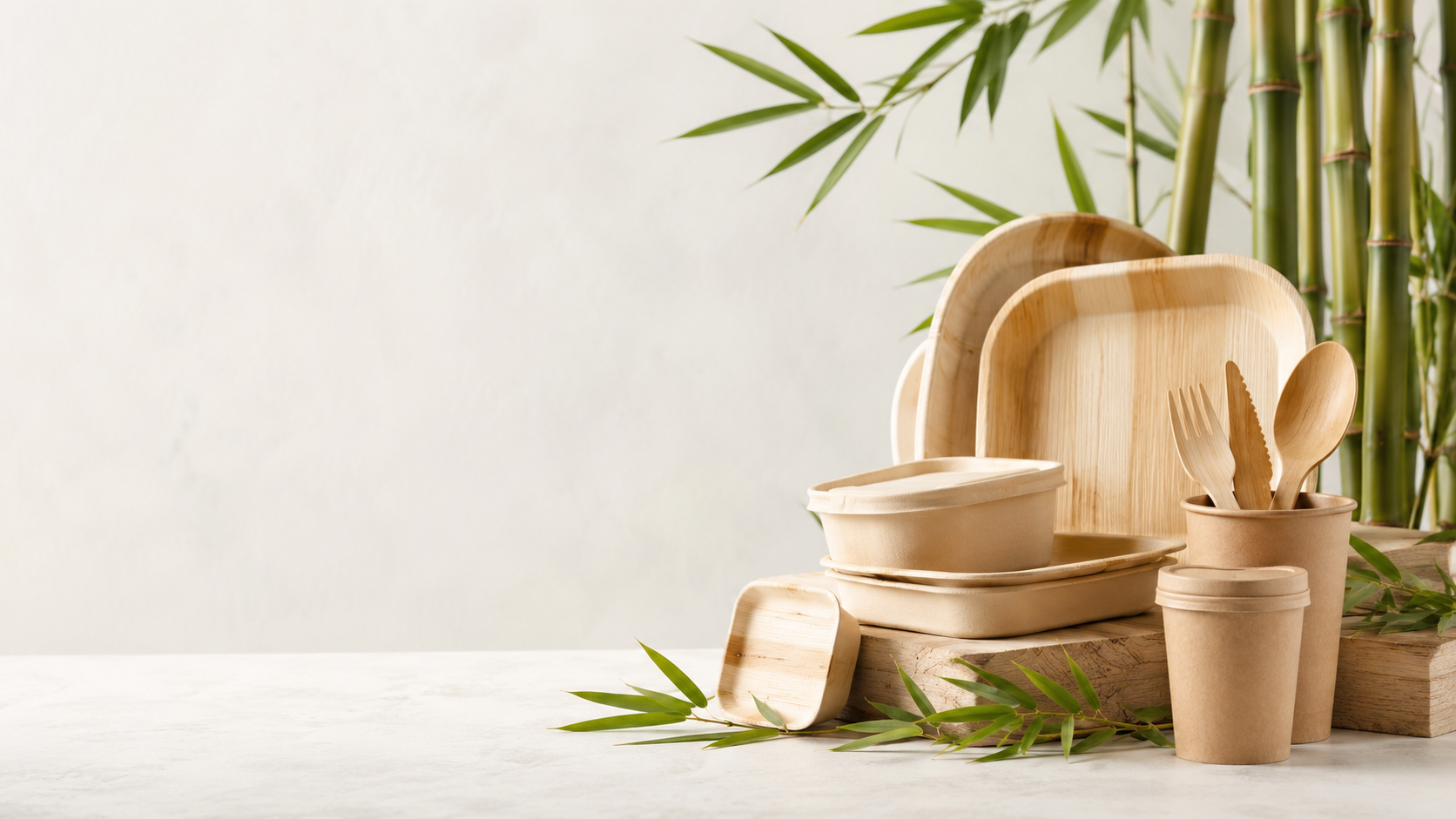
Plant-based food packaging is becoming an important choice for food brands, restaurants, catering companies, importers and distributors that want to reduce the use of traditional plastic packaging and build a more sustainable packaging system.
In simple terms, plant-based food packaging refers to food packaging products made from renewable plant-based materials such as bamboo fiber, wood, sugarcane bagasse, paper pulp, PLA and other plant fibers. These materials can be used to produce disposable food containers, bowls, plates, trays, cups, lids, cutlery and retail food packaging for different foodservice applications.
However, for B2B buyers, choosing plant-based packaging is not only about choosing an “eco-friendly” material. A real purchasing decision also involves product strength, oil and water resistance, food contact safety, compostability claims, certificates, MOQ, customization, logistics and long-term supply stability.
At Panabam, we provide eco-friendly disposable food packaging solutions made from bamboo fiber, wood and other plant-based materials for takeaway, catering, retail and private label projects.
What Is Plant-Based Food Packaging?
Plant-based food packaging is packaging made fully or partly from materials derived from plants instead of conventional fossil-based plastics.
Common plant-based materials include:
- Bamboo fiber
- Wood
- Sugarcane bagasse
- Paper pulp
- Cornstarch-based materials
- PLA
- Other molded plant fibers
These materials are widely used for disposable foodservice packaging, such as:
- Takeaway containers
- Clamshell boxes
- Bowls and lids
- Plates and trays
- Foodservice cups
- Wooden cutlery
- Wooden boats and trays
- Retail food packaging
- Private label packaging
For food brands and distributors, plant-based packaging is not only a material choice. It is part of a wider packaging strategy that includes product function, food safety, sustainability claims, branding, logistics and market compliance.
Panabam Experience Note
Panabam has worked in disposable bamboo fiber pulp tableware and food service packaging for more than 10 years. Our business covers bamboo seedling cultivation, bamboo fiber processing, eco-friendly food container equipment and technology, product R&D, production and export supply.
Based on our manufacturing and export experience, B2B buyers usually do not choose plant-based packaging only because it is eco-friendly. They also need to confirm whether the packaging is strong enough, suitable for oily or watery food, compliant with food contact requirements, easy to customize and stable enough for wholesale supply chains. You can learn more about Panabam’s factory production and supply ability.
For importers, distributors and foodservice buyers, the right packaging should solve real business problems, not just look environmentally friendly.
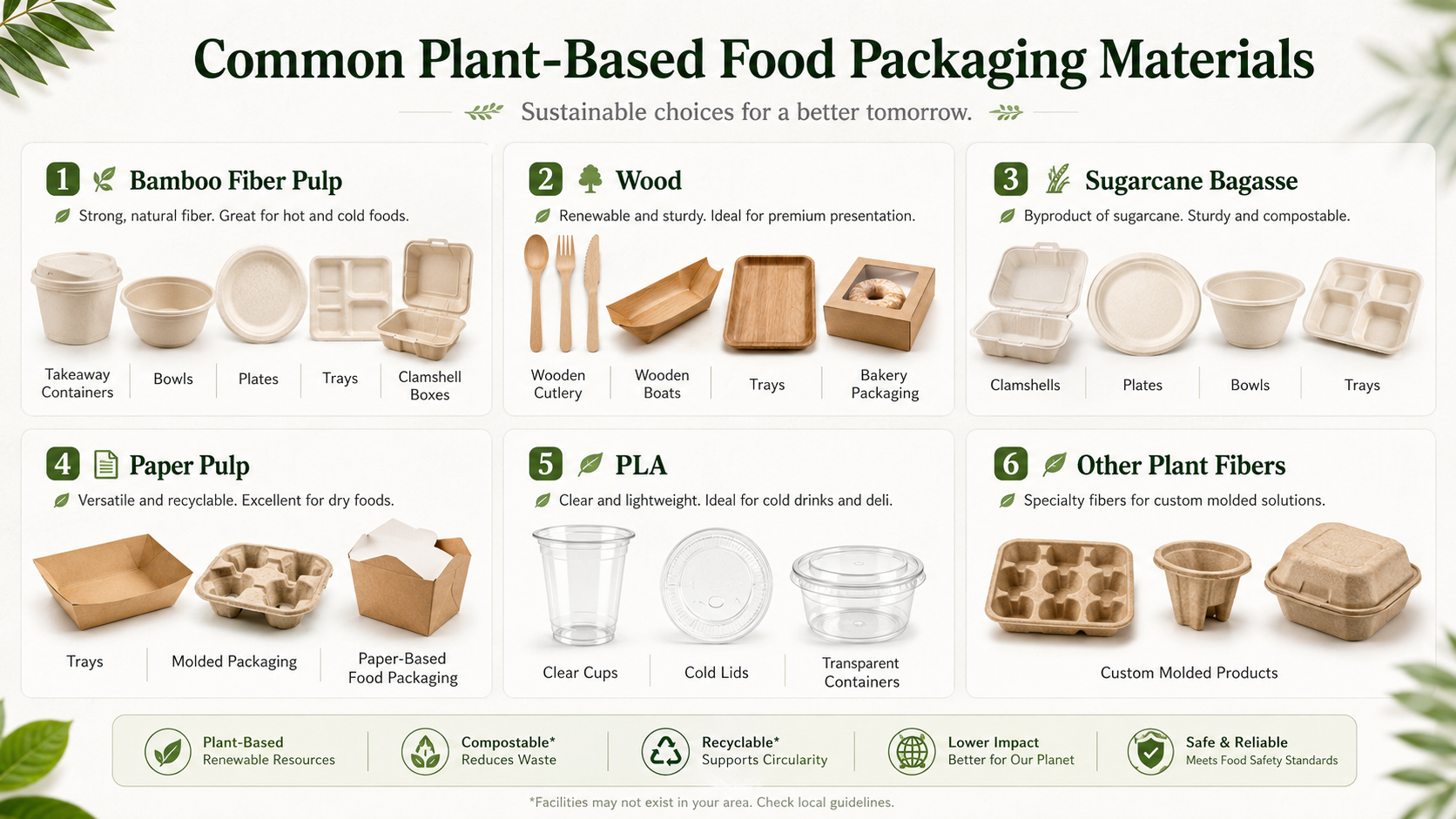
Common Plant-Based Food Packaging Materials
Different materials have different strengths, costs and limitations. Before choosing a product, buyers should understand how each material is normally used.
| Material | Common Products | Best For | Buyer Notes |
|---|---|---|---|
| Bamboo Fiber Pulp | Containers, bowls, plates, trays, clamshell boxes | Takeaway, catering, retail meals, premium eco packaging | Strong structure, natural appearance, suitable for many disposable food packaging projects |
| Wood | Cutlery, wooden boats, trays, bakery packaging | Bakery, snacks, events, catering | Natural look, suitable for dry or semi-dry food applications |
| Sugarcane Bagasse | Clamshells, plates, bowls, trays | Hot meals, takeaway, catering | Widely used molded fiber material, but strength and coating should be checked |
| Paper Pulp | Trays, molded packaging, paper-based food packaging | Light food packaging, custom molded shapes | Some products may feel soft or require coating for oil and water resistance |
| PLA | Clear cups, cold lids, transparent containers | Cold drinks, salads, display packaging | Usually better for cold applications; heat resistance should be checked |
| Other Plant Fibers | Custom molded products | Special packaging projects | Depends on product design, strength and testing requirements |
This is why B2B buyers should not only ask whether a product is “plant-based.” They should also ask what it is made from, what food it is designed for, what certificates are available and whether it matches the target market.
Plant-Based vs Compostable vs Biodegradable: What Is the Difference?
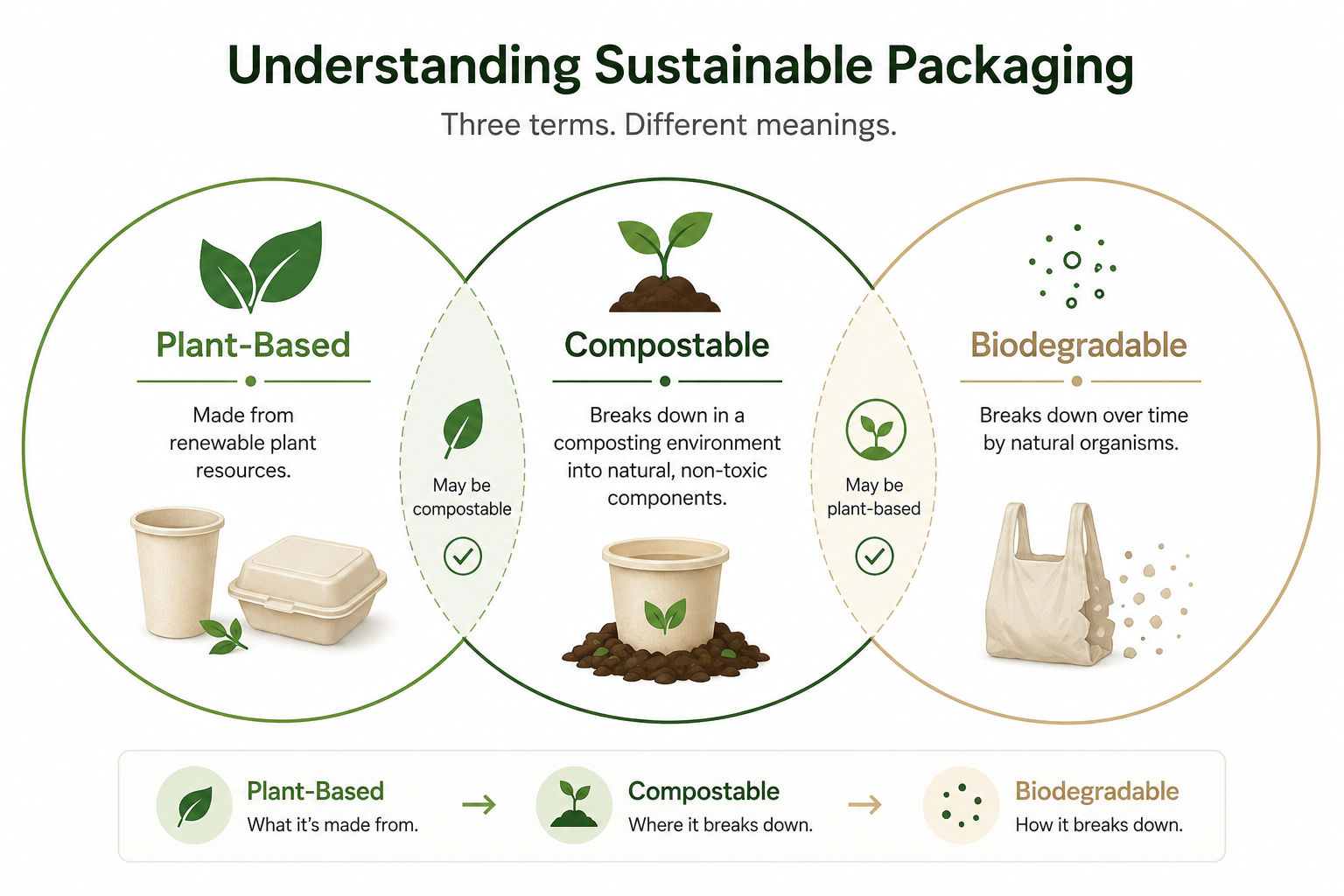
These three terms are often used together, but they do not mean the same thing.
Plant-Based
Plant-based means the material comes fully or partly from plant sources, such as bamboo, wood, sugarcane, paper pulp or cornstarch.
Compostable
Compostable means the product is designed to break down under specific composting conditions. In many markets, compostability claims should be supported by product-specific testing or certification.
For example, some products may be suitable for industrial composting, while others may be designed for natural composting or soil degradation under suitable conditions. The actual result depends on material, product structure, coating, temperature, humidity, oxygen and local composting conditions.
Biodegradable
Biodegradable means a material can be broken down by microorganisms over time. However, the speed and result of biodegradation depend on the environment.
For buyers, the key point is simple:
Do not assume every plant-based product is automatically compostable in every environment. Compostability claims should be checked against recognized standards such as EN 13432 or ASTM D6400, depending on the target market and product type.
For environmental claims such as “eco-friendly,” “biodegradable” or “compostable,” buyers and brands should also make sure their marketing statements are clear and supported by reliable evidence. The FTC Green Guides provide guidance on avoiding misleading environmental claims.
Why Food Brands Choose Plant-Based Food Packaging
Plant-based food packaging is not only about replacing plastic. It can also help food brands and distributors build a more responsible packaging system.
1. Supports Plastic Reduction
Many countries and regions are introducing plastic reduction policies or plastic bans. Plant-based food packaging can help foodservice businesses reduce reliance on traditional plastic packaging and prepare for changing regulations.
For importers and distributors, this can reduce future compliance risks and make the product range more suitable for eco-conscious markets.
2. Builds a Better Brand Image
Natural materials such as bamboo fiber and wood give packaging a cleaner, warmer and more eco-friendly appearance.
For restaurants, cafés, catering companies and retail food brands, packaging is part of the customer experience. A well-designed plant-based package can help communicate sustainability, quality and brand values.
3. Suitable for Many Foodservice Applications
Plant-based packaging can be used across different scenarios, including takeaway meals, catering events, restaurants, cafés, bakeries, retail food displays and private label food packaging.
Different product structures can be matched with different food types, such as rice meals, salads, noodles, snacks, desserts, bakery products and ready-to-eat food.
4. Supports OEM and Private Label Projects
For importers, distributors and food brands, plant-based packaging can support private label and OEM & ODM food packaging solutions.
Customization options may include:
- Custom logo
- Label design
- Sleeve design
- Carton design
- Barcode
- Shipping mark
- Packaging design
- Product matching
This helps customers build their own branded sustainable packaging line.
5. Works with Different Product Formats
Plant-based materials can be used for many packaging formats, such as clamshells, bowls, plates, trays, cups, lids, wooden cutlery and wooden food packaging.
This gives buyers more flexibility when building a complete product range for foodservice, retail or wholesale channels.
Common Buyer Concerns When Choosing Plant-Based Food Packaging
From our experience, B2B buyers usually compare plant-based food packaging from several practical angles.
1. Cost Compared with Plastic
Traditional plastic packaging is often cheaper. This makes price one of the biggest concerns for buyers who are switching to bamboo fiber or other plant-based packaging.
However, buyers should not only compare unit price. They should also consider brand value, compliance risk, product strength, customer experience and hidden costs caused by leakage, deformation or poor packaging performance.
2. Strength Compared with Paper Pulp
Some paper pulp tableware can feel too soft for heavy, oily or watery food. In some situations, users may need to stack two or three pieces together to achieve enough strength.
For foodservice businesses, weak packaging can create customer complaints and waste.
3. Oil and Water Resistance
For takeaway, catering and delivery, oil and water resistance are very important. Some molded fiber products may need coating to improve resistance. Buyers should check whether the coating affects compostability, shelf life or market requirements.
4. PFAS and Coating Concerns
In some markets, buyers are increasingly concerned about PFAS and fluorinated coatings. If PFAS-free packaging is required, buyers should confirm testing documents before bulk orders.
5. Supply Stability
For wholesalers, distributors and foodservice chains, supply stability is as important as product quality. Delayed production, unstable quality or poor packaging can affect sales plans and customer relationships.
6. Customization Flexibility
Many buyers need private label packaging, custom cartons, logo printing, barcodes or retail packaging. A supplier should be able to support customization while keeping MOQ, lead time and cost under control.
Cost vs Value: Why Bamboo Fiber Packaging Is Not Only a Price Decision
Bamboo fiber food packaging may cost more than traditional plastic packaging or some basic pulp products. For many buyers, this is the main challenge.
But for B2B purchasing, price is only one part of the decision.
A lower unit price does not always mean a lower total cost if the product is too weak, leaks during use, requires double stacking, causes customer complaints or fails to meet local market requirements.
Bamboo fiber pulp packaging can offer value in several ways:
- It supports plastic reduction and sustainability positioning.
- It provides a natural, premium appearance.
- It can be stronger than some traditional molded pulp tableware.
- It can support oily, watery or heavier food applications depending on product structure.
- It can support OEM and private label packaging.
- It can help brands build a stronger eco-friendly image.
For restaurants, catering companies, distributors and retailers, packaging is not only a cost item. It is also part of product presentation, brand communication and customer experience.
Applications of Plant-Based Food Packaging
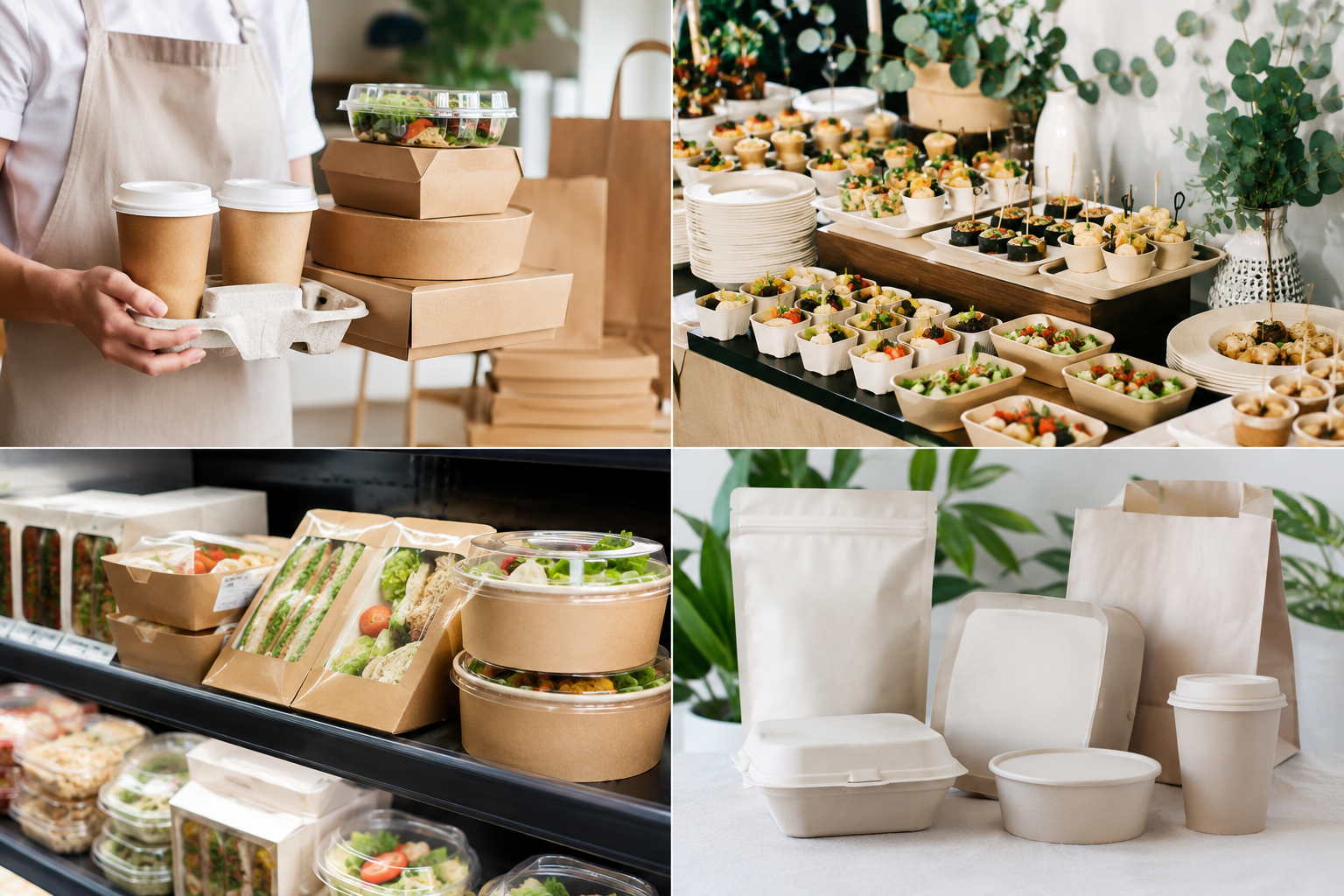
Plant-based food packaging is widely used in foodservice, retail and institutional projects.
Takeaway and Delivery
Takeaway food packaging needs to protect food during transport. Common products include clamshell containers, bowls with lids, trays, cups and cutlery.
Buyers should consider:
- Food temperature
- Portion size
- Lid fit
- Leak resistance
- Stacking
- Delivery time
- Customer experience
Restaurants and Cafés
Restaurants and cafés use plant-based packaging for takeaway meals, dine-out orders, drinks, desserts and branded foodservice packaging.
Common options include:
- Bamboo fiber containers
- Foodservice cups
- Bowls and lids
- Wooden cutlery
- Plates and trays
Catering and Events
Catering companies and event suppliers often need large quantities of disposable packaging for meals, snacks, desserts and drinks.
Plant-based packaging can help events create a cleaner and more eco-friendly serving experience.
Retail Food Packaging
Retail food packaging needs both function and presentation. Buyers may need packaging for ready-to-eat meals, salads, bakery products, snacks, desserts or prepared food.
Important factors include:
- Product appearance
- Shelf display
- Label space
- Barcode requirements
- Lid clarity
- Stacking and transport
Hospitality and Travel
Hotels, resorts, airlines and cruise lines may use plant-based disposable packaging for in-room dining, meal service, events and sustainability initiatives.
Institutions and Public Sector
Schools, universities, hospitals, office cafeterias and government projects may choose plant-based packaging to support plastic reduction goals and sustainability policies.
Private Label Projects
Private label customers often need custom cartons, labels, sleeves, barcodes, shipping marks and packaging design support.
Plant-based food packaging can help importers and distributors build their own sustainable packaging line for local markets.
How to Choose the Right Plant-Based Food Packaging
For B2B buyers, choosing the right packaging should follow a practical process.
1. Confirm the Food Type
Different foods need different packaging. Hot meals, oily food, soup, salad, bakery products, snacks and desserts may require different materials and structures.
2. Confirm Usage Conditions
Before ordering, check whether the packaging will be used for:
- Hot food
- Cold food
- Microwave use
- Freezer use
- Oven use
- Takeaway delivery
- Retail display
- Long holding time
3. Choose the Right Product Structure
A clamshell container, round bowl, tray, plate or cup may serve different food applications. The right shape can improve food presentation and reduce packaging waste.
4. Check Lid Options
For takeaway and retail food, lid matching is critical. Buyers should check lid material, fit, clarity, sealing performance and stacking.
5. Confirm Oil and Water Resistance
If the food contains soup, sauce, oil or moisture, buyers should confirm oil resistance, water resistance and leakage performance before placing a bulk order.
6. Prepare Branding Requirements
For private label or OEM projects, prepare:
- Logo file
- Label design
- Sleeve design
- Carton mark
- Barcode
- Product item number
- Retail packaging requirements
7. Ask for Samples
Samples help buyers check product size, material, lid fit, appearance, strength and packing method before bulk orders.
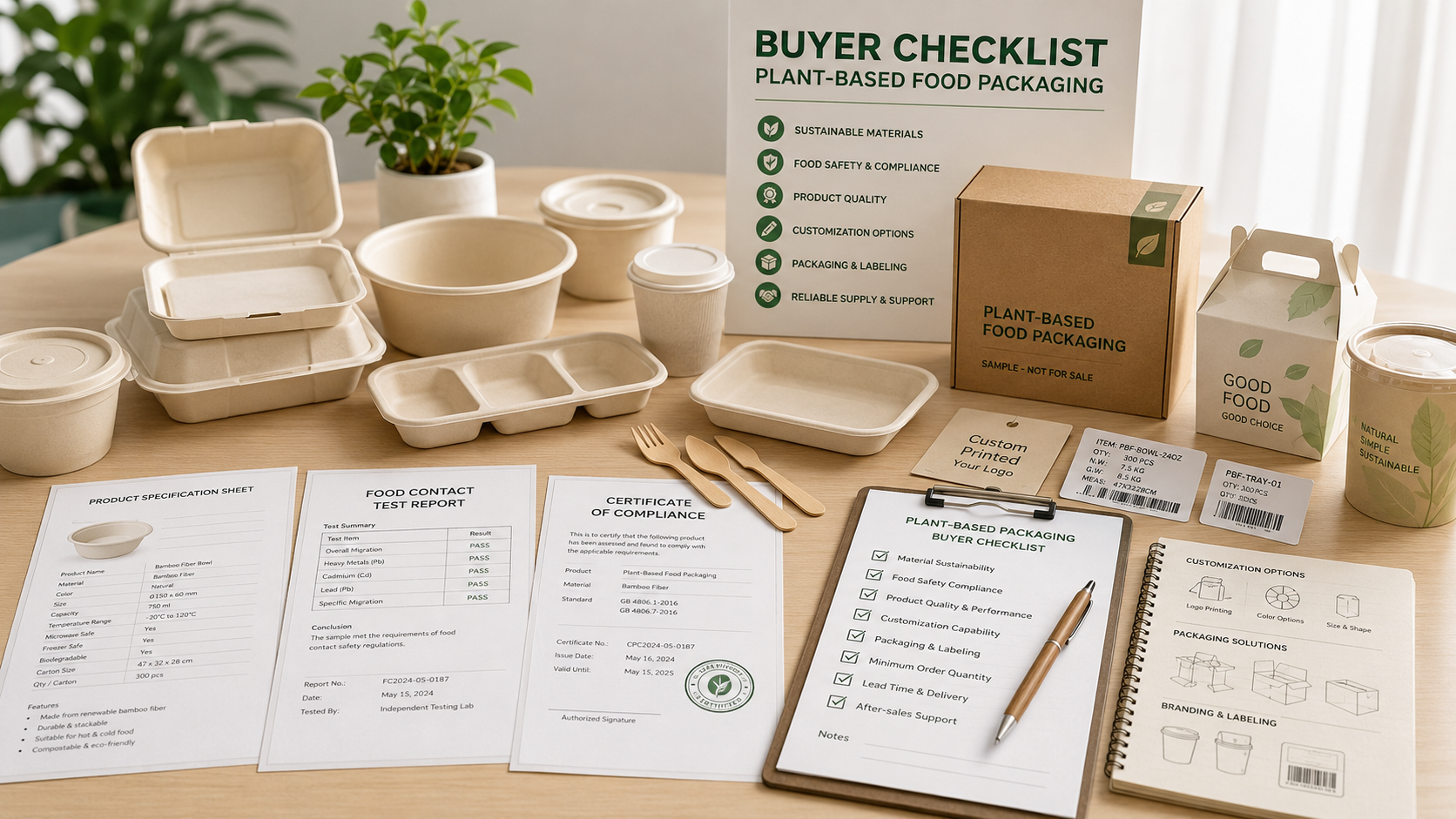
8. Check Certificates and Testing Documents
Food packaging documents should be checked based on the product and target market. Do not rely only on general claims such as “eco-friendly” or “biodegradable.”
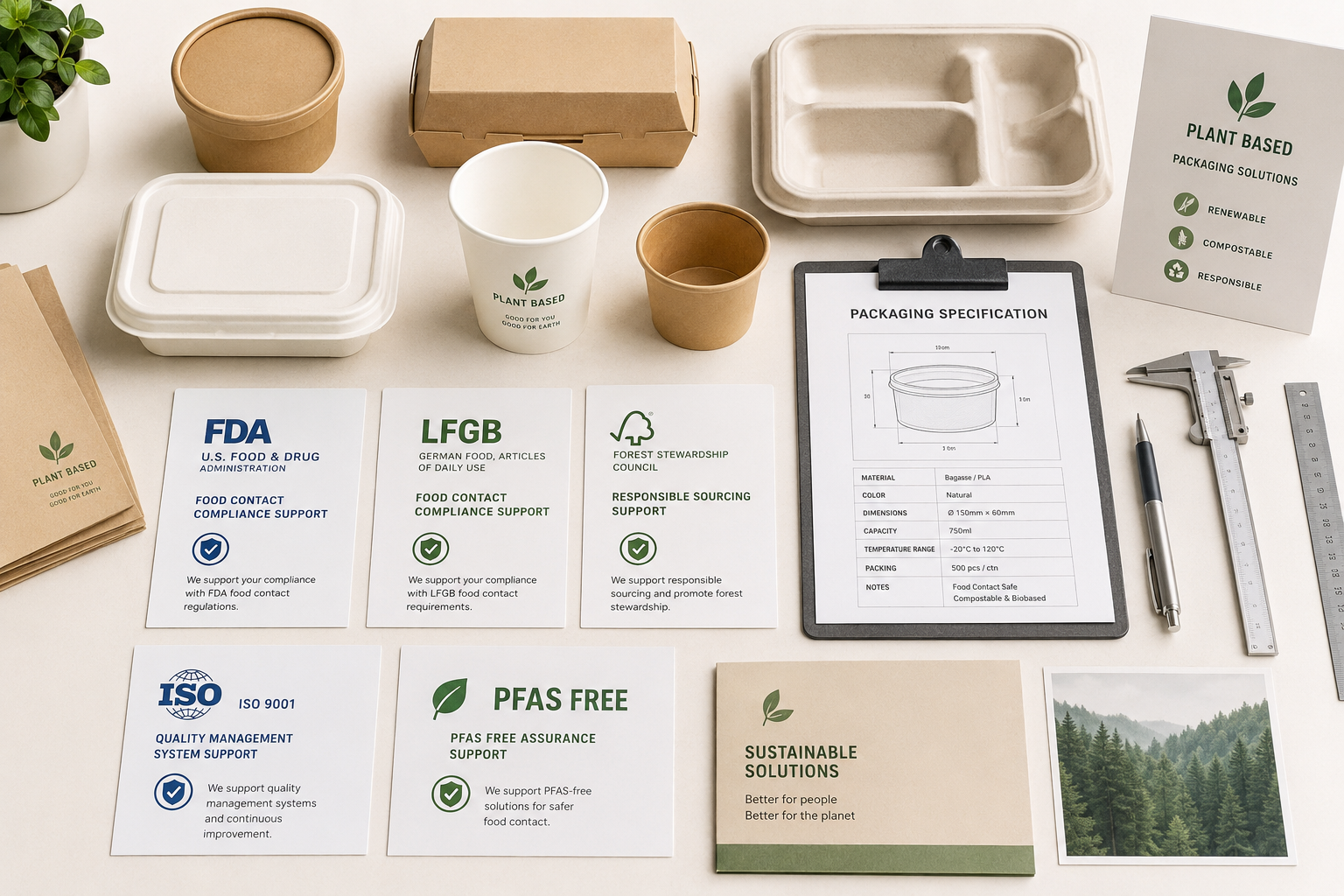
Certificates and Testing Documents B2B Buyers Should Check
For food packaging projects, buyers often need documents related to food contact, quality management, material sourcing and market requirements.
Depending on the product and target market, documents may include food-contact support from FDA food packaging and food contact substance guidance, FSC certification, BRCGS Packaging Materials, PFAS-free testing support, and compostability-related documents such as EN 13432 or ASTM D6400.
- FDA food contact support
- LFGB testing support
- FSC material support
- ISO quality management support
- PFAS-free testing support
- BRCGS food safety support
- Compostability testing or certification for selected products
These documents are not always the same for every product. The best approach is to confirm the specific item, material, destination market and end-use application before making claims or placing a bulk order.
At Panabam, testing and certificate support can be provided based on specific product and project requirements.
Buyer Checklist Before Ordering Plant-Based Food Packaging
Before starting a project, buyers should prepare the following information:
- Product type
- Food application
- Size or capacity
- Quantity
- Material preference
- Lid requirement
- Oil and water resistance requirement
- Microwave, freezer or oven requirement
- Logo or private label requirement
- Carton or retail packaging requirement
- Destination country
- Required certificates or testing documents
- Sample address
- Expected delivery time
Providing this information helps suppliers recommend the right products and prepare a more accurate quotation.
How Panabam Supports Plant-Based Food Packaging Projects
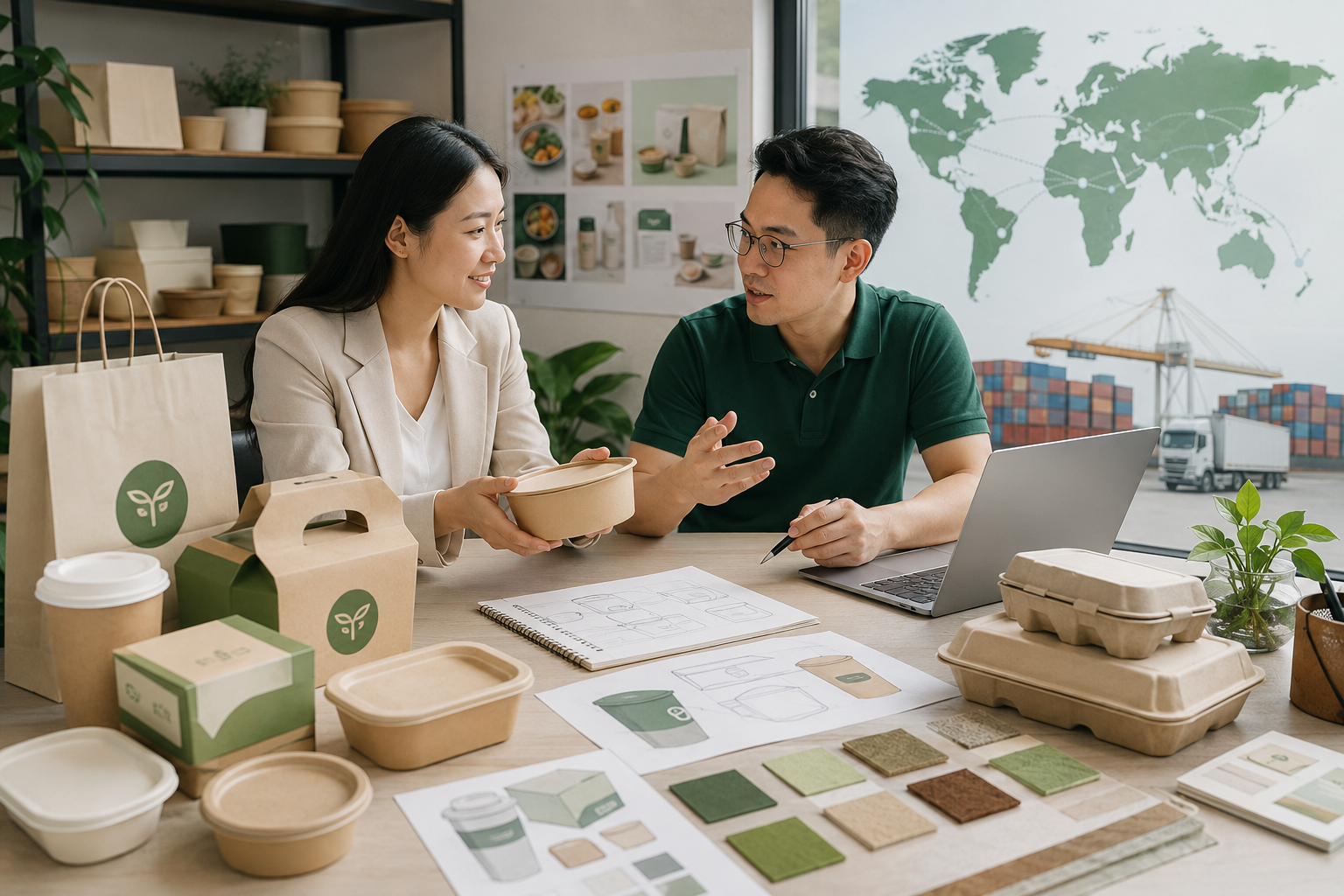 Panabam provides eco-friendly disposable food packaging solutions made from bamboo fiber, wood and other plant-based materials for takeaway, catering, retail and private label projects.
Our product range includes:
- Bamboo fiber containers
- Bamboo fiber bowls and lids
- Plates and trays
- Cups and foodservice accessories
- Wooden cutlery and tableware
- Disposable wooden food packaging
- Clamshell boxes
- Takeaway containers
- Private label packaging options
For OEM and private label customers, Panabam can support:
- Custom logo
- Carton and label design
- Sleeve design
- Product matching
- Sample confirmation
- Testing and certificate support
- Export packaging and shipment preparation
With years of production experience, automated production support and export experience to markets such as the United States, Australia, Canada, the United Kingdom, Japan, the Netherlands and Germany, Panabam helps global buyers develop practical and scalable food packaging solutions.
Whether you need ready-made products or customized packaging solutions, our team can help you check suitable options before bulk production.
FAQs About Plant-Based Food Packaging
Is plant-based food packaging always compostable?
No. Plant-based means the material comes from plant sources. Compostable means the product can break down under specific composting conditions. Compostability depends on the material, coating, product structure and testing documents.
Is bamboo fiber food packaging suitable for hot food?
Many bamboo fiber food packaging products can be used for hot meals and foodservice applications. The final suitability depends on product type, food temperature and usage conditions. Buyers should confirm product-specific information before bulk orders.
Can plant-based food packaging be used for takeaway delivery?
Yes. Plant-based containers, bowls, lids, trays, cups and cutlery can be used for takeaway and delivery projects. Buyers should check lid fit, leak resistance, stacking and food holding time.
What is the difference between bamboo fiber and wooden food packaging?
Bamboo fiber is often used for molded containers, bowls, plates and trays. Wood is commonly used for cutlery, wooden boats, trays, bakery packaging and event foodservice packaging.
Can I customize plant-based food packaging with my brand logo?
Yes. Many plant-based food packaging projects can support custom logo, private label packaging, label design, sleeve design, carton design, barcode and shipping mark requirements.
What documents should buyers ask for?
Buyers may ask for food-contact testing, FDA or LFGB support, FSC material support, ISO, PFAS-free testing, BRCGS support or compostability-related documents depending on product type and target market.
Why is bamboo fiber food packaging usually more expensive than plastic?
Bamboo fiber packaging uses plant-based raw materials and production processes designed for eco-friendly food packaging applications. While the unit price may be higher than traditional plastic, it can offer stronger sustainability value, better brand image, plastic ban readiness and improved customer experience.
How can I get a quotation?
You can send your product type, size, quantity, packaging requirements, destination country and any logo or private label needs. Panabam will help check suitable products, samples and quotation details. Please contact us to start your project.
Final Thoughts
Plant-based food packaging is a practical option for food brands, importers, distributors and foodservice businesses looking for more eco-friendly disposable packaging solutions.
However, the best packaging choice depends on more than the material name. Buyers should consider food type, temperature, product structure, lid option, branding needs, destination market, certificates and testing documents before making a decision.
For B2B buyers, plant-based packaging should be evaluated from both a cost perspective and a value perspective. A good packaging solution should support product performance, compliance, brand image, customer experience and long-term supply stability.
If you are looking for eco-friendly disposable food packaging made from bamboo fiber, wood and other plant-based materials, Panabam can help you check suitable products, samples and quotation details for your project.
Looking for Plant-Based Food Packaging Solutions?
Tell us your product type, quantity, packaging requirements and destination market. Panabam will help you check suitable products, samples and quotation details.
Start your project here: Contact Us